
Oak Management Pathway






Step 4.2: Monitoring Protocols
We observe changes by casual observation in our day-to-day lives, by passing down lessons learned in oral stories, through photos taken from the same location over time, and through the collection and analysis of technical data. Below you’ll find information on several monitoring approaches that ECOP partners are using to better understand our impacts on oak systems and whether or not our restoration is having the desired effect. When we collect the same information in the same way from different sites, we can compare results and identify trends across the region, strengthening our understanding and the learning we do together.
With the guidance of working groups, ECOP has developed the following standardized monitoring protocols:
Navigate our Monitoring Protocols

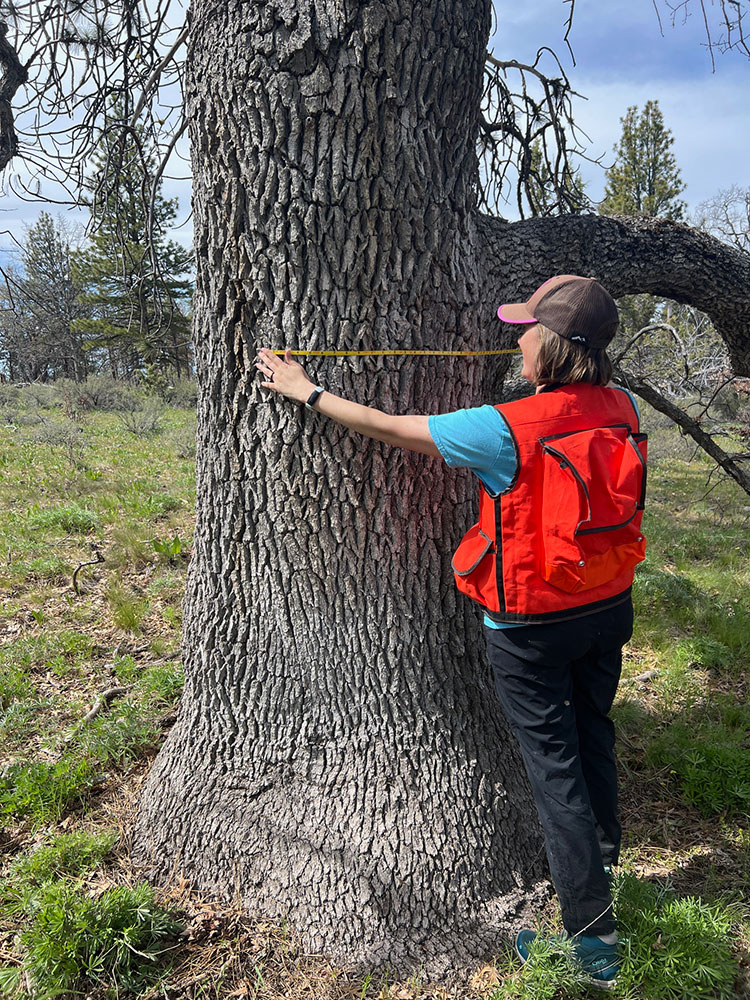
Disturbance monitoring protocol
The ECOP Disturbance Monitoring Protocol documents changes in density, structure, and composition of trees, plants, and fuels following natural disturbances like fire and planned disturbance events such as fuels reduction, conifer thinning, or prescribed fire. The methods are adapted from the USFS Forest Inventory and Analysis Program. Data collected includes photo points, fuel transects, and tree and snag measurements such as diameter, height, species, and crown base height. It also includes tree health indicators such as mistletoe and epicormic branching, and characterizes oak-specific attributes like stump sprouting, cavity abundance, and oak crown shape. ECOP has put together monitoring toolkits available for partner check-out, which include all the materials and instruments needed to conduct this protocol. Email Oaks@ColumbiaLandTrust.org to check out a monitoring toolkit and get technical support!

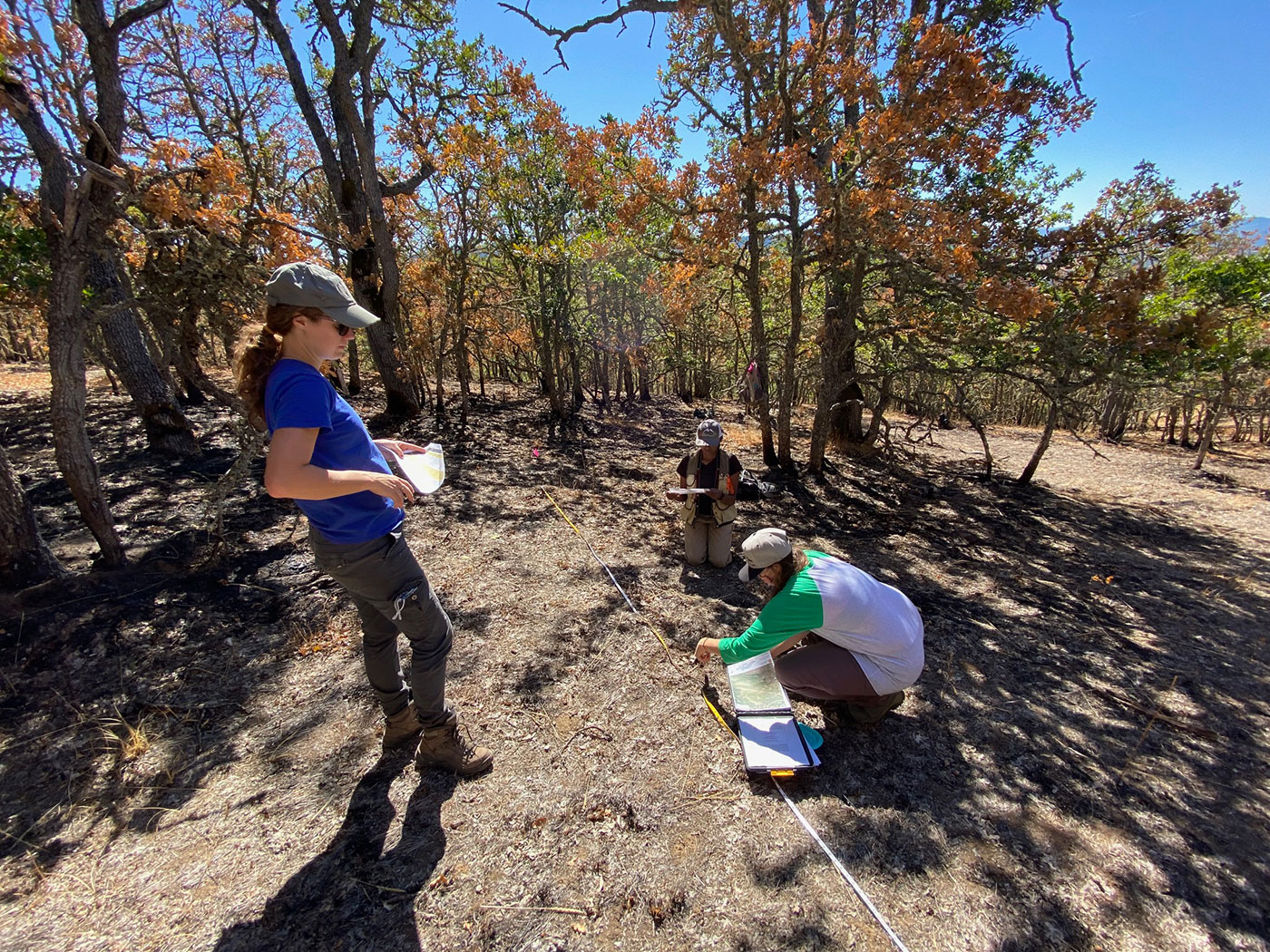
Oak understory module
The ECOP Oak Understory Module documents effects of restoration on the plants growing beneath the oaks – the understory plant community, including responses to herbicide treatment to control weedy species, prescribed fire, mechanical thinning (use of chainsaws or machinery to cut and limb trees), and mastication (using equipment to grind up woody plants). Measurements estimate the cover of plant species and species diversity.
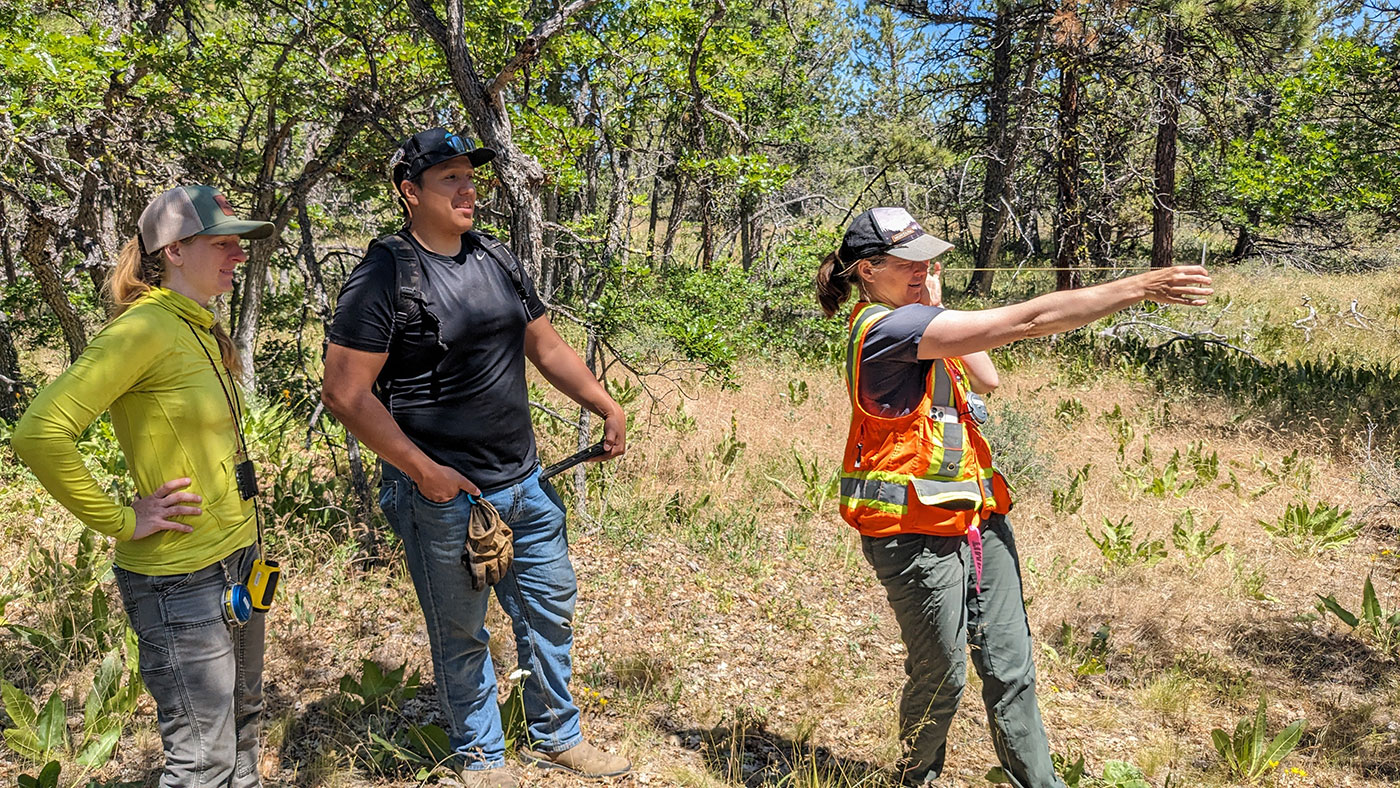
Fire monitoring module
The goal of the ECOP Fire Monitoring Module is to document burn severity and tree responses to fire. Measurements estimate burn severity of substrate and vegetation, and scorch and char on trees within the monitoring plot. The fire module is useful for projects deploying prescribed fire as a management action, or it can be used opportunistically after wildfires. Understanding how systems burn and why is an important part of evaluating risk of high intensity wildfire and how controlled burns influence desired outcomes.
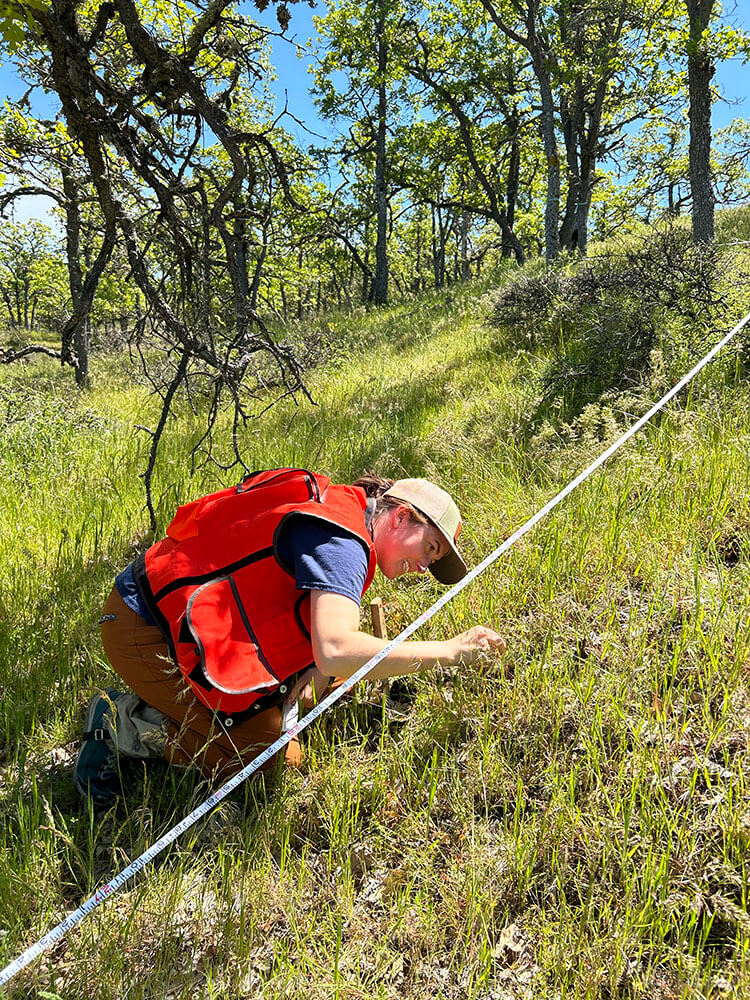
General Monitoring
For more general monitoring resources including photo point monitoring guides, see ECOP's Resource Library.
Monitoring toolkits
We strongly encourage partners to follow the above monitoring protocols where possible, and landowners to install monitoring plots on their properties even where treatment is not occurring. A broad network of monitoring plots across the region will help us understand climate change and wildfire impacts. ECOP has put together monitoring toolkits available for check-out, which include all the materials and instruments needed to conduct these protocols. Email Oaks@ColumbiaLandTrust.org to check out a monitoring toolkit and get technical support! Every plot we install builds our collective understanding of these complex and fascinating systems.
Ready for Step 4.3?
ECOP has installed over 200 monitoring plots across Oregon and Washington on private and public lands! In the next step you have the chance to view the locations of ECOP monitoring plots in an interactive story map.