
Guidance on the Trees
Managing Oak Habitats in the East Cascades



Dig Deeper:
OAK MANAGEMENT PATHWAY
This page is a tool that supports Step 2: Make a Plan within the Oak Management Pathway.

Oregon white oak’s preference for a temperate climate generally keeps them west of the Cascade Mountains, but luckily for us, the maritime air flowing through the Columbia River Gorge coaxes them to the east side of the mountains!
Much of the existing research and management recommendations were focused on populations in the West Cascades. Since conditions in the East Cascades are highly variable, we’ve developed management recommendations specific to enhancing and restoring these unique Oregon white oak habitats.
Let's dive in!

Why oaks look the way they look in the East Cascades
Oregon white oak is a generalist, meaning it can grow in a wide variety of conditions. It grows in association with many other plants, on a variety of soil types, slopes, and elevations, and it adopts a different growth form in response to its environment. We can learn a lot about what trees are responding to, including our management decisions, from their growth form.
Oak growth forms and management implications
What most of us first notice about an oak tree is its growth form, or shape, and we have a lot of ideas about a tree’s value based on its form. People generally prefer large trees, and there are plenty of reasons to love a big tree. But we are happy to show you why the smaller ones matter too!
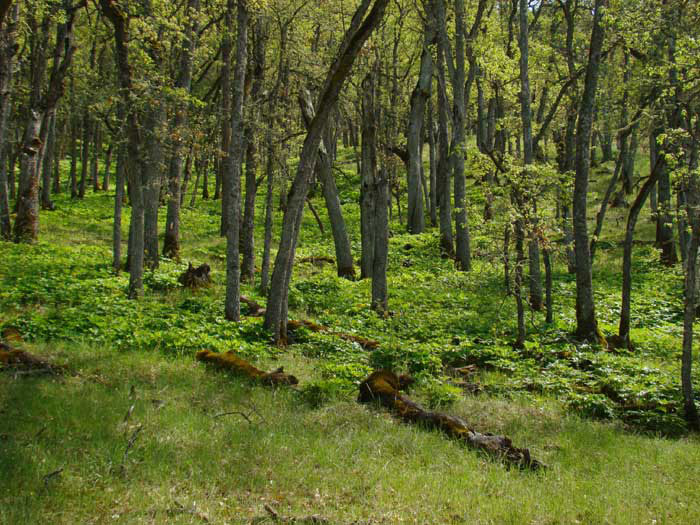
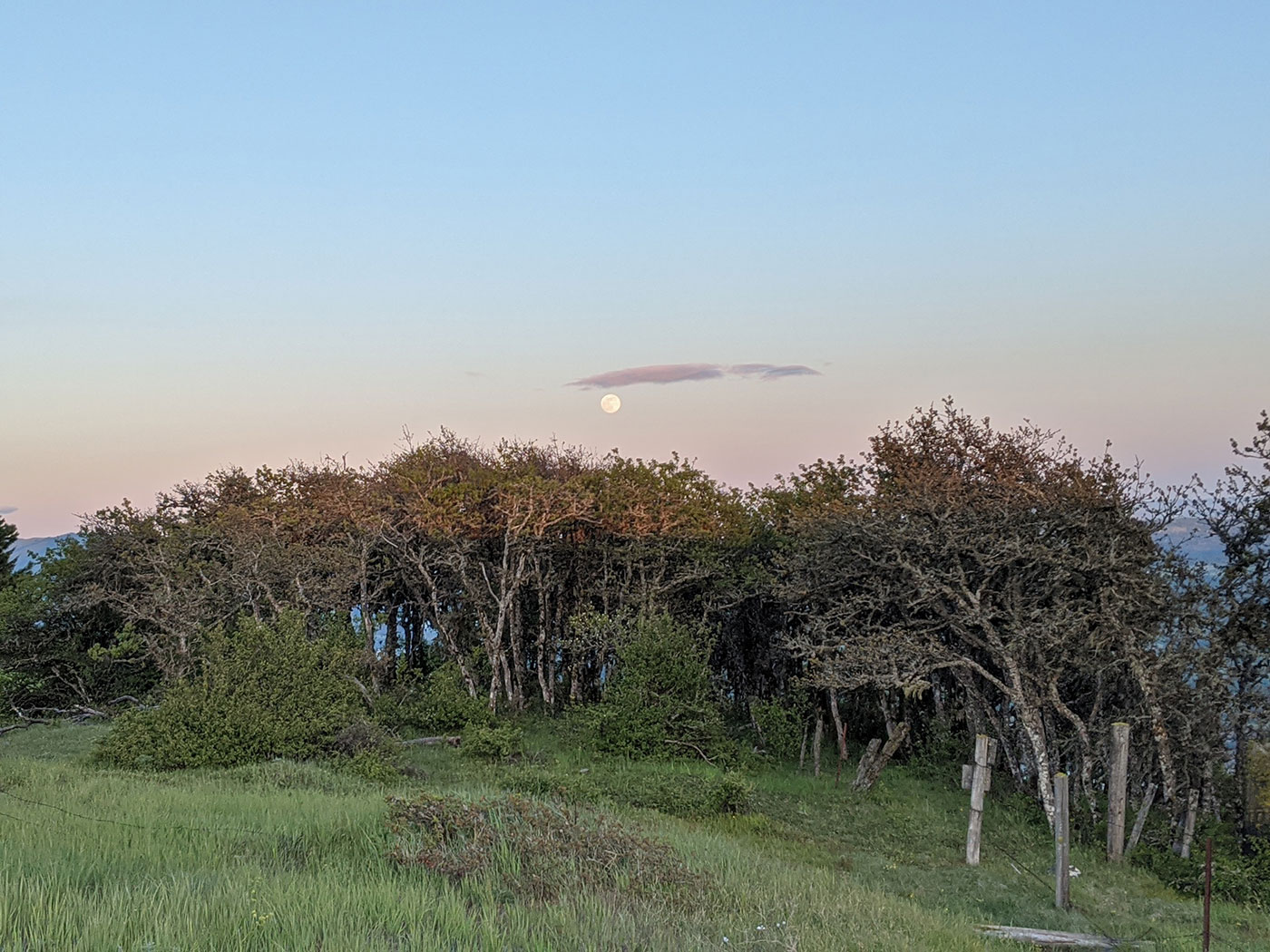

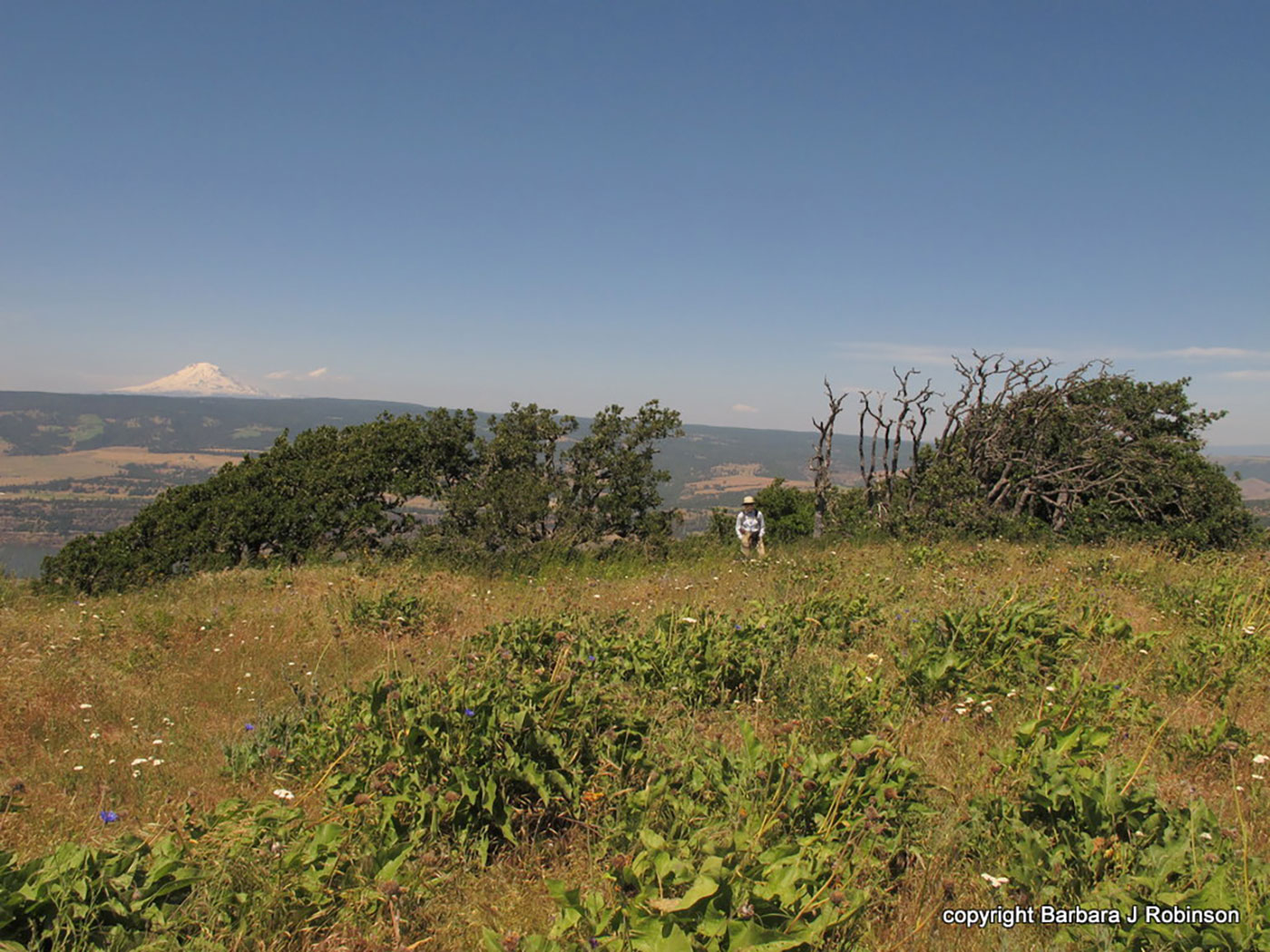
On dry, exposed slopes where wind or intense fire can desiccate the leaves and cause physical damage to crowns, oaks adopt a shorter, shrubbier growth form, densely clustered together for protection. These oaks provide important cover and forage for wildlife. With repeat disturbance and suckering, clones can form. The largest documented Oregon white oak clone is near Bellingham, WA and is 122 feet long by 66 feet wide! Who knows how old or large our clones are in the gorge? We’d like to find out!
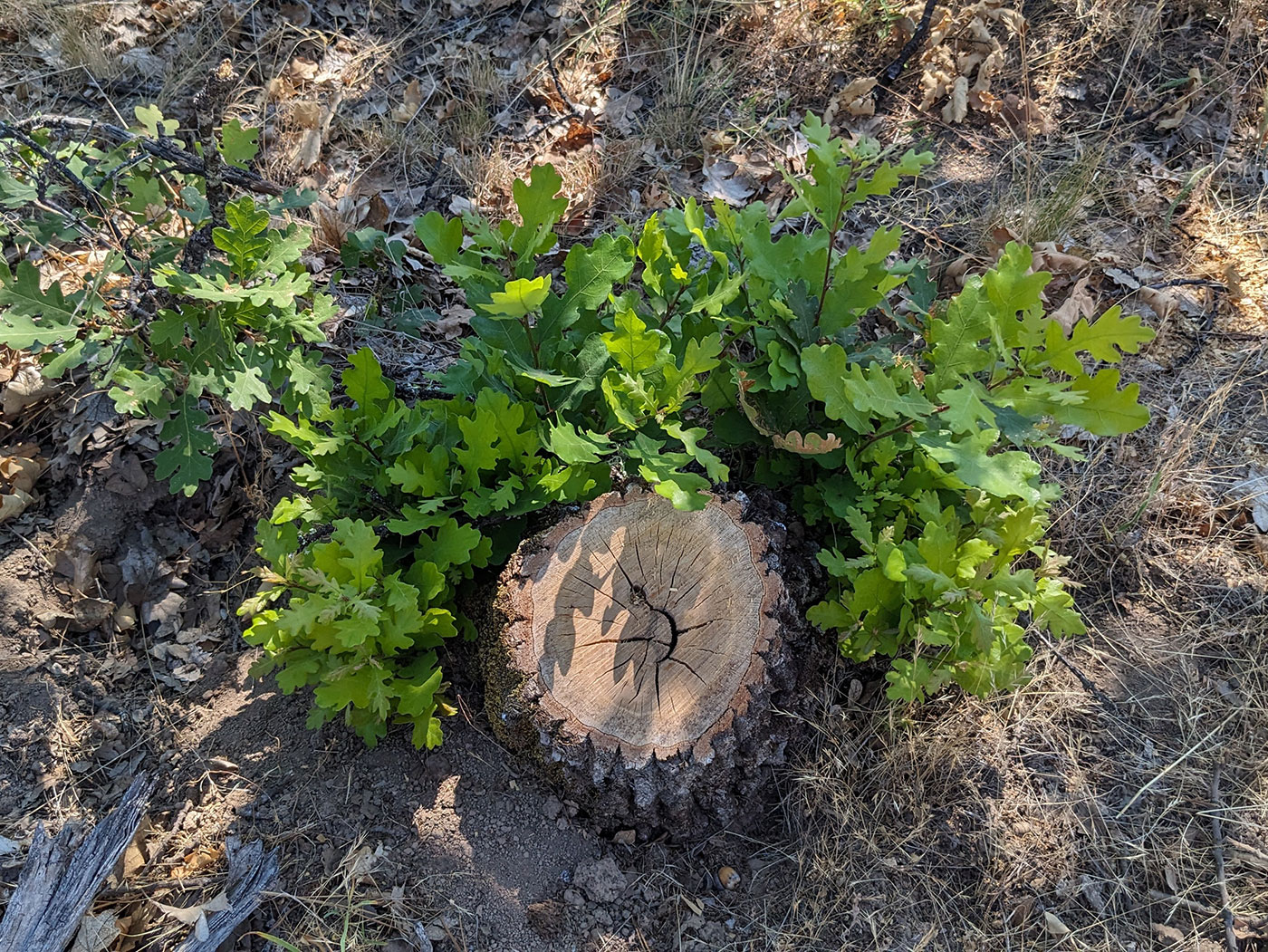
Exposure to hot fire can kill the tops of oak trees, causing them to resprout from the root crown. You can see the dead crown of an oak and the live sprouts at its base. These sprouts create a shorter, shrubbier growth form, at least for a little while, and are a sign of intense disturbance… and strong resilience!
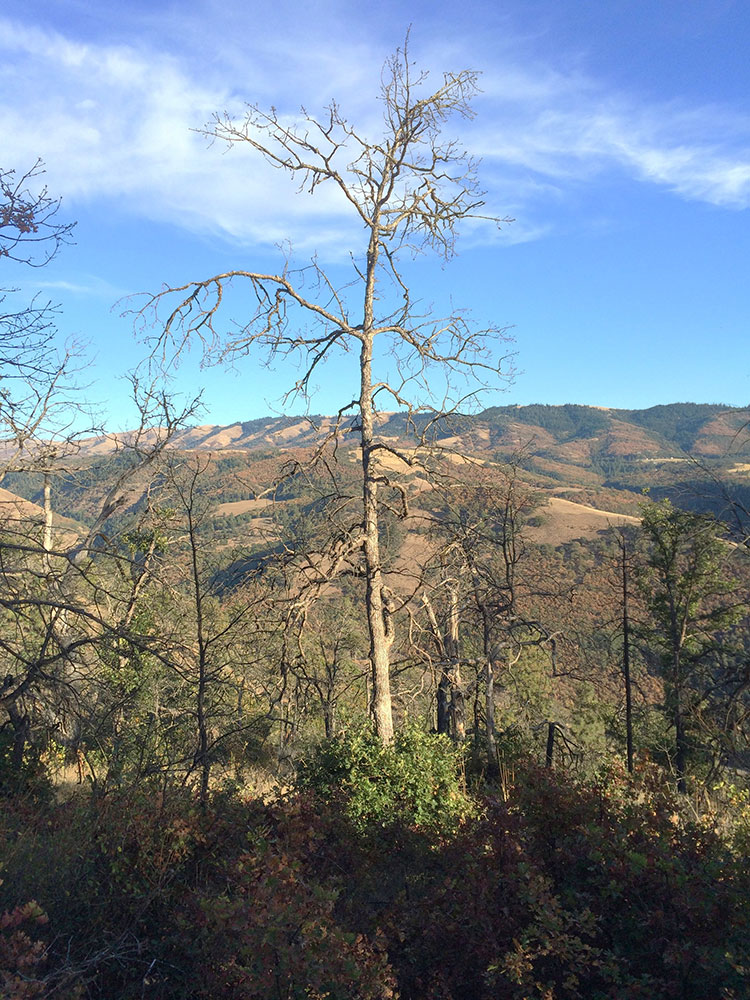
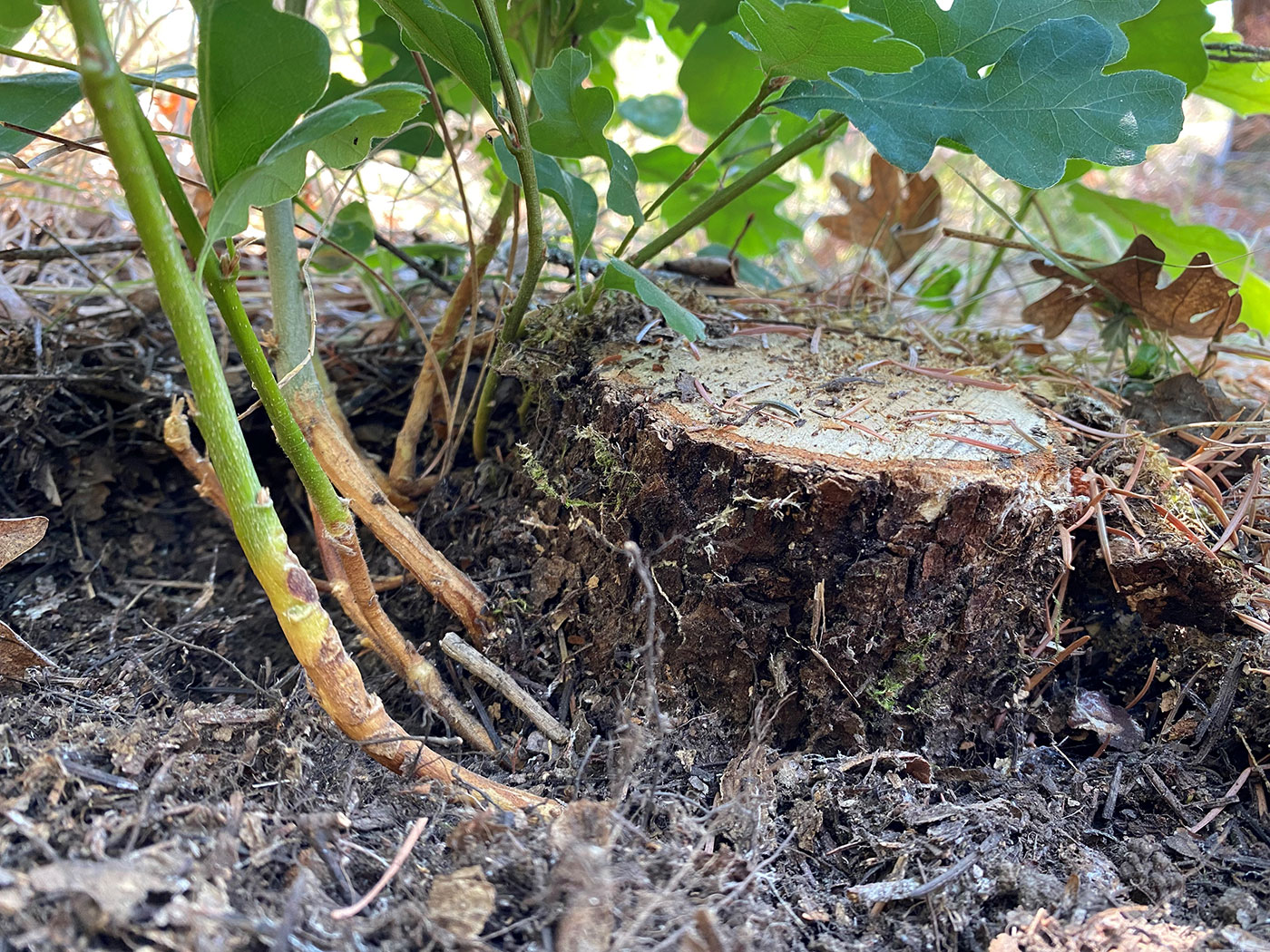
Let’s take a moment to appreciate this incredibly resilient thing oaks do. The top can be cut, burned, or chewed off, and… the tree resprouts.
Oaks are tough as nails and resilient in a changing climate as fires may grow more intense. Less drought tolerant trees may not persist in the places we’re accustomed to seeing trees. We’ve seen oak resprout as soon as a month after crown damage, immediately securing carbon, building soils, and sheltering and feeding wildlife. This is a gift. But it can feel like a curse if you are thinning oaks you don’t want to grow back. More on that later.
A few leaders will eventually emerge from the resprouting clump, escaping wildlife or livestock browse pressure. These clonal oak stems might one day grow together, appearing eventually to be a single stem again, though they won’t develop the same large central cavity resource single stem trees of equal size would.


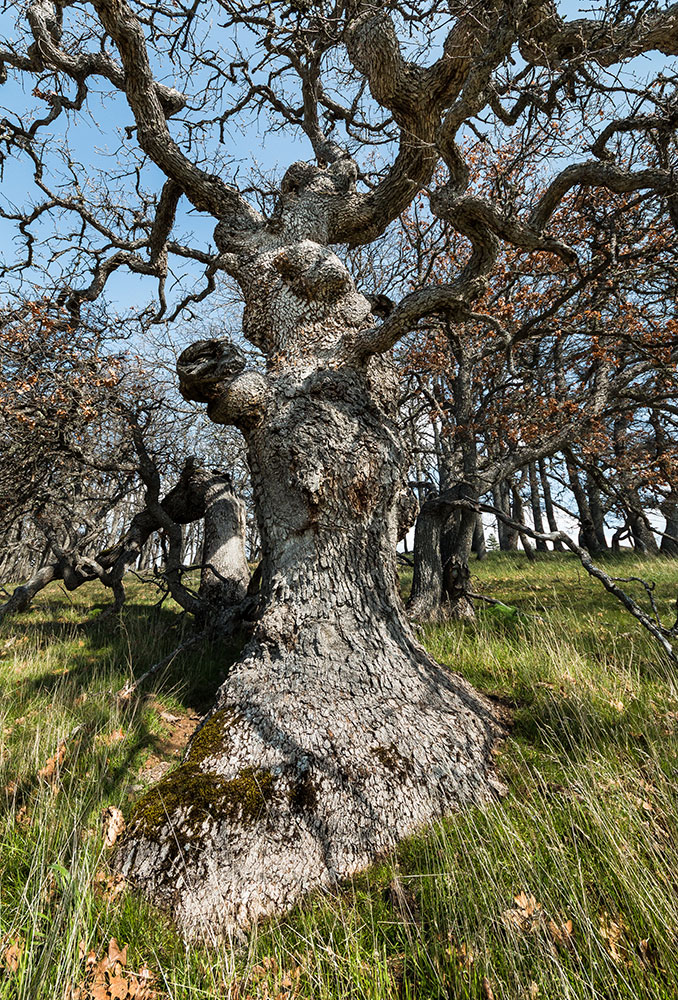
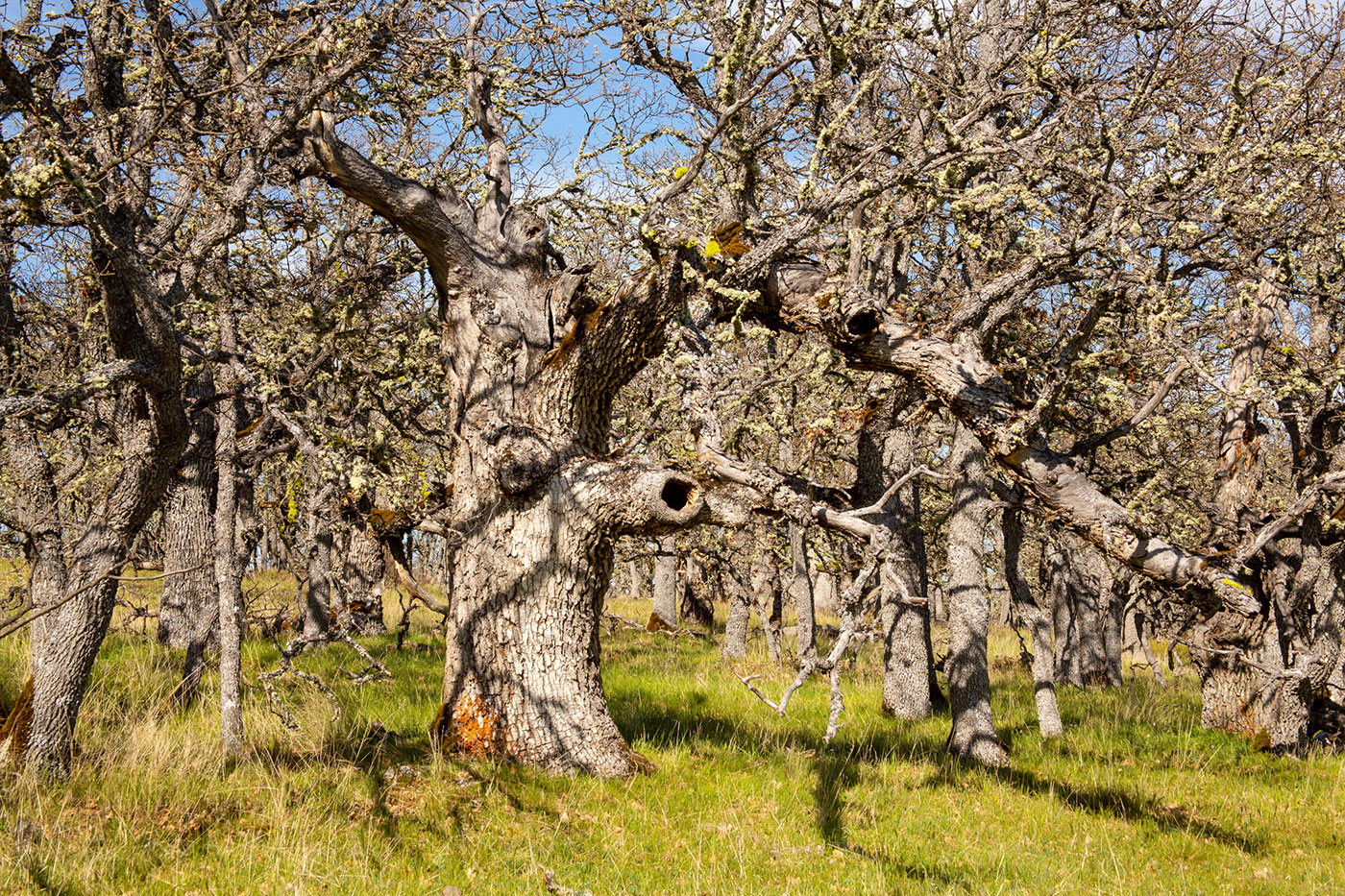
These trees at all stages provide wonderful habitat and forage for elk, deer, squirrels, birds, and more. But the trees providing the most spacious cavities for wildlife are large, mature trees from a single stem. These trees show character in their lost or gnarly limbs, broken tops, thick and peeling bark, and battle scars from fire, wind, ice, pests, and wildlife. Here are a few of our favorites!


Improving oak vigor
Oaks have a strong response to their environment. They may become stressed by a variety of factors including wind, ice, diseases, pests, wildlife, domestic animals, people, or fire. Competition for resources like soil moisture or light can also influence their structure and vigor. These are complex interactions. We’ll discuss a few common methods of improving oak vigor below, including removal of encroaching conifers, oak thinning, and mastication, as well as planting oaks. To review pros and cons of mechanical removal of trees using mastication vs. hand tools vs. prescribed fire, see ECOP Guidance on Fire: Fuels Reduction.
Conifer encroachment
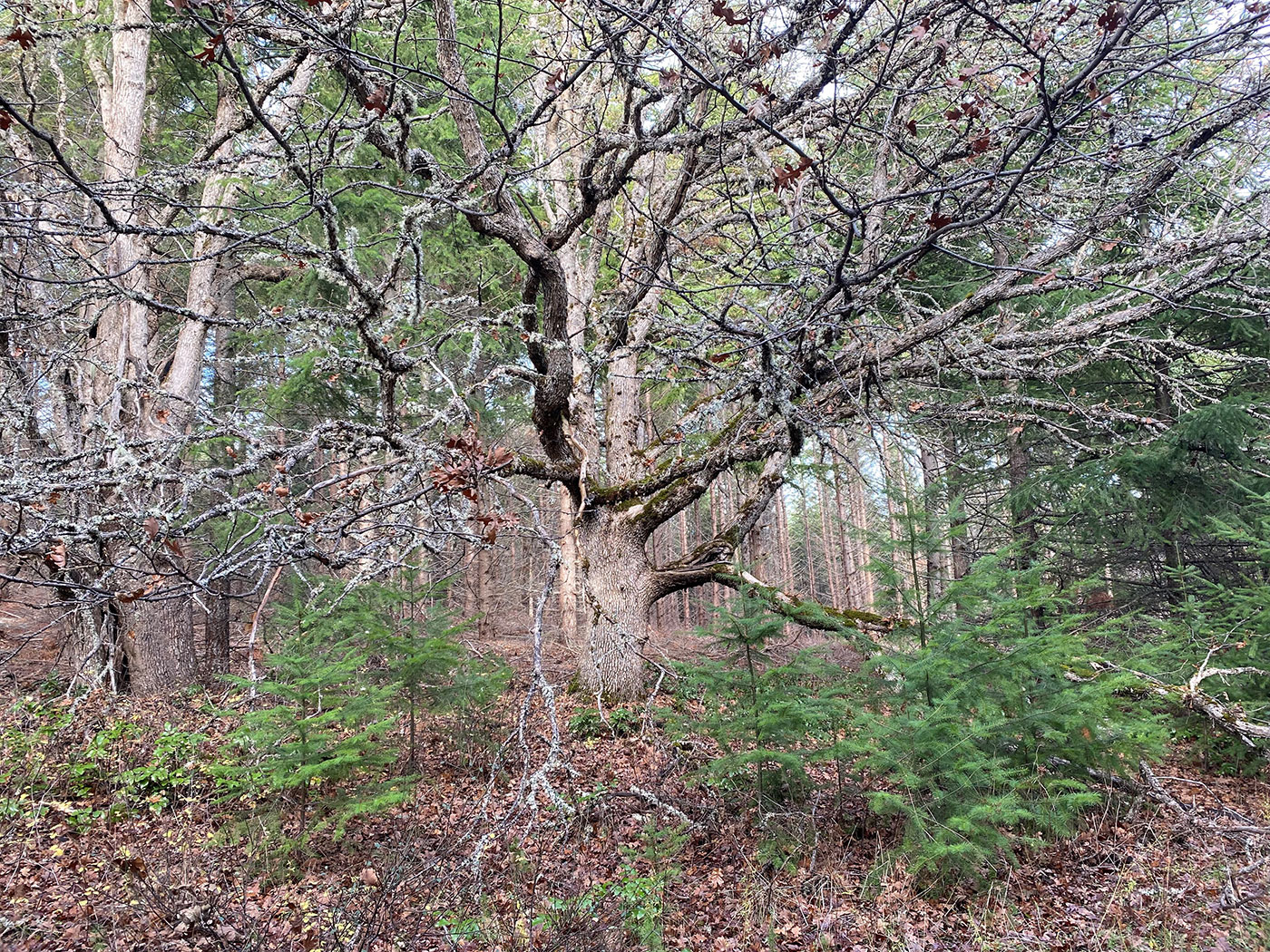
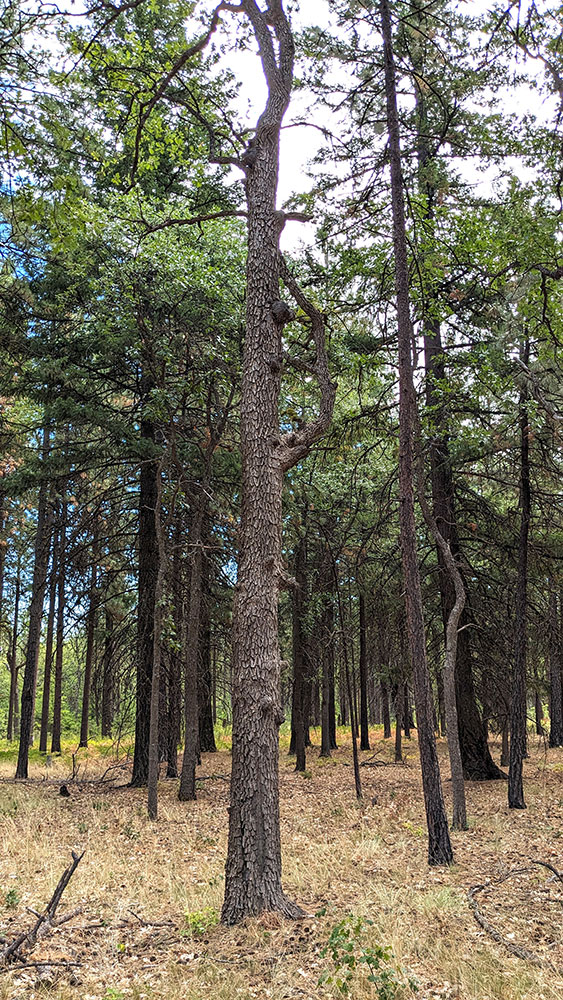
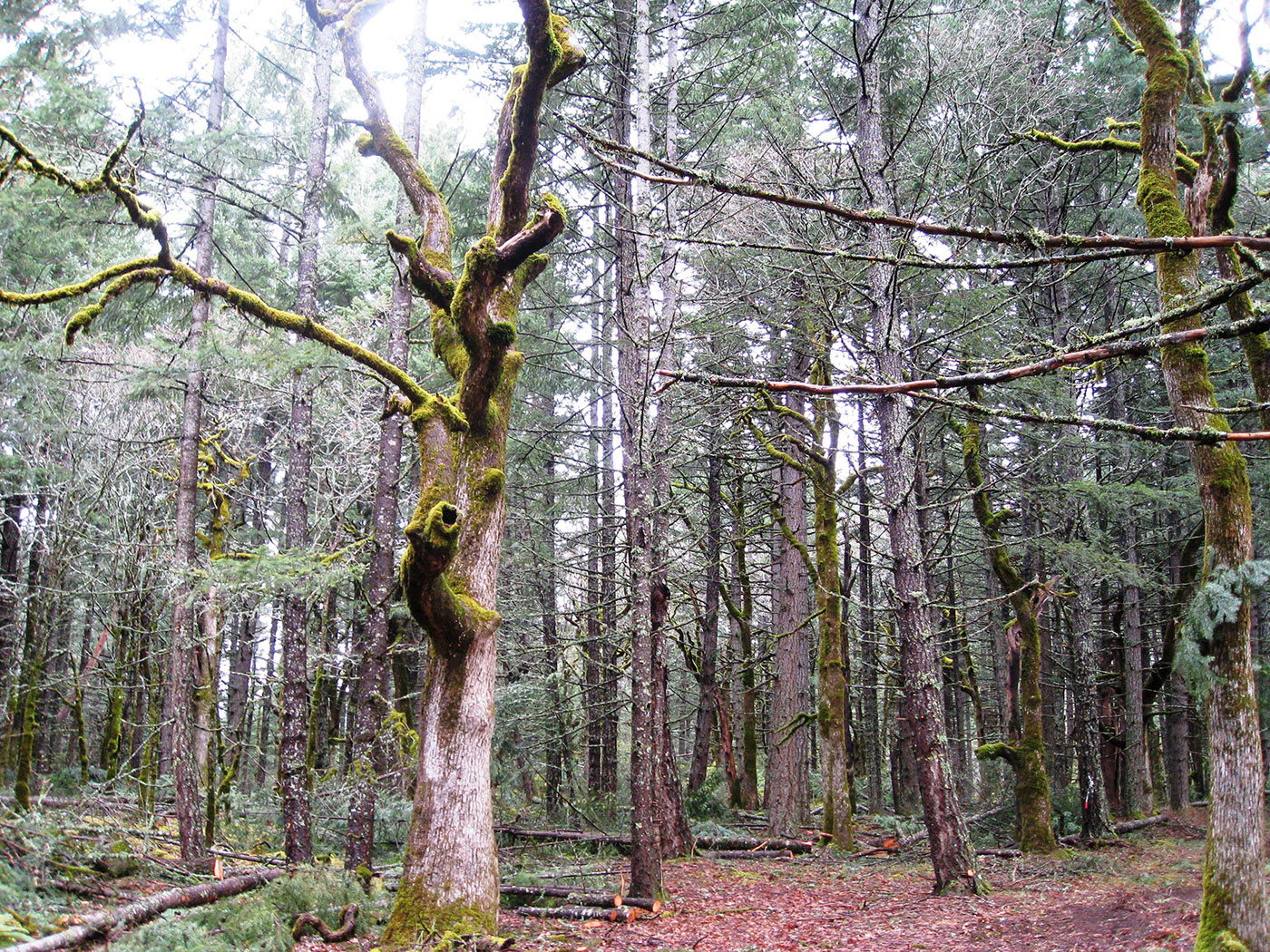
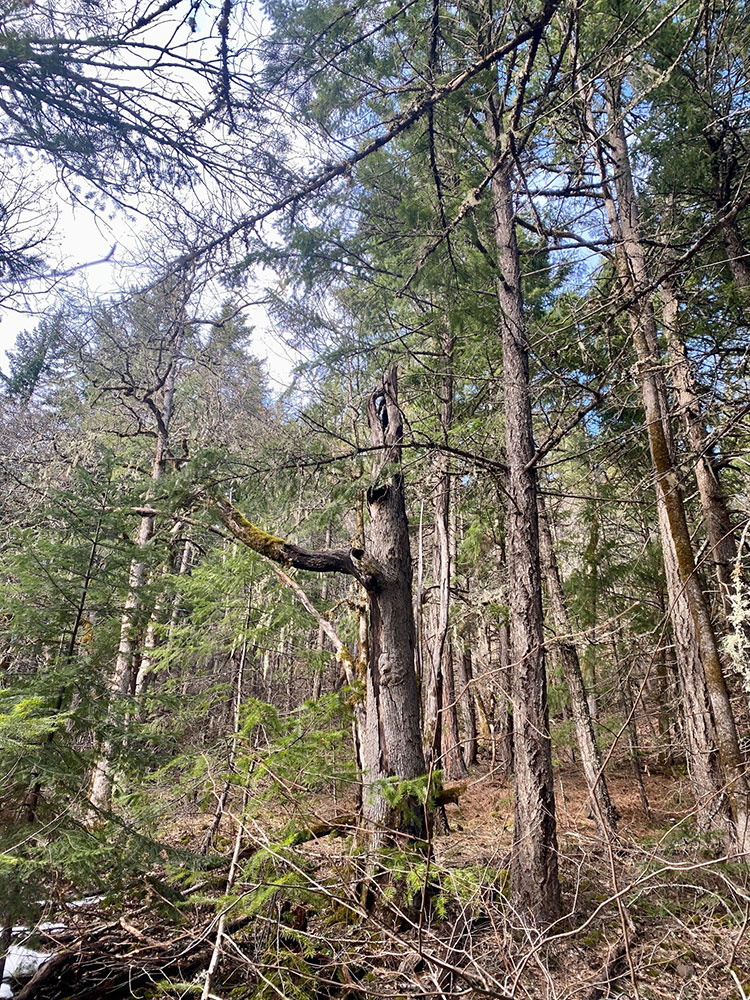
With over a century of fire suppression, conifers (primarily Douglas-fir, juniper, and ponderosa pine) are shading out oaks, compromising the older oaks. As conifers develop into larger trees piercing the oak canopy, the less shade tolerant oaks begin to lose lower limbs no longer receiving sufficient light, leaving cavities or scars on the trunk of the oak and dead limbs on the ground. A completely overtopped oak will begin to die.
Small conifers can function like a ladder conveying fire into the crowns of the oaks. Thinning or removing the conifers lowers the risk of crown fire and increases sunlight and water availability. Early-stage conifer encroachment, when conifer seedlings are emerging beneath the oaks, is the easiest time to intervene because the conifer trees are small and their removal generates less slash, or cut material, which must be dealt with by burning or chipping. Once conifers have reached a certain size, they may become commercially valuable, depending on site conditions, haul distance, and market demand. Removing conifers at this stage may pay for itself or even generate revenue. For more on conifer removal options, including wildlife habitat considerations, see ECOP Guidance on Fire.
How many conifers should I keep?
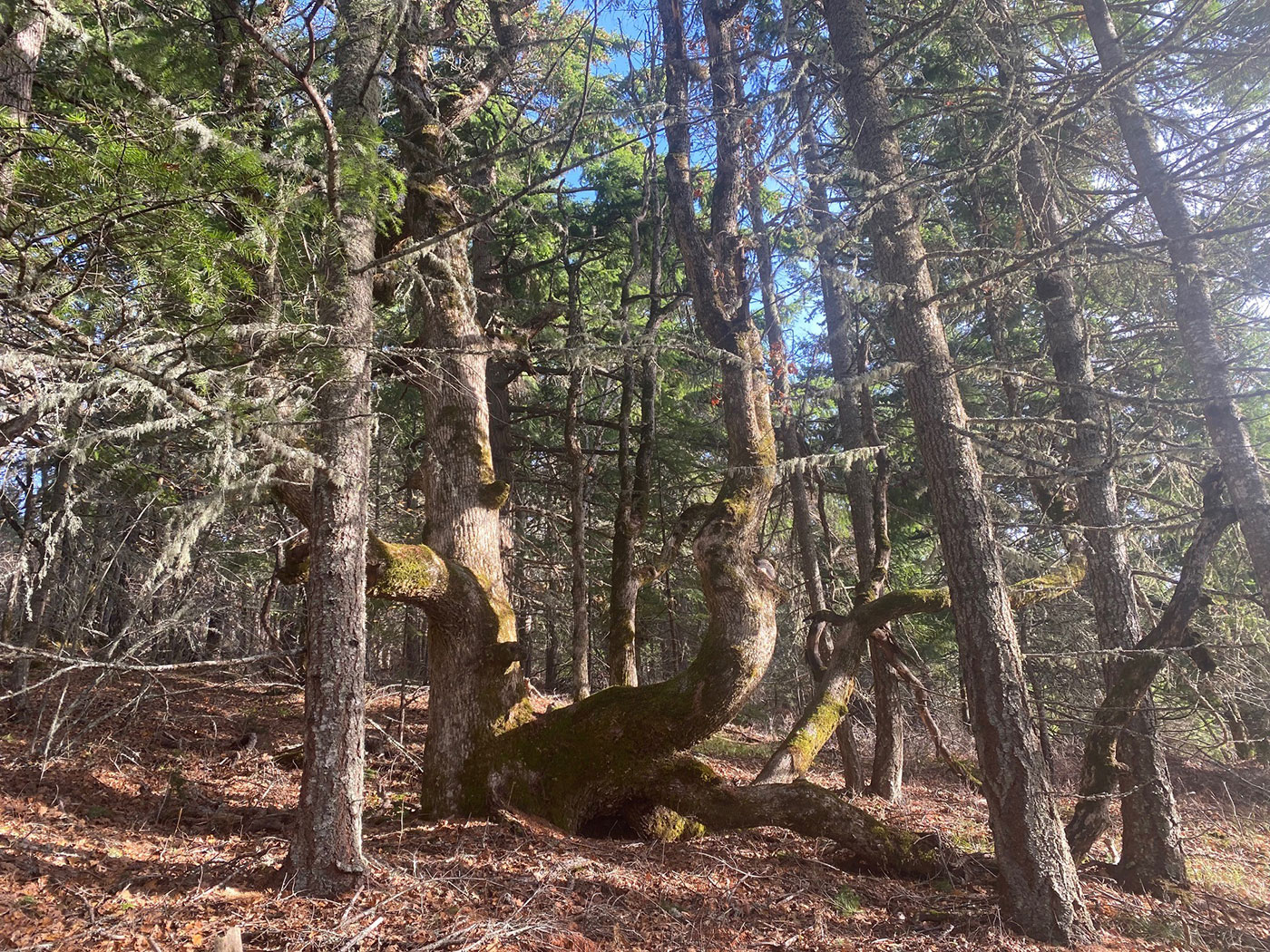
Oaks evolved alongside conifers, the ratio of each determined by climate, fire, and animal behavior, especially the behavior of people! Deciding what balance is right for your forest is based on your management goals, how the trees on your site interact with one another, the unique features your site supports, and the rarity of those features on the larger landscape. Old oak and conifers take centuries to develop and support a wide variety of plants and wildlife. Characteristics like broken tops, dead limbs, cavities, sloughing bark, and nests demonstrate the progressive enrichment occurring as trees age, each feature offering habitat for an ever-growing variety of insects, wildlife, and plants. Thin around these elders. They are irreplaceable... at least for centuries. If one of your top management goals is providing wildlife habitat, you may consider keeping the occasional conifer with mistletoe as these trees are favored by wildlife such as western gray squirrels. If you keep mistletoe infested trees, don’t keep any conifers around the infested tree to minimize pest transfer.

Conifer encroachment treatment: Consider removing conifers shading oak, as shown in the example above. If you are choosing which conifer trees to keep around an oak, prioritize larger or older conifer trees. Focus on removing conifers growing to the south and east of the oak to maximize the additional sunlight the oak will receive.
Dealing with slash
Slash left on the forest floor after limbing, thinning, or commercial logging adds bulk to ground fuels which can contribute to higher than desired intensity of future wildfire. Some kinds of slash are also breeding sites for bark beetles. For more guidance on proper slash disposal, see the Oregon Department of Forestry (ODF) fact sheet on slash management.
Are the oaks too far gone to save?
Despite simply standing there, a tree does explore its environment in pursuit of resources, expanding its root area and developing epicormic branches (branches that emerge from dormant buds in the stem) when resources become available. Most oaks will respond to a change in resources. A general rule of thumb is that the tree must have at least 10% of its crown green and leafy to be viable, but we have seen oaks with less than 10% live crown still producing leaves.
Remember oaks grow slowly, so their response following treatment will be gradual and may take years to observe. Dead limbs will not generate new leaves, so the tree’s overall shape may not change a whole lot after removing conifers. However, live portions of the tree may leaf out, improving vigor.

Can I hurt an oak by releasing it?
While studies have shown oak release treatments (i.e., conifer removal) have little to no negative side effects on released oaks, oaks in very dry, windy, or more exposed sites may not tolerate sudden exposure to increased wind or aridity following conifer removal. Some advocate for a slower approach on windy or exposed East Cascades sites, repeating treatments over time rather than completing the full treatment at once, to reduce stress on the oaks. While we cannot always anticipate how any individual oak will respond to change, we know it cannot persist in the shade, so err on the side of release!

PRO TIP: If you’re worried about physically damaging your oaks while removing conifers, consider using a feller buncher, which can control the direction a tree falls when cut, or girdling conifers to create snags.
Check out ECOP’s brochure “Fire and Your Landscape” for more information on conifer encroachment in East Cascades oak habitats.
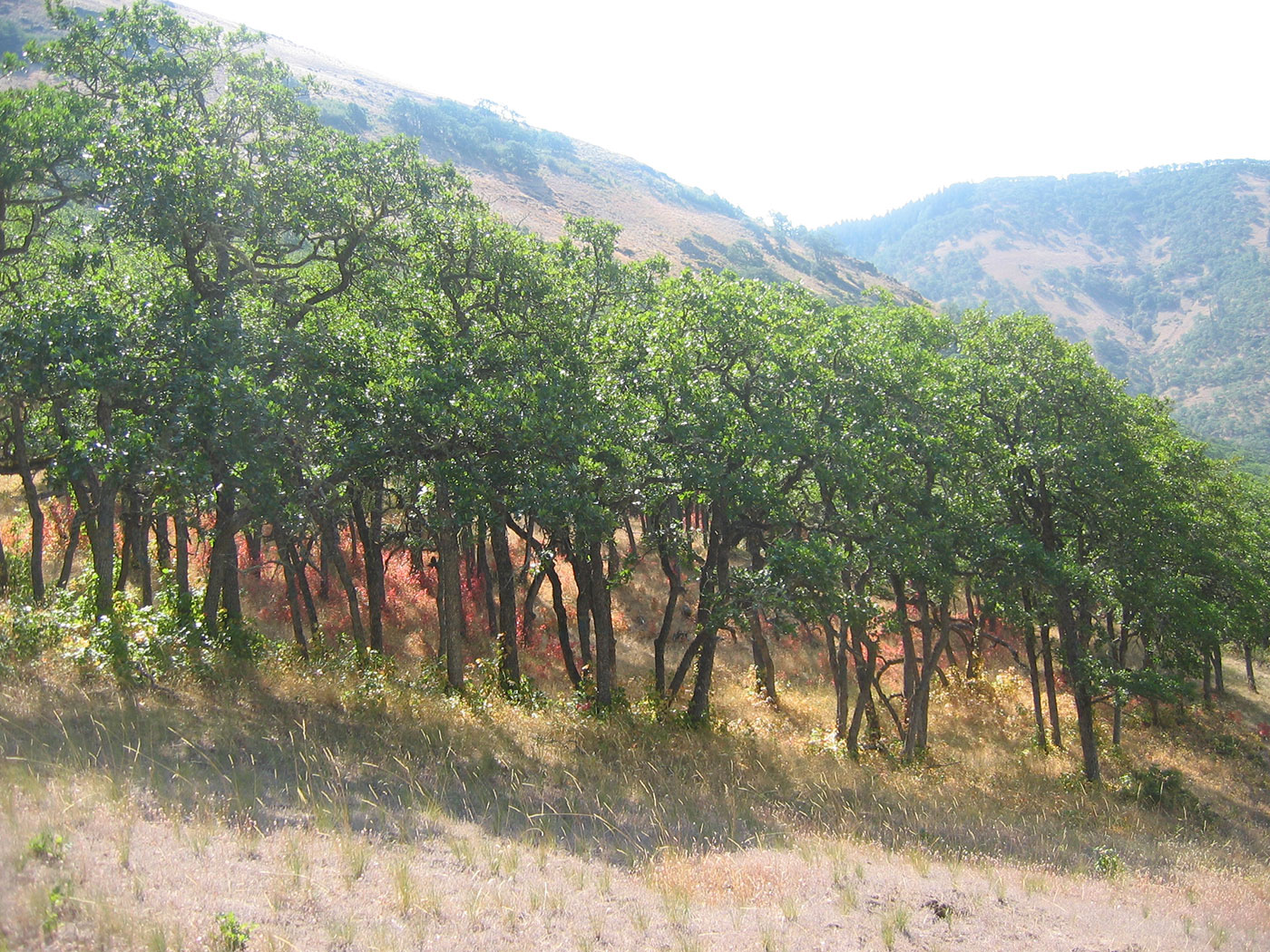
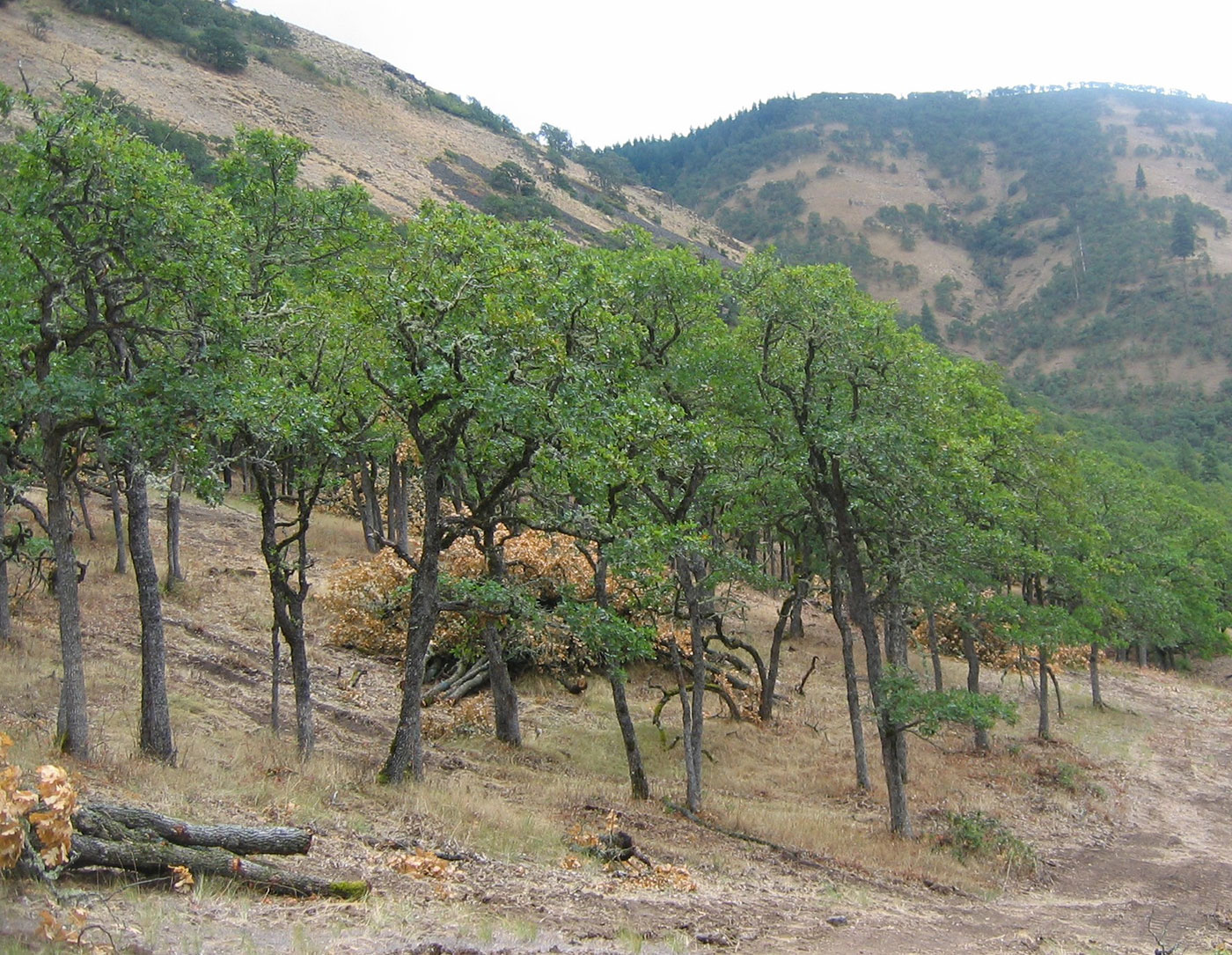
Columbia Land Trust's Dillacort Creek Natural Area oak thinning: Pre-treatment photo on the left, immediately post cutting on the right. This thinned stand is healthy and thriving 20 years after treatment, but undesired growth of sprouts from cut stumps continues across the site. See below for more on stump sprouts.
Thinning oaks
When to thin?
Do oaks exert competition pressure against one another, or are they cooperative? When should they be thinned? When might higher stem densities have a protective effect? As mentioned above, trees are opportunists, responding to resource availability and stressors like wind, humidity, competition, or fire, but some scientific evidence suggests they also share resources through fungal networks in the soil. Knowing what your goals are (i.e., do you want fewer, larger trees or more, smaller trees) is critical, as is knowing your site history and conditions.
What indicators might suggest thinning could be productive?
-
If tree density has noticeably increased
The growth form of the larger, older oaks in your stand indicates the density of your woodland was historically much lower. Look for larger oaks with large dead limbs and old dead limb scars on the lower trunk, surrounded by smaller, younger, straighter oaks.
-
If soil water is limited, competition may be impacting the vigor of your trees
This is why trees tend to be shorter and shrubbier where the air is drier or soils are thinner, and why some areas experiencing increasing drought have trees with reduced crowns. See “Assessing the health of your trees” for more information on drought stress. Availability of soil water may also contribute to how tall or large a tree grows. For trees like pine and fir, sufficient soil water helps them generate pitch to pitch out invading insects. Thinning conifer stands can help improve the vigor of the remaining conifer trees. The same may be true for oak, but practitioners are still trying to understand the dynamics at play.
Dig deeper:
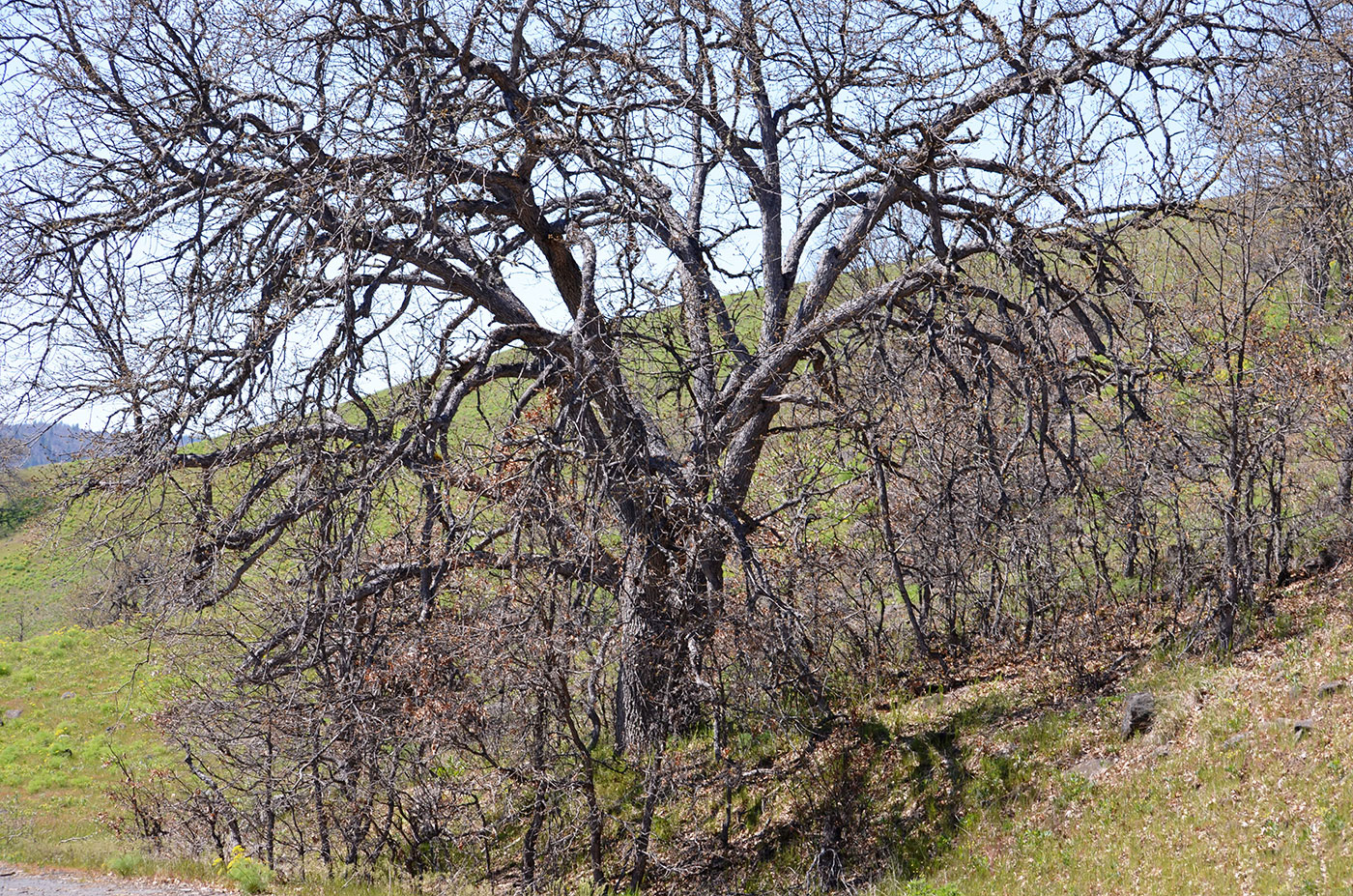
In the absence of high frequency, low intensity fire, seedlings grew under the oak above. The parent tree’s shade helped retain enough moisture for acorn germination but did not block all available light, allowing tall, spindly seedlings to develop beneath. The large oak below is surrounded by another cohort of smaller, younger, straighter oak. We can discern by looking at the growth form of the older tree that it developed in a more open grown condition – oaks simply don’t develop large limbs in shade. Favoring sunlight, oaks grow upwards, spindly.
What indicators might suggest thinning could harm oaks?
-
Trees with Krummholz growth forms
Trees with Krummholz growth forms – limbs growing away from a persistent, strong wind and appearing “wind swept” – are responding to a strong environmental stressor. Oaks growing close to one another are likely sheltering each other. Removing oaks in these conditions could compromise the rest.
-
Oak tree density may have a protective effect against drought
In dry climates, drought can force a tree to keep its stomata closed to prevent drying out and consequently stalling photosynthesis, which is how a plant makes food to continue growing. Successive years of drought can thus lead to starvation. In these extreme conditions, dry air may be just as dangerous as dry soil. Thinning the trees to reduce competition for soil water, a common strategy to reduce competition for resources, may expose the trees to increased sun and wind. If dry air is the primary problem for oaks, and not soil water, thinning could be counterproductive. Limbing in these contexts to remove ladder fuels could be a strategy to reduce the risk of crown fire without significantly impacting humidity.
These concerns led to ECOP partnering with Oregon State University, Cal Poly Humboldt, and Natural Resources Conservation Service to complete an “Oaks on the Trailing Edge” monitoring project in oak stands where thinning treatments are occurring at different sites in low moisture environments. Understanding more about these dynamics will help us make more informed management decisions, especially as the climate warms and droughts intensify. We are grateful to the Oregon Watershed Enhancement Board and Oregon Department of Forestry for supporting this work.
Controlling oak resprout
There is still much to be learned about thinning oaks. One thing is for sure, if you need to thin oaks, many of the cut oaks will stump sprout. Sometimes managers want resprout to provide fresh browse for wildlife. But if your goal is to reduce the number of oak stems in your forest, or to prevent the eventual development of more shrubby, clonal oak, you must spray any trees that resprout with herbicide or commit to long term pruning.
Pro Tip:
Be cautious when applying herbicide to cut stumps of clonal oaks. Herbicide applied to one or more cut stumps in a clone may affect the other live trees in the clone, although more field testing is needed.
Resprout control method pros and cons
Cut and Squirt
Method Description:
Within 1 minute of cutting the tree, paint the cut surface with herbicide (some partners have had success using triclopyr).
Pros:
Very effective, immediate, and permanent control. Low likelihood of killing non-target vegetation.
Cons:
Labor intensive for sawyers who must cut and then spray. Potentially wasteful if cut stumps were not going to resprout to begin with. Herbicides can be toxic to non-target organisms, including people, and may persist in the environment.
Post Harvest Spray
Method Description:
After the tree resprouts but before the sprouts exceed head height, spray the sprouts with herbicide (some partners have had success using imazapyr with surfactant)
Pros:
Very effective and permanent control. You only use herbicide on trees that actually resprout. When sprouts are full, not much non-target contact.
Cons:
Labor intensive. You may hit non-target vegetation with drift. Herbicides can be toxic to non-target organisms, including people, and may persist in the environment.
Grazing
Method Description:
Allow domestic livestock to eat the sprouts (and other edible forage).
Pros:
No chemicals required. Domestic animals get forage. Careful herd management and animal selection can help secure more desirable results.
Cons:
Will not control sprouts, only suppresses them. Inconsistent results based on the appetites and preferences of the animals. Domestic animals often prefer native grasses and flowering plants over the resprouting oak, so grazing can hurt non-target organisms before it results in suppression of sprouts.
Mowing or Masticating

Method Description:
Mow the sprouts with hand tools or saws, a masticator, or other machinery.
Pros:
No chemicals required. Easy to implement on larger scales with machinery. Can quickly rearrange fuels for prescribed burns.
Cons:
Suppression, not control, is ever achieved. Being selective about what is cut can be difficult depending on the size of the machine or tool and operator skill. Selective methods using hand tools are time consuming. Non-target vegetation is almost always affected. Soil disturbance and coarse wood inputs can cause weeds to proliferate. May be highly disturbing to wildlife.
Pro Tip:
If using the cut and squirt method, it’s helpful to mix herbicide and then pour into spray bottles that can hang on sawyer’s belts or pants.
Planting oaks
Jays and squirrels do a great job of planting Oregon white oaks. A single jay can carry 5 acorns at a time in its throat pouch and cache as many as 5,000 acorns in a season! If you’d like to plant oaks, we recommend planting acorns just like they do (well, except for the throat pouch part). Oaks invest growth in the taproot before the crown. Starting from seed is slow. Oak seedlings can persist for decades before substantially increasing their height. Plus, acorns cost nothing to collect.
-
Plant acorns
Check out ECOP’s acorn planting guide for information on collecting and planting acorns.
-
Mind the taproot
When planting plugs or seedlings, mind the taproot! Oaks grow an incredibly long taproot very quickly which makes it challenging to transplant them. Consider this planting guidance from the Pacific Northwest Research Station, which shares what worked with Oregon white oak seedlings in the Puget Sound region.
-
Care
It can be tempting to water or fertilize your freshly planted oak. This may be necessary for plants started from plugs or containers that are sitting in imported soil, but Oregon white oaks are uniquely adapted to conditions in the East Cascades. It is likely that your oaks, if they are starting from seed, already have everything they need to succeed. Slow growth and summer drought are part of their natural life cycle.
-
Insects
Watering and fertilizing can increase the vigor of nonnative grasses, and some suggest that it can increase the presence of sucking insects like aphids which may target your oaks.
-
Protection
Place cages around young oaks to protect them from deer (or even beaver in riparian areas). Surround them with mulch to prevent competition from grasses and promote soil water retention.
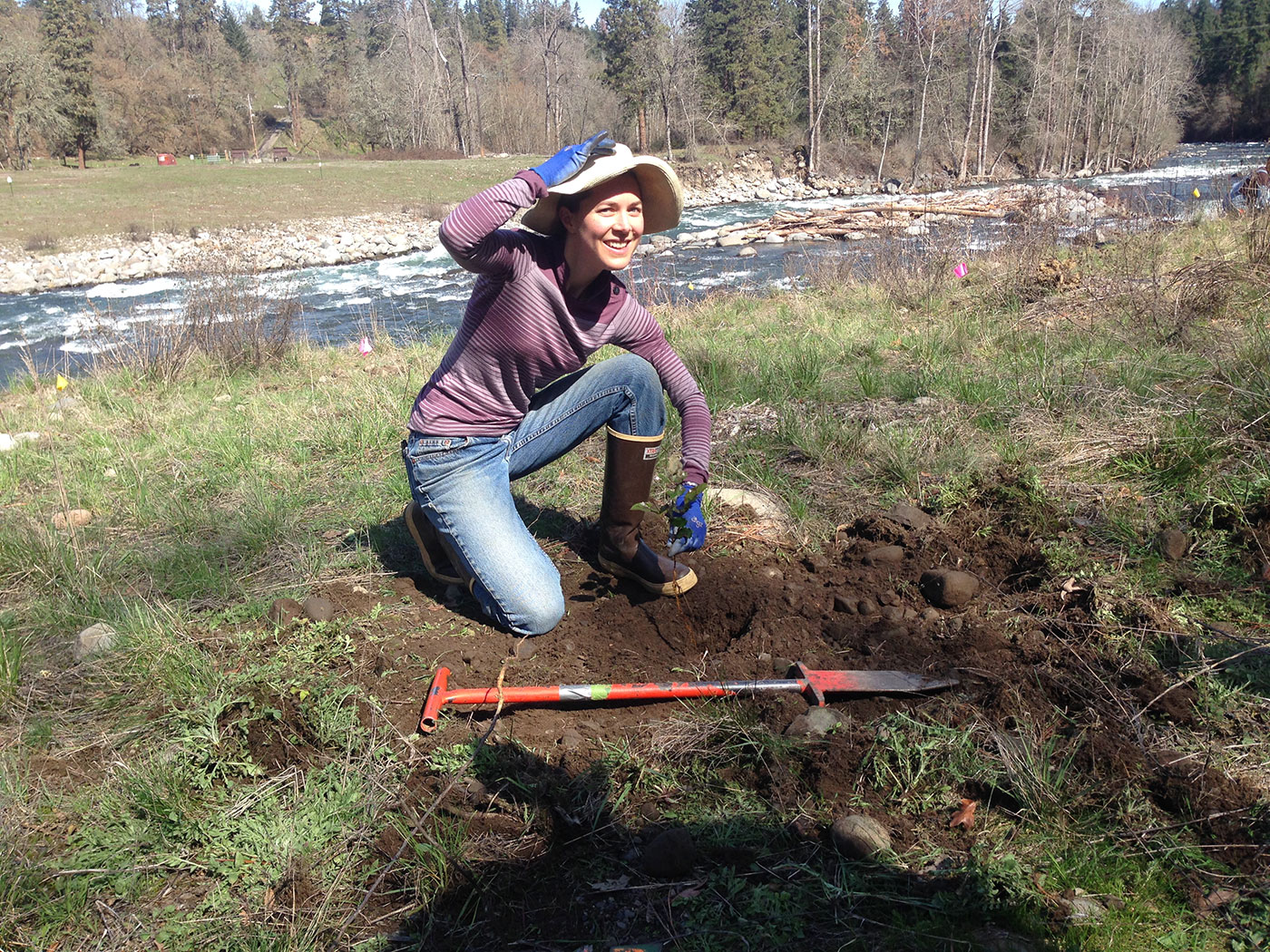
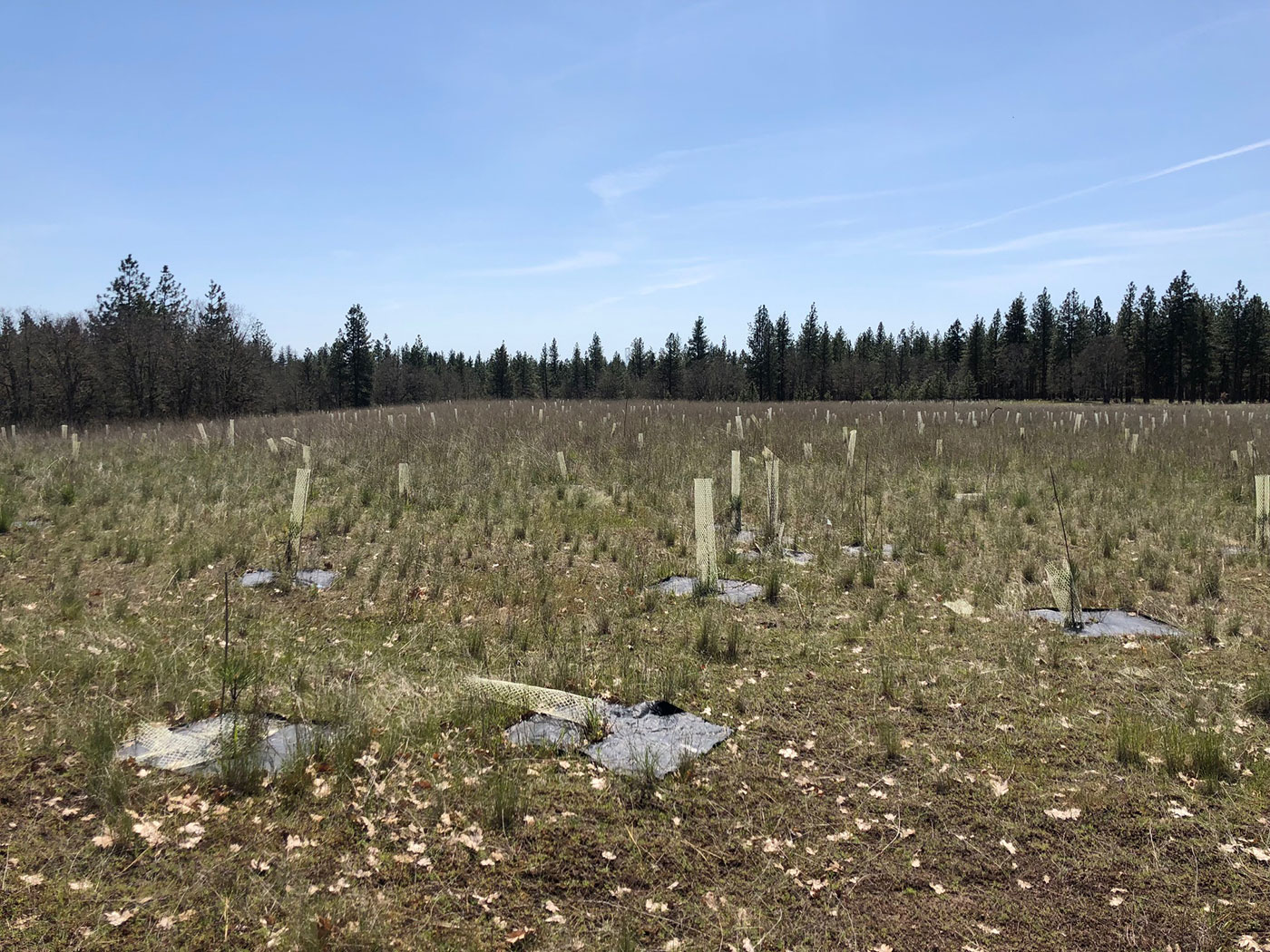
If starting from acorns, it can be years before you see meaningful growth, and many may not start at all. Plant several acorns for every oak you want to grow and thin them out later. Remember, acorns provide the best plant protein in the woods. We know of one planting project completely decimated by clever seed predators who figured out flags had been used to mark the location of the acorns! Ah well! Feeding wildlife is one of the reasons we love oaks, after all.
Mastication
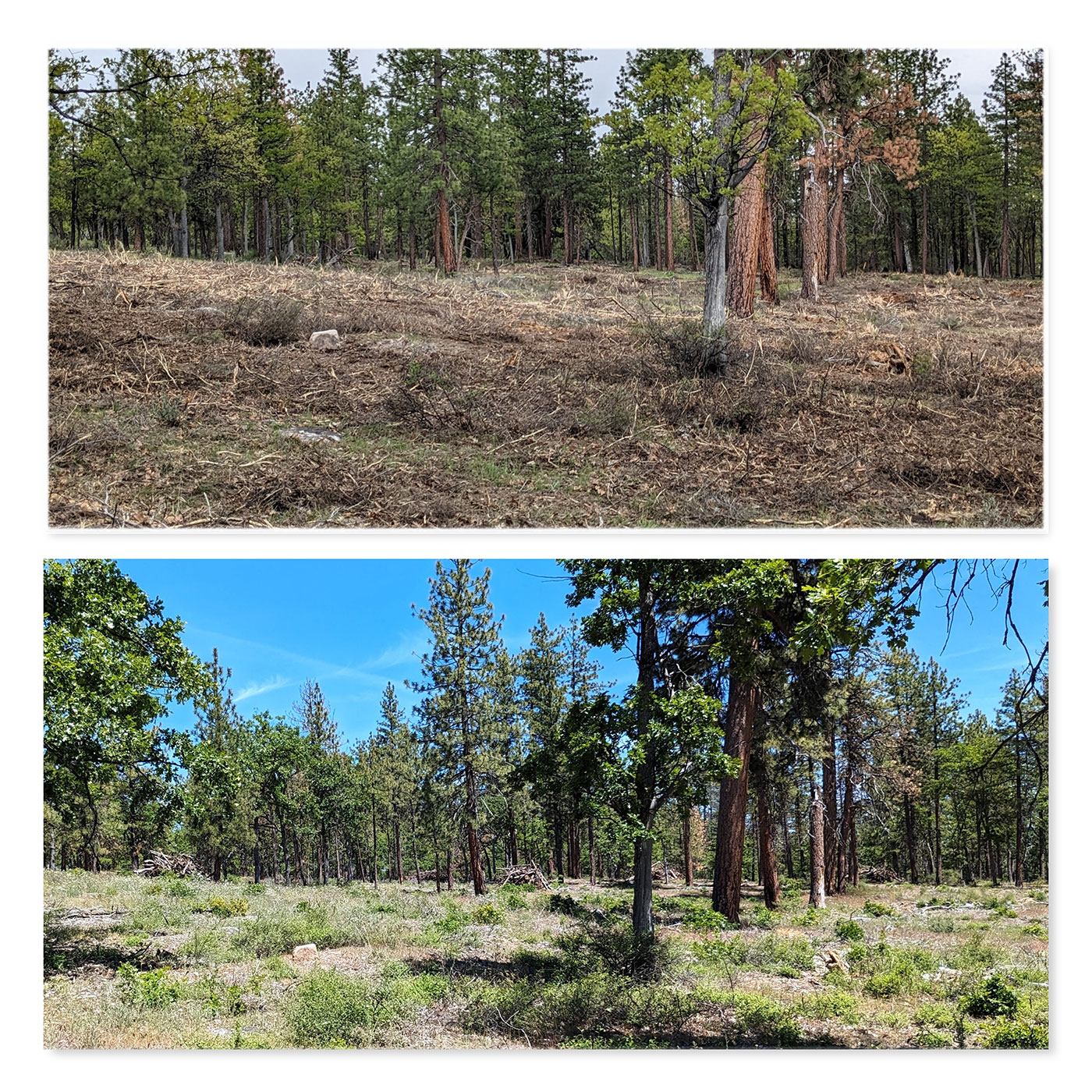
Mastication is a forest management tool where heavy equipment (tractor, skid steer, excavator, or dozer) mounted with a mulching head is used to grind vegetation into smaller pieces typically left on site as mulch. Mastication is usually undertaken by a single operator in a large machine, and as such can be deployed efficiently at a large scale. Land managers use this tool with the goal of converting ladder fuels to surface fuels, thereby reducing the risk of crown fire, or to thin the number of trees and shrubs, reducing competition.
Beware— oaks and other hardwoods might resprout following mastication, committing the manager to future mowing!
Masticating understory vegetation reorganizes fuels, resulting in a concentration of fuel on the forest floor in the form of chips or shredded coarse wood. These materials can fuel future fires (prescribed or wildfire) or lie in situ and decompose. The residence time of fire, or how long fire burns in one place, in a heavy bed of chips will likely be longer and generate more heat than typically generated by grasses and flowering plants. Piloting this approach is a good idea to make sure outcomes are desirable. When left in situ, decomposing chips can alter soil chemistry and hydrology. A heavy bed of chips might also act as a physical barrier to plant germination, providing instead a surface for hardier plants to seed into (often weeds). The tracks of masticators can expose soils, providing opportunities for weeds to establish, or, if created in an area already infested with weedy plants, an opportunity to expose soil and seed in native plants.
Mastication is a relatively new management tool and managers are still working to understand the effects. For more information, see “Is Mastication Right for Your Site? Science-Based Decision Trees for Forest Managers” published by the Rocky Mountain Research Station. And share your own observations with the ECOP community!
Protecting oak habitat features
Oregon white oak is uniquely suited to provide habitat features of a snag, or a dead tree, while they are still living! When the large limbs of older trees break off due to wind, ice, or under their own weight, fungus is introduced through the resulting wound. These fungi typically consume the dead wood at the center of the tree, leaving behind a vacant cavity but not generally hurting the living tissue of the tree. The resulting cavities are incredibly important for nesting and sheltering wildlife. Dead limbs and leaf litter below the oaks create habitat for invertebrates – the base of a food chain and important for nutrient cycling – and buggy dead limbs and lichens provide food for woodpeckers, songbirds, and winter forage for deer and elk. When completing treatments on your site, consider leaving some snags, especially large ones, and some downed oak limbs to provide habitat. For more information on protecting oak habitat features, view this video from Oregon Department of Fish and Wildlife on oak habitat restoration in the East Cascades.
How to protect oak habitat features when mechanically reducing fuels or thinning:
-
Retain large oaks including standing dead and dying trees. Gaping holes and broken limbs do not mean oaks are sick! These features have evolved over millions of years to provide a rich nursery of food and shelter for hundreds of species of plants and wildlife. Large diameter live limbs touching the ground do not need to be removed. These limbs are not likely to act as ladder fuels.
-
To learn what to look for in East Cascades conifer species, reference WA DNR’s “Identifying Old Trees and Forests in Eastern Washington.”
-
Instead of removing all trees, create snags when thinning. According to the oak management guide the Bureau of Land Management produced for landowners, “Oregon white oak/Douglas-fir forests typically average more than 4 snags (diameter larger than 10 inches DBH) per acre.” There were likely fewer snags per acre in places historically experiencing frequent fire, but snags, especially larger snags, provide important habitat for many bird species and were certainly present in fire-adapted places.
-
Remove dead limbs near structures or features you’d like to protect from wildfire. Elsewhere, you can leave patches of brush, downed wood, snags, and leaf litter for wildlife foraging, nesting, and denning sites. For more on the stunning diversity of insects oaks support with their leaf litter and downed woody debris, read Doug Tallamy’s, The Nature of Oaks, or listen to his presentation to ECOP.

For information on using prescribed fire to reduce fuels, see our management guidance on fire.
Thank you
Thank you to our gracious ECOP members who reviewed this management guidance document and provided important feedback.
Last updated: April 2025