
Guidance on Fire
Managing Oak Habitats in the East Cascades



Dig Deeper:
OAK MANAGEMENT PATHWAY
This page is a tool that supports Step 2: Make a Plan within the Oak Management Pathway.

Fire is a hot topic these days!
Oaks are uniquely adapted to fires, having evolved in the presence of fire for millions of years in the Pacific Northwest. The waxy leaves and thick bark of oak resist heat and protect sensitive buds. And when a tree does burn, it might sprout back from dormant buds!
Let's dive in!

A history of oak and fire
Lower intensity fires in the East Cascades landscape historically happened frequently, and the people, animals, and plants living here were attuned to its rhythms. Dry, hot summers and gusty winds carried flames ignited by summer lightning storms across tens of thousands of acres annually in the Columbia River Gorge and East Cascades. Scientists and indigenous elders estimate these fires burned every 5-25 years, sometimes lit intentionally as a land management practice by people to favor certain plants or woodland conditions, a practice called cultural burning. Dr. Andrew Merschel’s recent work to reconstruct the fire history on the east side of the Mt. Hood National Forest bears out this same story.
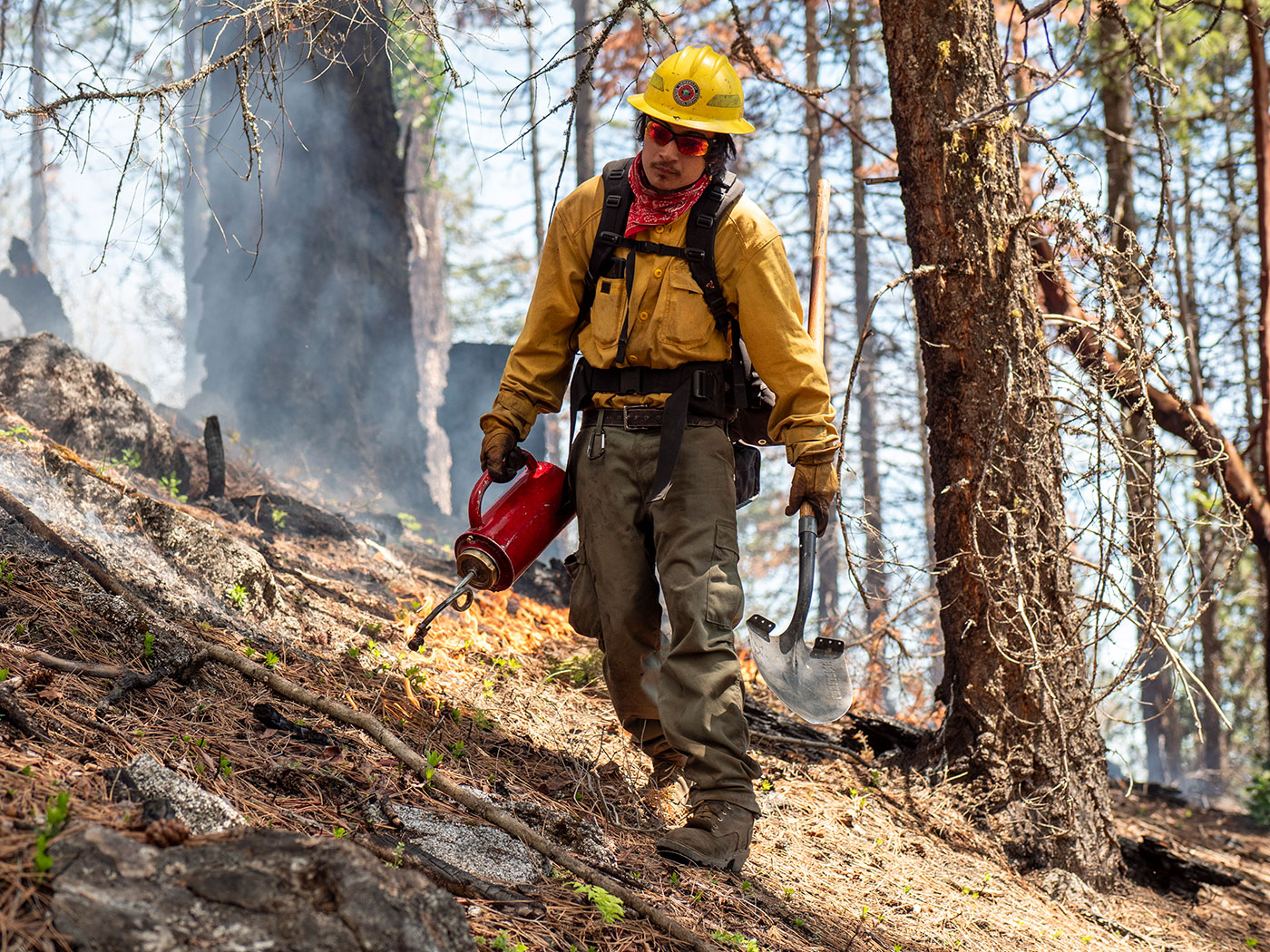
A change in relationship with fire occurred after the Treaty of 1855 , which forcibly removed indigenous people from their homeland, severing lifeways that facilitated frequent, lower intensity fire. Over time, a culture of fire suppression emerged to protect permanent settlements, forest products, and agricultural crops. In the absence of regular fire, trees, shrubs, and other plants accumulated across the landscape. Subsequent wildfires had more fuel to consume and so burned hotter and spread further. These wildfires have been exacerbated by intensifying drought and heat associated with climate change, and declining forest health.
It may well be time to consider a different relationship with fire: one informed by the original stewards of this land, deploying the practical skills, knowledge, and hard work of the people who live, work, and play today in this landscape.
To learn more about indigenous burning, explore ECOP partner, Lomakatsi Restoration Project’s website and video “Tribal Hands on the Land”. And you can hear more indigenous voices in these videos collated by Mt. Adams Prescribed Burn Association: Indigenous burning resource library .
A number of ECOP partners from the Mt. Hood and Gifford Pinchot National Forests, Oregon Department of Forestry, Columbia River Gorge National Scenic Area and members from the Mt. Adams PBA, have been working to implement prescribed fire across the region, some of them for decades. Some of their learning is represented below.


What is cultural burning?
Cultural burning is an act of reciprocity. It’s an ecocultural practice of various indigenous groups that involves the use of low to moderate intensity fire as a means of cultivating materials, food, and spiritual nourishment. It also helps create habitat and restore nutrients and moisture as part of the natural cycle of the landscapes these peoples have known since time immemorial.
Ecological role of fire in East Cascades oak landscapes
The frequency, duration, and intensity of fire a landscape experiences over time shapes plant and animal communities as well as ecological processes. Learn more about fire behavior from Oregon State University Extension.
Because low to moderate intensity wildfire and cultural burning have been a regular feature of the East Cascades oak landscape since time immemorial, many plants and animals here are adapted to fire. Some seeds, like manzanita seeds, only germinate after being exposed to heat or smoke.
Oregon white oak requires fire to maintain its preferred growing conditions. Oaks need light, and in the absence of fire, fast growing conifer species like Douglas-fir and juniper can proliferate and overtop oaks. This is referred to as conifer encroachment. Regular fire intervals promote lower density forests by consuming small trees and seedlings, allowing more light on the forest floor. As a result, many species of wildflowers, shrubs, and native bunchgrasses flourish under the open canopy. In turn, these plants provide cover for insects, supporting thriving bird populations and offering forage for deer and elk.
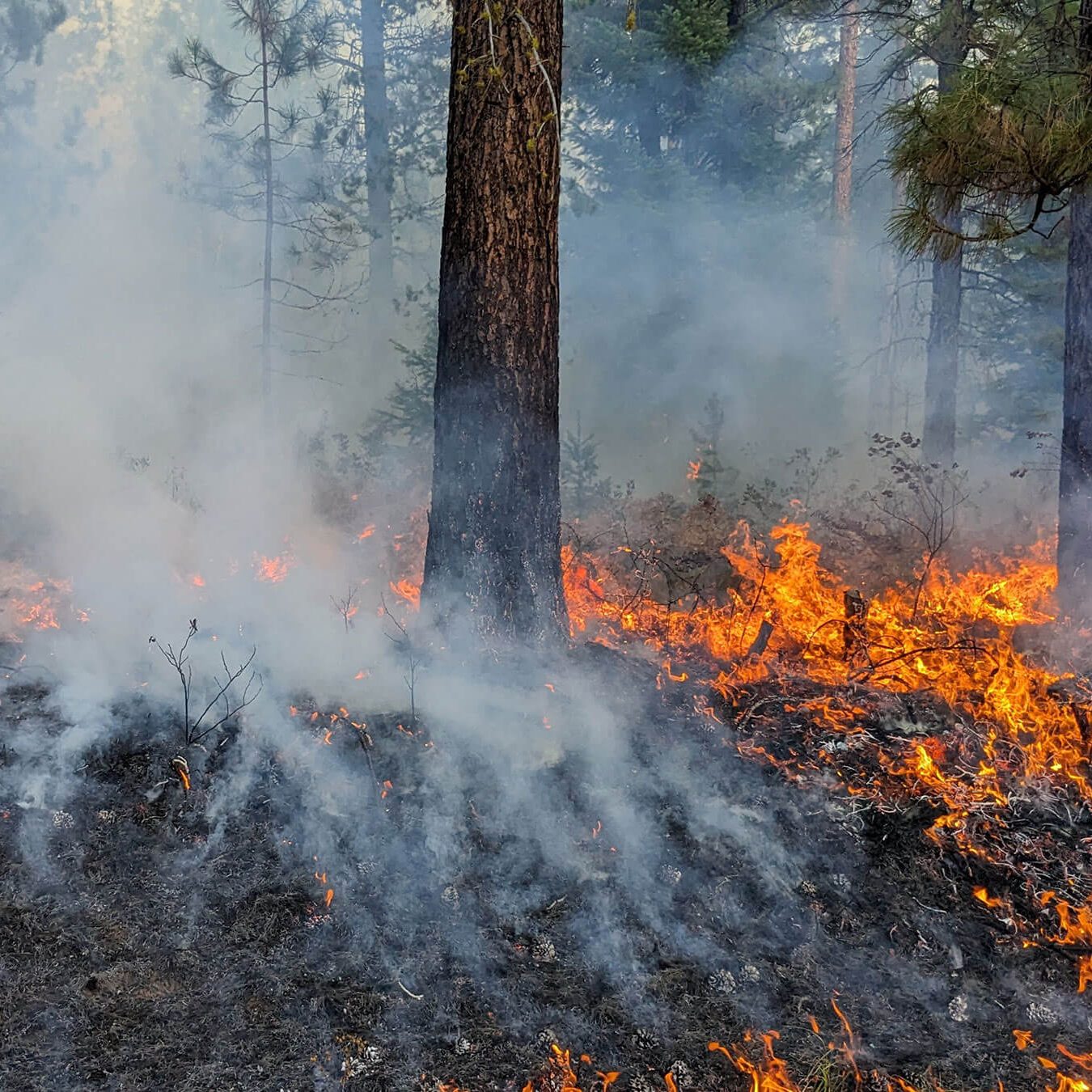
Fire events can stimulate important physiological processes in fire adapted plants, such as reproduction and defense against pests. For example, the number of resin ducts in ponderosa pine increases following fire, which can improve the tree’s ability to “pitch out” or expel invading wood boring insects it would otherwise be susceptible to.
Fuels reduction
Fuels reduction is the practice of removing accumulated dead and live fuels from your forest. These efforts can reduce the likelihood of a higher intensity crown fire (a fire in the canopy of the forest). Fuels reduction is an important management technique but may require a staged approach or more than one treatment to be effective. Fuels reduction is not often the sole objective of a manager, so it is important to consider the full scope of your management goals when designing your fuels reduction treatment and to understand how your approach may affect those goals.
Fuels reduction treatment approaches include:
-
Mechanical removal of fuels using hand tools like chainsaws and pruners.
Learn more about this technique here- Guidance on the Trees: Improving oak vigor
-
Mechanical removal of fuels using heavy equipment like masticators.
Learn more about mastication here- Guidance on the Trees: Mastication
-
Prescribed burning to remove accumulated fuels.
See below, “Fighting fire with fire”
Treatment Types: Pros and Cons
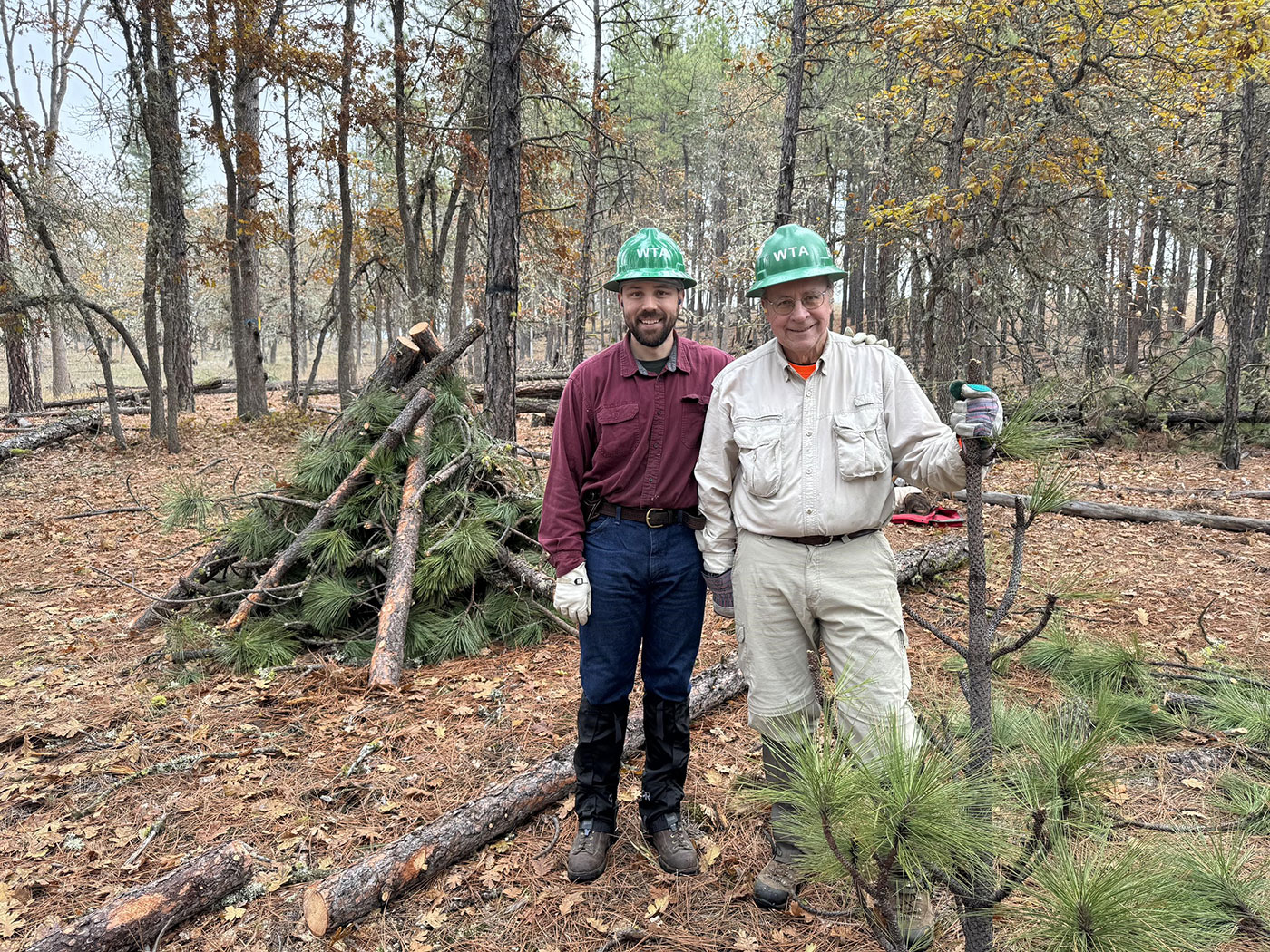
Hand thinning, pruning, and limbing using chainsaws and pruners

Pros:
- Operator can be highly selective in what gets cut/removed.
- Can be deployed by small private landowners.
- Ground disturbance is typically limited to slash disposal areas (burn piles), minimizing risk of weeds.
- Collateral damage to other resources is minimized.
- Work can be implemented year-round (being mindful of attracting beetles with fresh slash when sap is flowing).
- If oak are a target for removal, operator can apply herbicide to cut stumps at the time of cutting to control for resprout.
Cons:
- Time consuming, hard work.
- Scale of treatment is limited by crew size.
- Contractors may be hard to secure during fire season.
- Larger crews increase the need for supervision.
- Safety considerations for sawyers, especially when working with standing dead material.
Thinning and mowing using masticators or brush mowers, usually mounted on large equipment like an excavator, skid steer, or dozer.
Pros:
- Large machines with a single operator can cover a lot of ground.
- Can safely handle standing dead wood and larger material.
- Can be used to create a fuel bed where prescribed fire is going to be deployed.
- Can be used to improve seed-soil contact for native seed application (where equipment turns up soil) in areas already dominated by annual grasses.
Cons:
- Broad brush tool – can’t easily choose what to cut.
- Soil disturbance can create vectors for the spread of weedy species, especially if not seeded or sprayed following treatment.
- High levels of coarse wood inputs, if not burned, can change soil chemistry and alter plant communities, and may persist for years or decades.
- Employs fewer people and requires expensive equipment.
- Operations can be limited by weather (wet soils in winter and spring) and fire risk.
- May not be viable on steep slopes or on rocky terrain.
Prescribed fire: intentionally lighting fire to a prepared area.
Pros:
- Accomplishes multiple objectives: reduces fuels but also stimulates fire-adapted plant reproduction and plant health, recycles nutrients in soils, suppresses mistletoe, etc.
- With technical support from fire practitioners, can be designed to promote specific ecological outcomes.
- Reduces risk of high intensity fire in a way no other treatment type can by also removing leaf litter, duff, and woody debris and by stimulating plants to beef up their defense against invading insects.
- Economies of scale – the more acres treated, the less expensive it gets (to a point).
- State policy, funding resources, prescribed burn associations, and community support/social license are improving accessibility of burning on private lands.
Cons:
- Often requires significant land preparation prior to implementing.
- Requires significant technical support and resources. Contractors may be expensive and hard to secure, especially during fire season.
- Requires special permits.
- Inherent risk of escape generates liability concerns.
- Failure could damage the ability of other prescribed fire operations to progress due to changes in public acceptance or state and federal policy.
- Suitable weather windows are not guaranteed.
- Smoke needs to be managed.
- Can’t control outcomes at a fine scale: large, mature oaks with cavities and snags are vulnerable and need to be protected.
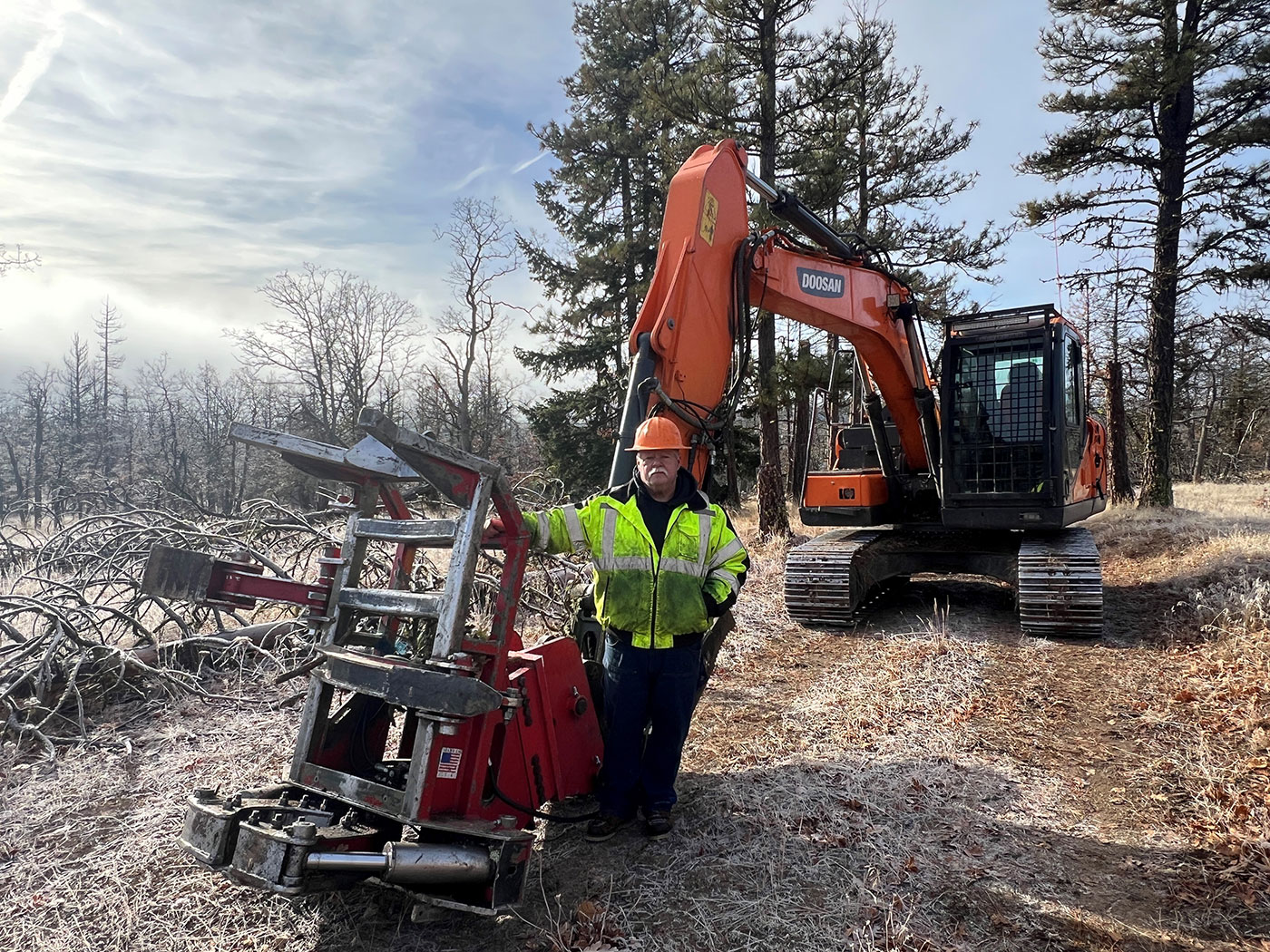
Case study: Mt. Hood Oaks fire resiliency
With OWEB-funding, a large private forest landowner in Wasco County, Oregon is conducting restoration treatments on 150 acres. Due to drought stress, this area is experiencing loss of ponderosa pines and the dropping of limbs in Oregon white oaks. To restore these woodlands and reduce wildfire risk, standing dead trees and excess downed woody debris will be removed from the landscape by piling and burning. Thinning treatments of both oak and pine will be implemented around large, healthy oak trees with the goal of increasing water availability in soils for remaining oaks.
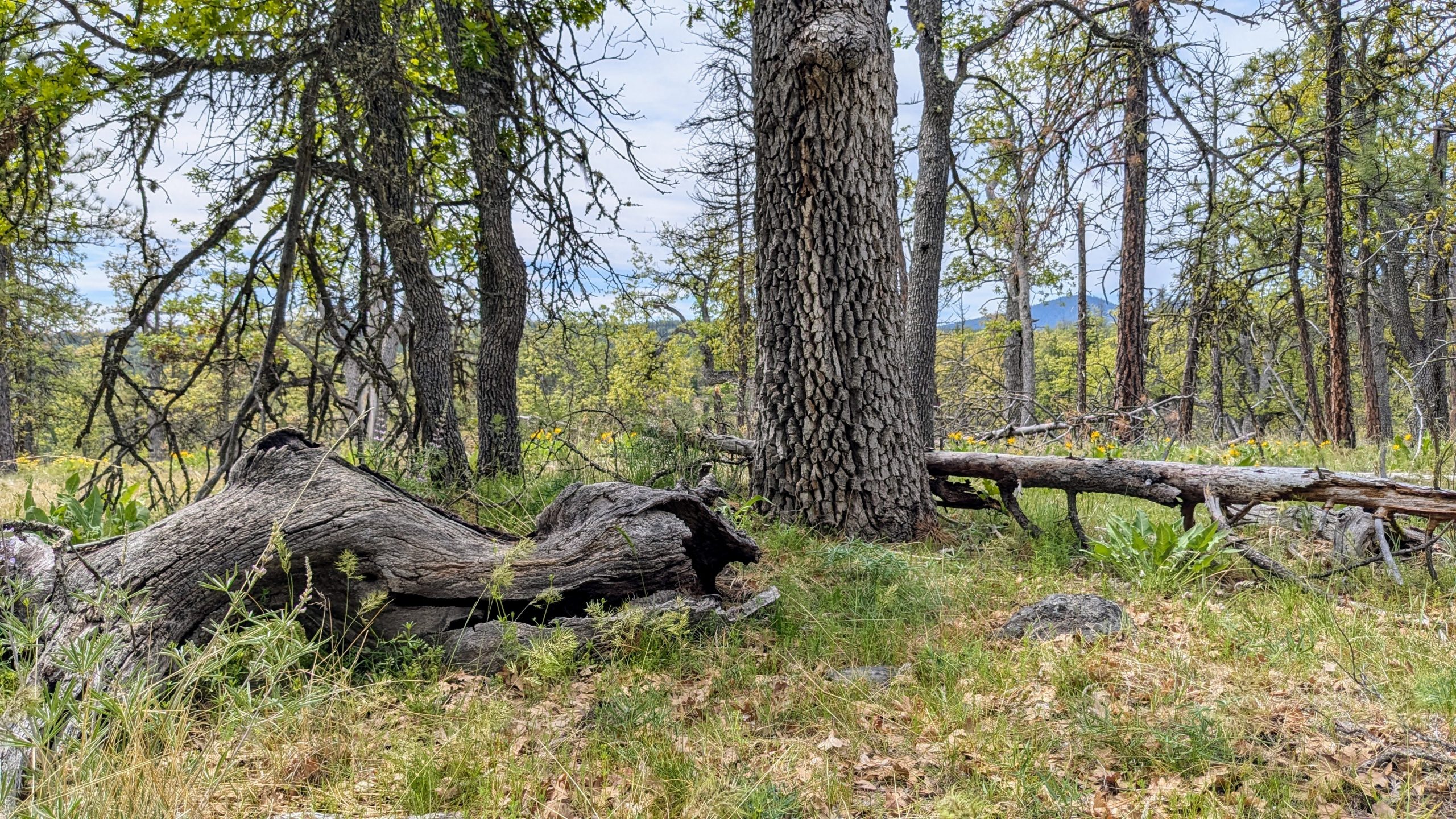
Finding balance – Ladder fuels and habitat
In the absence of regular low-intensity fire, there may be an increase in downed wood within your oak woodland or forest. However, large limbs on oak trees and the forest floor are drivers of significant biological richness. Your fuels reduction treatment may seek to balance the wildfire risk while also providing wildlife habitat. Prioritize keeping larger, more mature and clearly utilized snag and downed log resources when reducing fuels.
Cavities in oaks do not mean they are unhealthy! Cavities may have evolved to house the animals that oaks rely on for seed dispersal, and they support a wide array of wildlife. Avoid trimming or removing these features when engaging in fuels reduction treatments except when creating defensible space around structures.
For more information, check out:
Wildlife-Friendly Fuels Reduction in Dry Forests of the Pacific Northwest
Reducing fuels, improving forest health and enhancing wildlife habitat are common managementgoals on our private…
WA DNR Fuels Reduction and Improved Habitat
Try SLLOPPS (snags, logs, legacy, openings, patches, piles, and shrubs). This article from Washington Department…
Private landowners can reach out to WA DNR, Oregon Department of Forestry (ODF), Natural Resources Conservation Service (NRCS), or your local soil and water conservation district (SWCD) for cost share opportunities to help pay for fuels reduction work.
Recommendations to protect habitat
-
Use a patchy, clumpy approach to minimize wildfire spread while also retaining important habitat features.
Conduct more aggressive treatments near infrastructure and leave some pockets of denser shrub, snags, and large pieces of downed wood for wildlife farther from homes. These features support a variety of wildlife species, which are more beneficial when not immediately near human infrastructure.
-
Retain native, fire adapted species like ponderosa pine and Oregon white oak when possible.
Mature trees of these species are more resistant to flames than other species and naturally moderate fire behavior. Less fire tolerant trees, like Douglas-fir and western juniper, have proliferated in the absence of fire and your woodland may benefit from a reduction in the number of these trees. Consider keeping large, old trees of any species, particularly those with nests, as these tend to be limited on the landscape.
-
Consider retaining large, low hanging oak branches that have healthy foliage.
Oak trees can and do catch fire in extreme conditions, on steep, windy slopes, or when surrounded by other fuels. But we’ve also seen green oak branches just feet from flaming hot fuels resist ignition. Remove more flammable fuels from around these features and they’ll likely be just fine.
-
Retain and protect fire-adapted native species in the understory by limiting soil disturbance when using machinery.
Tracked machinery causes soil disturbance weeds love. Some of these weeds are more flammable than our fire-adapted native plants and create a connected carpet of fuels that can increase fire spread. See the Trees management guidance for more information about impacts on the understory.
-
Identify the grasses and plants in your stand before selecting a treatment method and consider how they may be impacted by the method you select.
Where soil is disturbed, seed with native grasses. Learn more about protecting and restoring your oak understory here.
-
Make a plan for responding to oaks that resprout.
Oaks often resprout from the dormant buds located in their root crowns at the base of the stem. If the goal is to remove these trees, you will need to do follow-up treatments.
Controlling oak resprout
If thinning oaks is part of your fuels reduction treatment, be aware that cut oaks may stump sprout. Sometimes managers want resprout to freshen up the browse available to wildlife or to encourage development of younger crowns. But if your goal is to reduce the number of oak stems in your forest, or to reduce ladder fuels, you must spray resprouts with herbicide or be prepared to cut or graze them every few years. Reliance on routine mechanical treatment may cause other issues in your stand, including wildlife disturbance and proliferation of invasive plants like annual grasses. See our management guidance on trees to learn more about thinning oak and controlling oak resprout.
Reduce ignition risks when working
-
Industrial Fire Precaution Level (IFPL)
When engaging in restoration work on your site, remember to heed the Industrial Fire Precaution Level (IFPL) in Washington or Oregon and adjust your workplan accordingly. This may mean stopping saw work early on dry afternoons.
-
Avoid operating machinery or burning slash on dry windy days and during red flag warnings.
-
Keep a shovel, water source, and fire extinguisher nearby when burning or using equipment, even in the winter.
-
Burn permits
Some counties require burn permits year-round. Contact your local fire district about permits for small backyard debris piles. For larger slash piles associated with a grant project or commercial operation, contact Oregon Department of Forestry or Washington Department of Natural Resources.
For more information on fuels reduction, we recommend ECOP partner OSU’s publication “Keeping Your Home and Property Safe from Wildfire: A Defensible Space and Fuel Reduction Guide for Homeowners and Landowners."

Living in a fire-prone landscape
While living in a fire-prone landscape can be challenging, there are many steps you can take to be more prepared.
-
Safeguard life and property
Harden existing homes against fire and build new homes to fire safe standards. Reducing vulnerability of structures can reduce the resources required to safeguard life and property and keep firefighters out of harm’s way.
-
Get notifications
Sign up for your county’s emergency notifications.
Did your property experience wildfire?
The effects of wildfire can feel devastating. Caring for your land following a wildfire can present an opportunity for healing as you watch life re-emerge and take shape around you. Learn more about restoring burned oak systems.
Resources
A guide from Oregon State University Extension on improving wildfire preparedness and living with fire…
Washington DNR Landowner Assistance Portal
A one-stop shop for a small forest landowner’s needs including cost share opportunities and support…
Watch Duty is a service, not an app, powered by over 150 volunteers – firefighters,…
Oregon Wildfire Response & Recovery
This website from the Oregon Department of Emergency Management provides resources and information on topics…
Mount Adams Prescribed Burn Association
The MAPBA serves as a one-stop shop to help connect private land managers in the…
ECOP brochure about how to create a fire resilient East Cascades and support oaks.
Fighting fire with fire
Prescribed fire, also called controlled burning, is the planned, skilled application of fire in a chosen location to meet specific restoration objectives. It is usually implemented by fire professionals or by private landowners with robust support when fire danger is lower than in peak wildfire season. Prescribed fire is a way to return fire to the landscape safely to fulfill its ecological purpose. Prescribed fire helps reduce fuel loads, create a healthy mosaic of trees and plants, create open spaces, stimulate berry and seed production, and can make an area safer for firefighters to access when wildfire arrives. Tribes across the East Cascades have used cultural burning since time immemorial to promote forest health and sustain traditional food sources.
Some general points to consider when considering prescribed burning:
-
Conduct pre-treatments before prescribed fire:
Fuels reduction needs to be completed before starting a prescribed fire to reduce fuel loads.
-
Communicate with your neighbors before burning:
It is important to do outreach with neighbors and the community who may experience smoke impacts or be alarmed by unannounced fire activity
-
Designing a prescribed burn is a complex process:
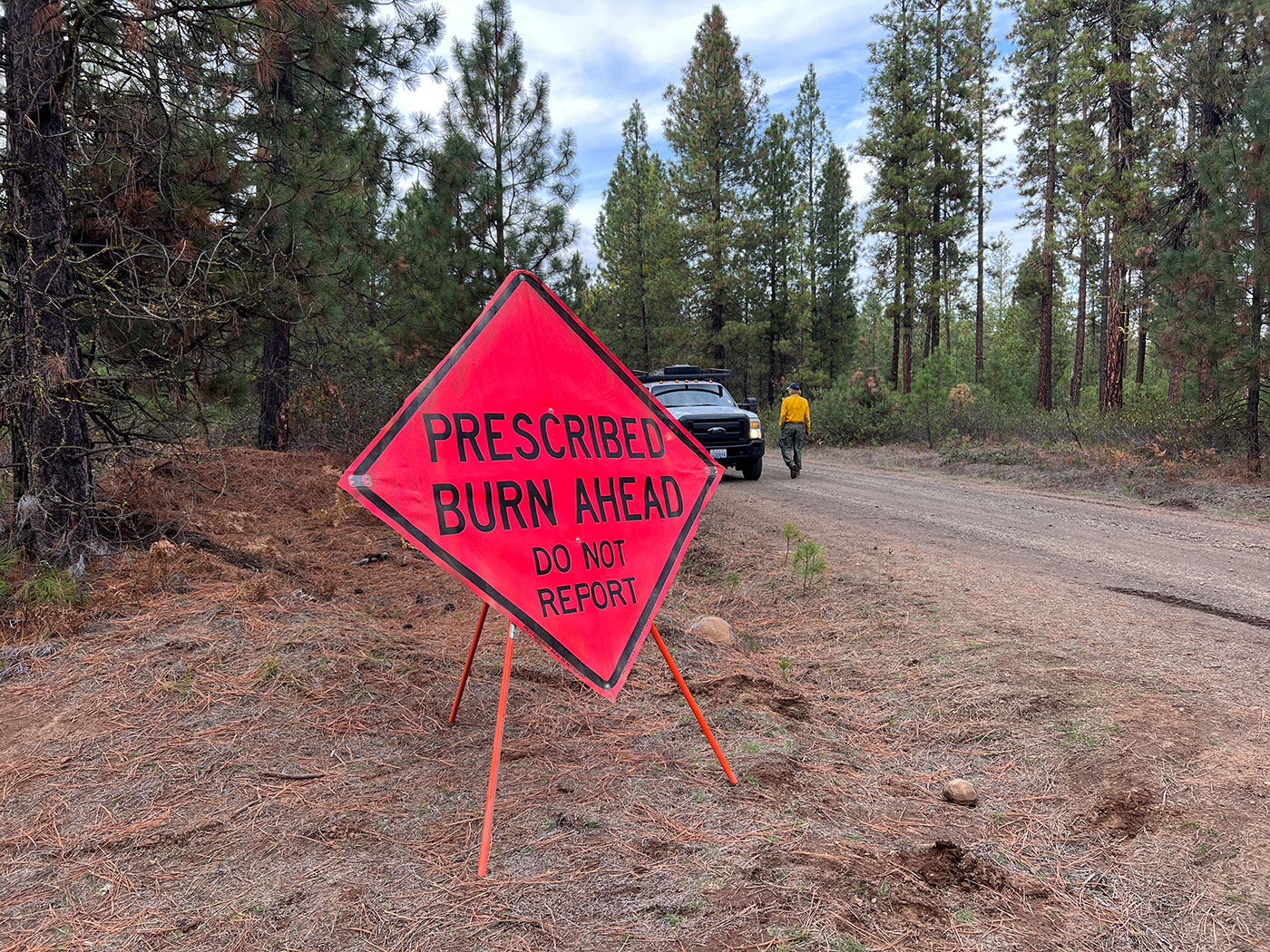
Designing a prescribed burn is a complex process: You will need a burn permit, to write a burn plan, and have resources on hand to suppress a fire should it get outside the prescription area. Help is available.
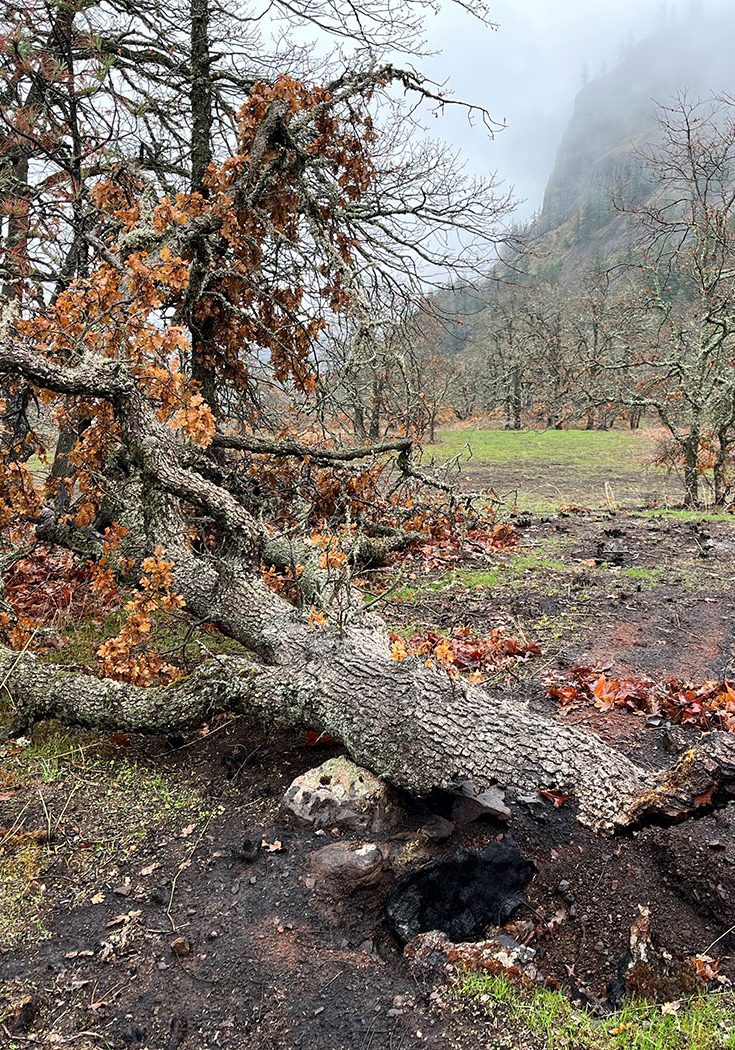

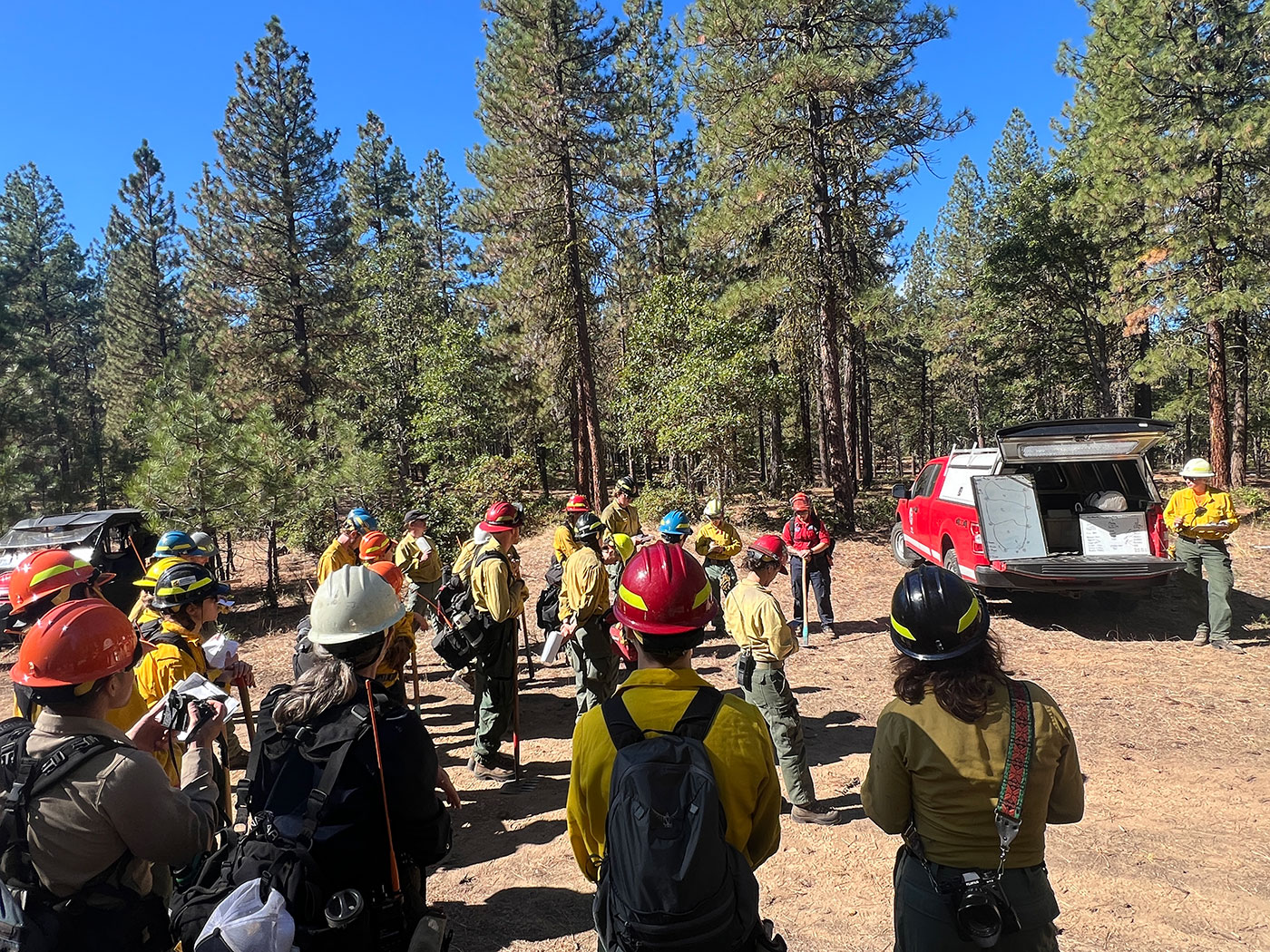
Unique lessons we’ve learned while burning in oak woodlands:
-
Protect legacy oaks:
Fire can burn into the accumulated litter and duff around the base of a tree, eventually burning through the tree’s trunk or roots and toppling it. There is also potential for loss of mature oaks due to embers floating into cavities and burning them from the inside out. Before burning, identify trees or large pieces of coarse wood on the forest floor you would like to protect. Strategies to protect individual trees, snags, or coarse wood include clearing plant material and duff from around the base, digging line around it, backburning, wetting, or even screening large cavities in oaks. Frequently patrol your mature oaks during and after a burn to suppress any embers that get a hold. They can be extinguished with water and effort!
-
Oaks will resprout:
You should expect many oaks, especially younger ones, to resprout after a prescribed fire- see our management guidance on thinning oaks and controlling oak resprout to consider pros and cons.
-
Oak leaf litter is fire resistant:
Oak leaf litter doesn’t always carry fire well. Practitioners implementing prescribed burns in the wetter shoulder seasons have reported difficulty getting the desired fire behavior because oak leaf litter is so fire resistant.
-
Burning in areas with invasive annual grasses could lead to their expansion:
Invasive annual grasses, such as cheatgrass, ventenata, and medusahead, respond favorably to disturbances like fire and are more flammable than native perennial grasses. Consider seeding perennial grasses into burned areas where invasive annuals are present or follow your burn with fall herbicide treatments to target fast germinating seeds. Some practitioners are using indaziflam (brand name “Rejuvra”) to control these grasses post fire. This chemical does not appear to affect established perennial plants. Use caution in culturally important areas where food may be harvested.
Case study: Bowman Creek Natural Area
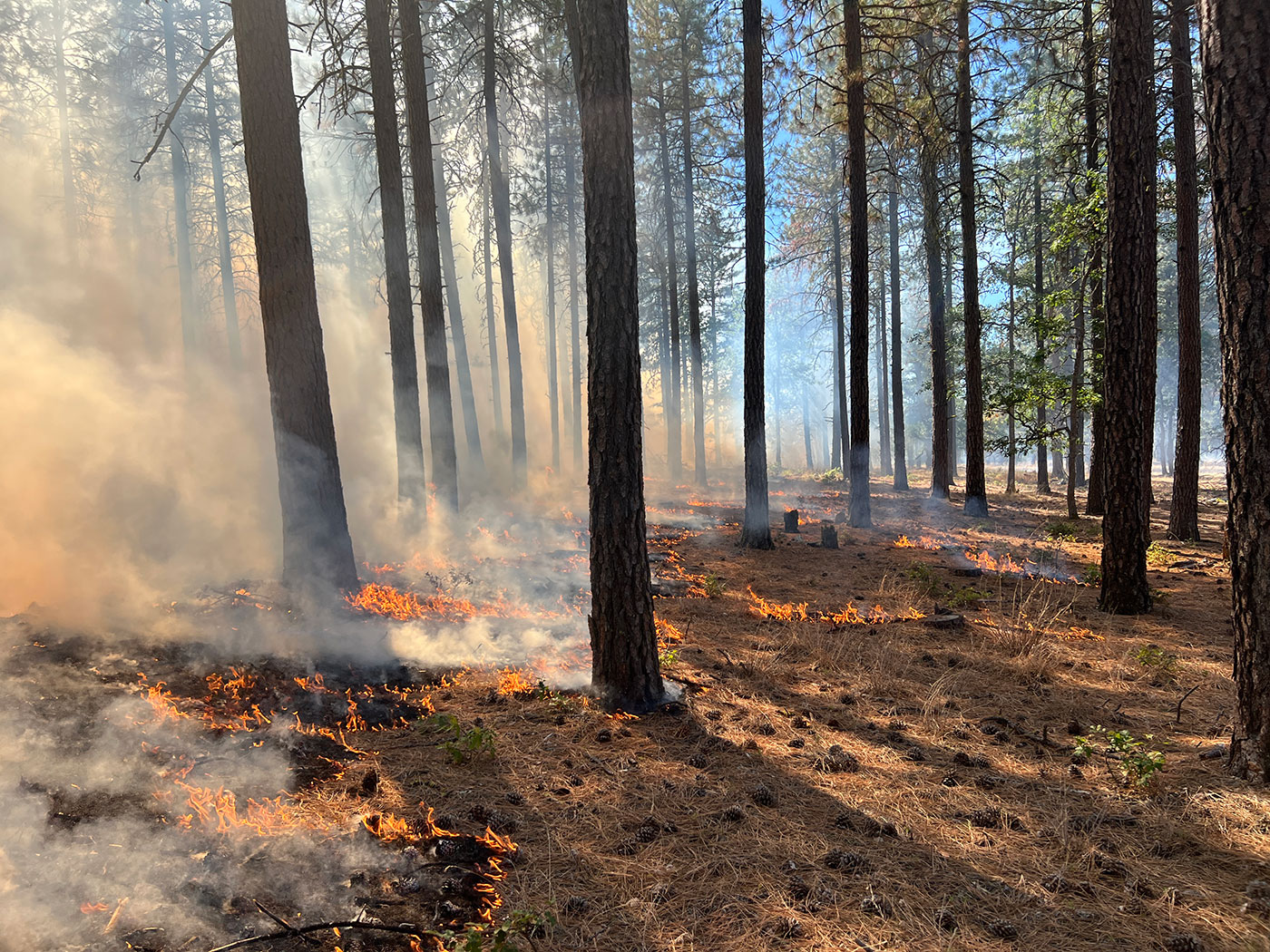
At the Bowman Creek Natural Area, Columbia Land Trust recently conducted a prescribed burn in a previously thinned and grazed pine and oak woodland. There were virtually no ladder fuels, so partners expected a lower intensity burn. The burn, though safe and as prescribed, was hotter than expected - the litter, duff, and pieces of wood sitting on the forest floor generated a lot of heat. This burn happened by design in a cool time of year, but a wildfire in the same area during a hot, dry summer would have produced more severe outcomes. This burn helped remove those surface fuels, improving its resilience to future wildfires. See how prescribed fire reduced tree mortality in the Bootleg Wildfire in Oregon.
Prescribed fire planning and resources
Implementing prescribed fire on private lands requires technical expertise and support. There are two pathways you might consider when implementing a burn—hiring a contractor or engaging with volunteers through a Prescribed Burn Association (PBA). Both have pros and cons. A contractor will provide the needed equipment, personnel and liability coverage, yet doing so can be cost-prohibitive and finding a contractor can be challenging (especially during fire season). Implementing a prescribed burn through a PBA offers access to low-cost or free expert guidance, shared equipment, and volunteer support, but the liability stays with the landowner and not all areas have PBAs.
More resources to help you safely deploy this important tool:
Landowners’ Options for Prescribed Burning
This publication from the OSU Extension Prescribed Fire Basics modules describes the practice of broadcast…
This two-pager details a burn procedure for a private landowner, including burn registration, planning a…
Mount Adams Prescribed Burn Association
The MAPBA serves as a one-stop shop to help connect private land managers in the…
Washington Prescribed Fire Council
Washington Prescribed Fire Council is a collaborative group working to protect, conserve and expand the…
Washington DNR Prescribed Fire Program
Skilled professionals within the agency conduct prescribed fire operations on DNR-managed lands, assist partner agencies…
Indigenous Peoples Burning Network
The Indigenous Peoples Burning Network (IPBN) is created by and for Indigenous fire practitioners and…
What is a PBA?
A Prescribed Burn Association, or a PBA, is a locally organized group of fire practitioners and private landowners committed to removing barriers to the safe use of prescribed burning on private lands. PBAs provide help acquiring equipment, navigating permitting, and accessing trained professionals.
Our local PBA, the Mt. Adams Prescribed Burn Association, is available to help local landowners implement prescribed burns. While the PBA primarily serves Washington landowners, resources and technical assistance are available to Oregon residents as well. ODF, NRCS, and other ECOP partners are also procuring resources to support landowners who want to burn.
Thank you
Thank you to our gracious ECOP members who reviewed this management guidance document and provided important feedback.
Last updated: April 2025