


OAK MANAGEMENT PATHWAY
This page is a tool that supports Step 2: Make a Plan within the Oak Management Pathway.

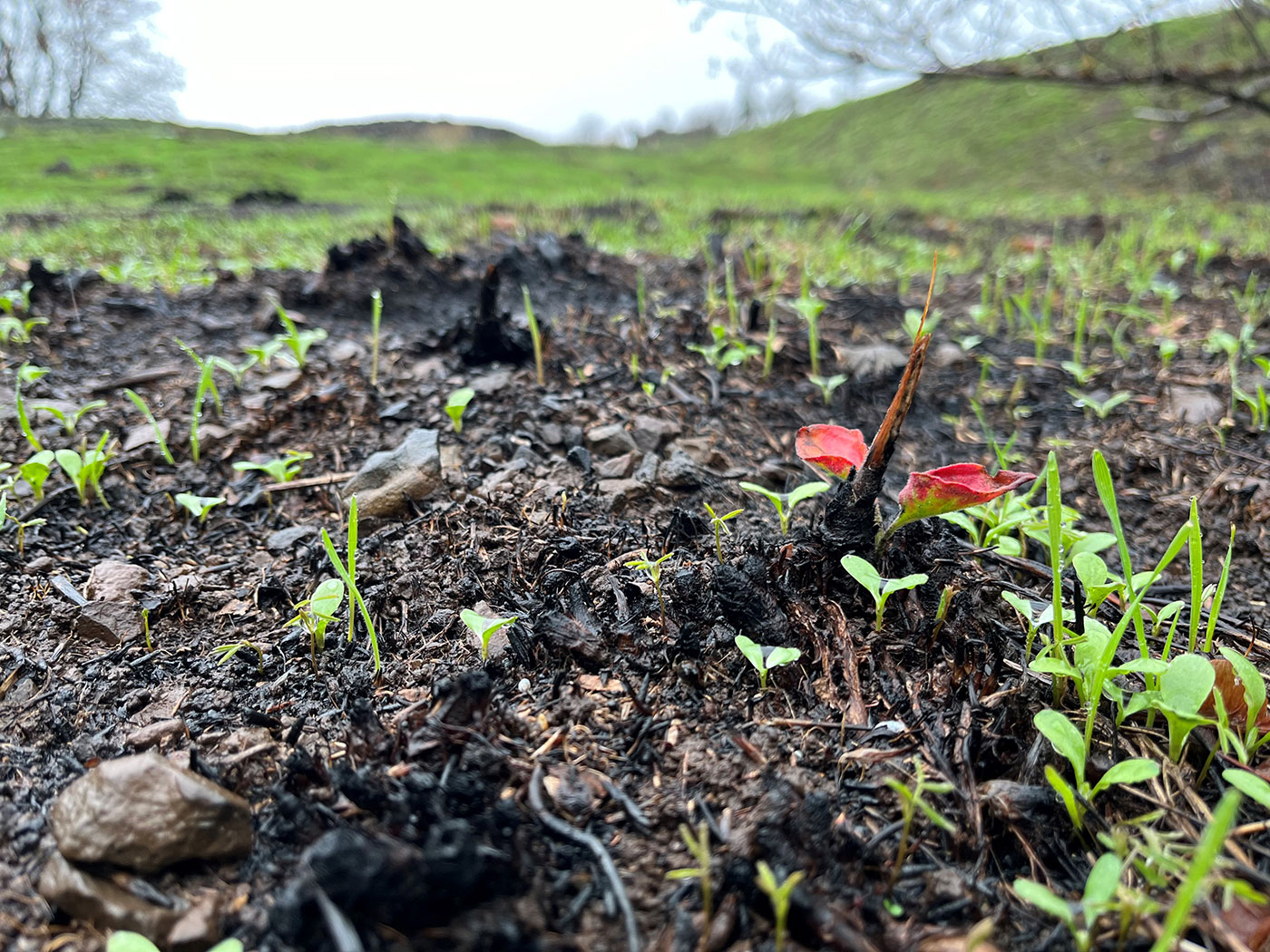
The effects of wildfire can feel devastating. Caring for your land following a wildfire can present an opportunity for healing as you watch life re-emerge and take shape around you.
A great first step in ecological healing is to observe or monitor how your site is responding after the fire. Watch for sprouting oaks, germinating grasses, or visiting insects. ECOP has tools for monitoring a site post-burn that can help you decide when or if action may be needed. Your decision will be influenced by the pre-fire state of the site (how much fuel was present and what types of plants were growing) and the intensity of the fire. Oak woodlands of the East Cascades historically experienced fire of varying intensity and many of the trees and understory plants are adapted to these conditions.
Let's dive in!

Assessing tree mortality
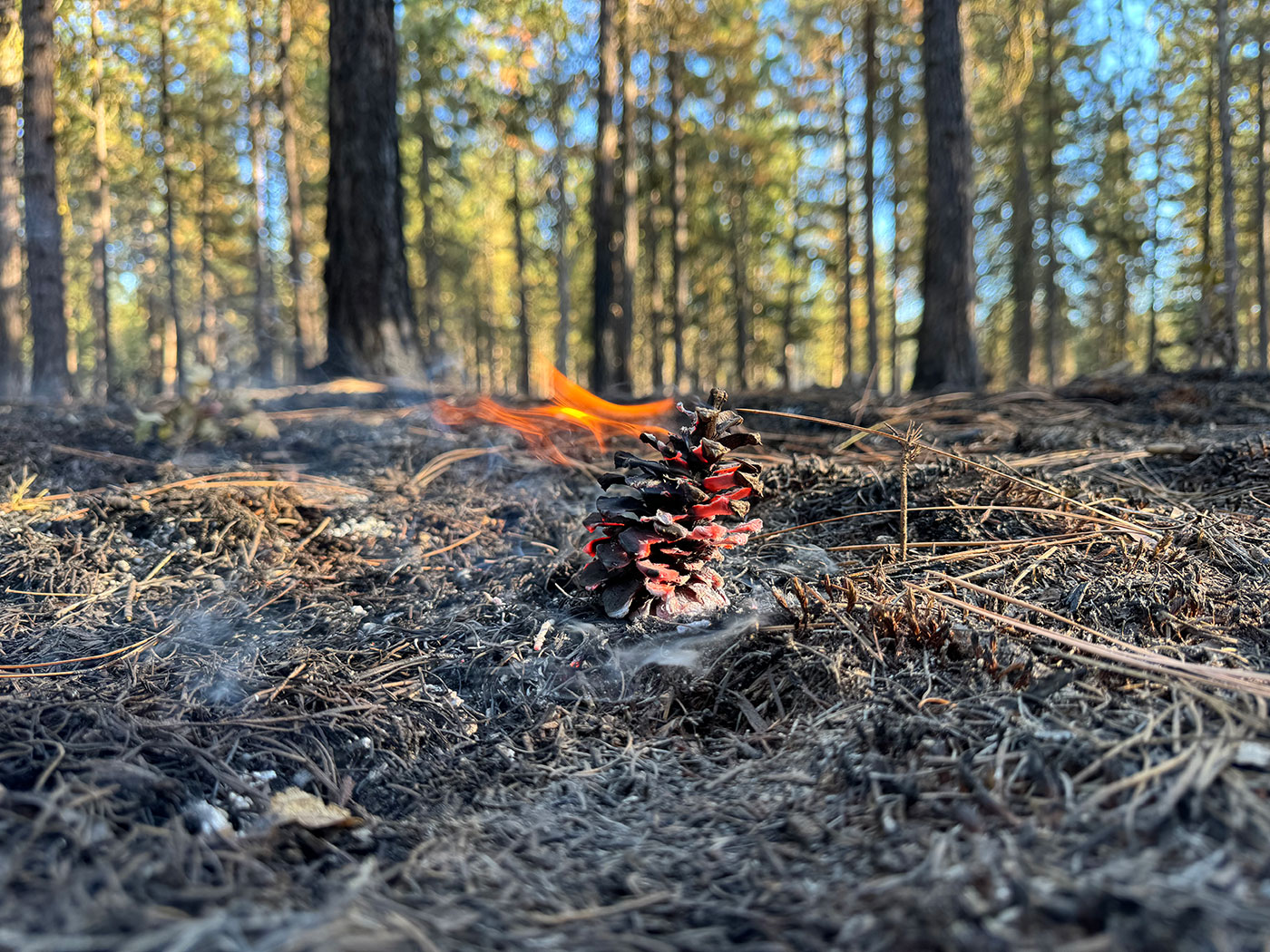
Oaks can resprout even when most of their crown is scorched and many conifers can survive some levels of crown scorch. Monitor your trees and see what comes back or what grows anew to learn if replanting trees is necessary. It can take several years for trees to die after a fire and some symptoms of stress resulting from fire may not actually kill the tree, so it can be challenging to assess their state immediately following a fire.
ODF Fact Sheet: Post-fire Tree Mortality
This guide serves as an overview on how to estimate and predict tree mortality after…
Assessing Post Fire Survivability of Trees and Potential for Salvage Harvesting
This Oregon State University Extension webinar covers a visual method for assessing survival of trees…
Planting acorns is one of the most effective ways to plant Oregon white oak. As…
Restoring the understory plants
If your site had a fairly intact understory and did not experience high intensity fire, it may not require management action. Montana State University put together a helpful guide on managing weeds after wildfire, with tables to assess the need to take action after fire.
It may be a good idea to seed native forbs and grasses after a severe, high intensity fire. This can help prevent erosion and weedy plants from establishing. Invasive annual grasses can be carried to your site by equipment and vehicles and can also proliferate in soils disturbed by heavy machinery. Consider seeding along fire lines and roads to prevent annual grasses establishing, especially if invasive grasses were already present on the site before the burn.
Be sure to use a site-adapted seed mix that is weed free. Remove asmany remaining noxious weeds or weedy species as possible before seeding. If your site is grazed, delay future grazing for at least 2 or 3 growing seasons to allow plants to establish.
Continue reading
High intensity fire and invasive annual grasses:
Invasive annual grasses, such as cheatgrass, ventenata, and medusahead, respond favorably to disturbances like fire. Partners are interested in strategies to reduce invasive annual grasses after wildfire using grass-specific herbicides. Indaziflam is a new herbicide chemistry that can be applied post-fire. Partners are weighing the effectiveness of the herbicide versus how it may affect existing desirable plant species and future seeded species.
ECOP Understory Guidance – Seeding and Planting page
Additional resources on seeding:
A Washington State University Extension guide that discusses when to seed or not to seed,…
This Natural Resources Conservation Service resource covers topics such as timing of seeding after a…
Case Study: Landowner observations after a wildfire
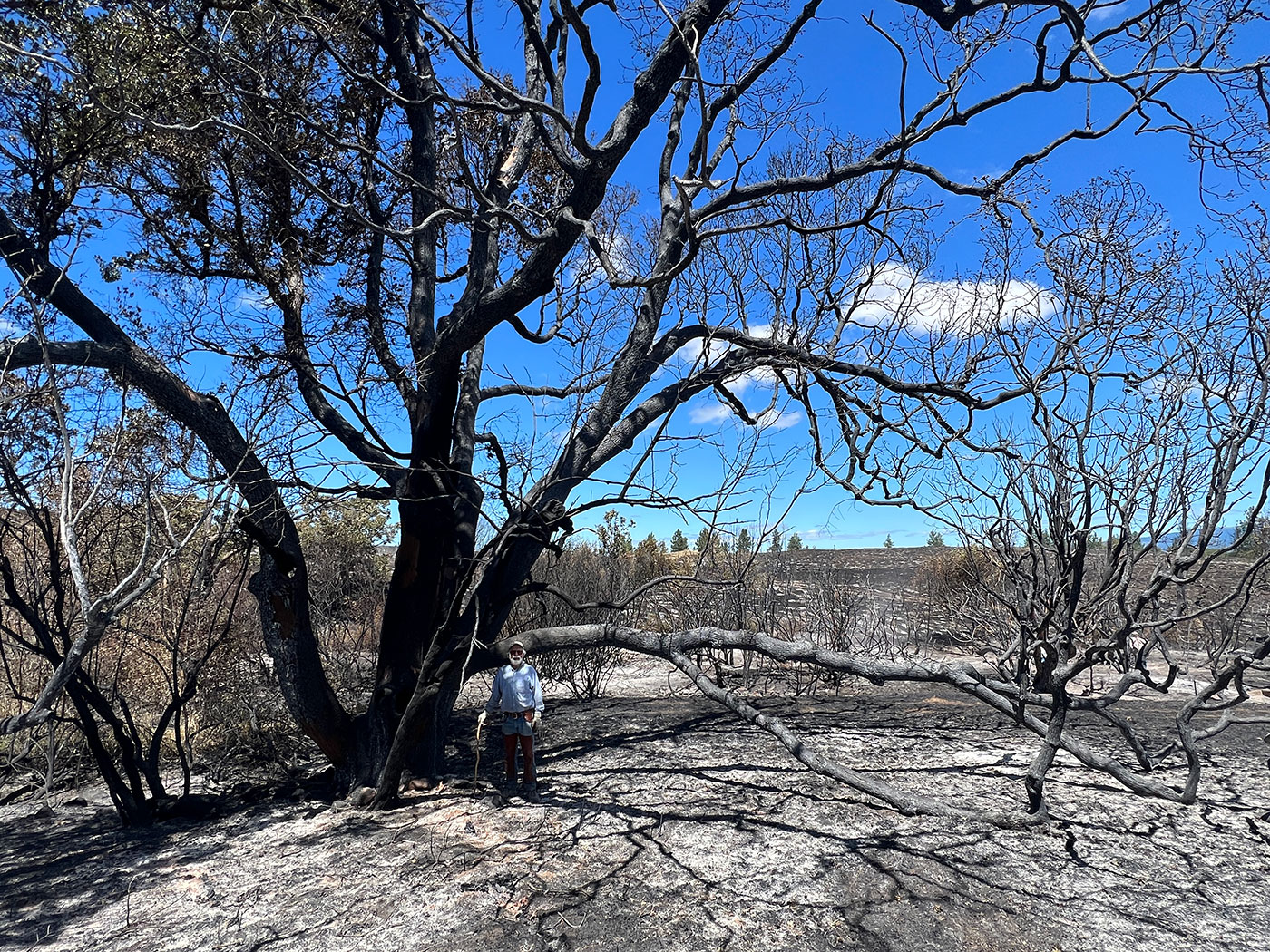
In summer 2023, a wildfire burned across one of Columbia Land Trust’s conservation easements at Horseshoe Bend in Klickitat County and onto an ECOP member's property. Due to the efforts of a neighbor and first responders, the homes were saved, but the fire burned very hot through a seasonal stream corridor that was home to several very large, very old oak trees. This ECOP member has been monitoring and observing the outcomes of the wildfire since it burned. One year after fire, they are noticing an abundance of weeds, but also some healthy resprouts of willow and oak saplings. Unfortunately, a few of the larger oak trees perished and have not resprouted.
Thank you
Thank you to our gracious ECOP members who reviewed this management guidance document and provided important feedback.
Last updated: April 2025