
Oak Observations July 2023
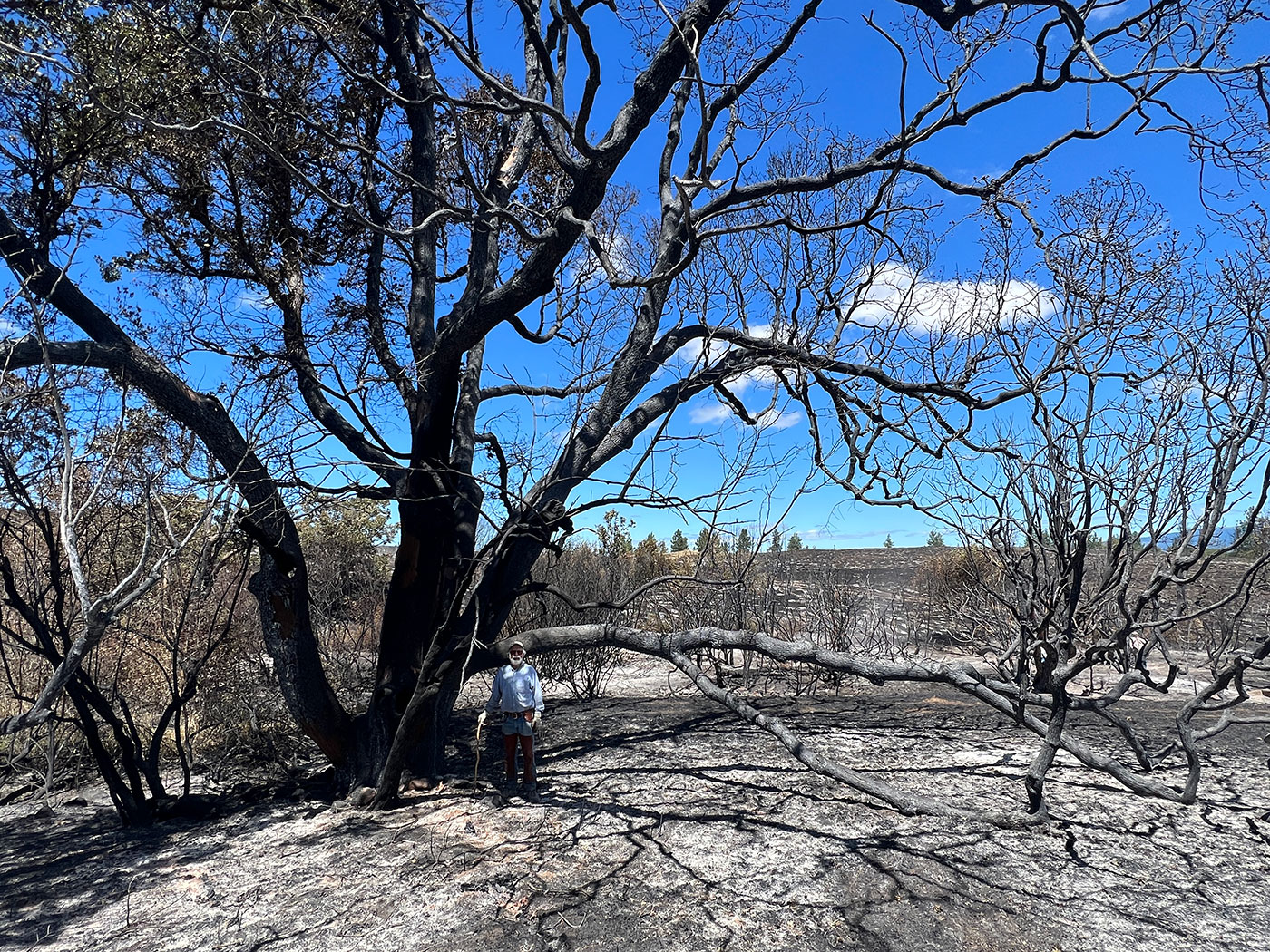
On July 15, a wildfire burned across one of Columbia Land Trust’s conservation easements at Horseshoe Bend in Klickitat County and onto an ECOP member's property. Due to the efforts of a neighbor and first responders, the homes were saved, but the fire burned very hot through a seasonal stream corridor that was home to several very large, very old oak trees.
One of these trees, which the ECOP member called “the grandfather,” had branches so long and lateral, they came down to the ground twenty feet from the trunk and then climbed again, giving the appearance of several younger trees nearby. This ECOP member spent time often beneath the branches of the grandfather and came to know his grove in a way that only time and thoughtfulness allows. Our hearts go out to him as he takes in this sudden, sweeping change. As he points out, this will at least be an opportunity to learn. And he’ll now get to watch as the grandfather gives itself over to snag and cavity loving wildlife.
We are curious to see which oaks persist and how the understory responds to such intense disturbance. Already during our first visit, a rattlesnake greeted us from its den beneath a severely burned oak and kestrel chicks called to us from the partially burned crowns.
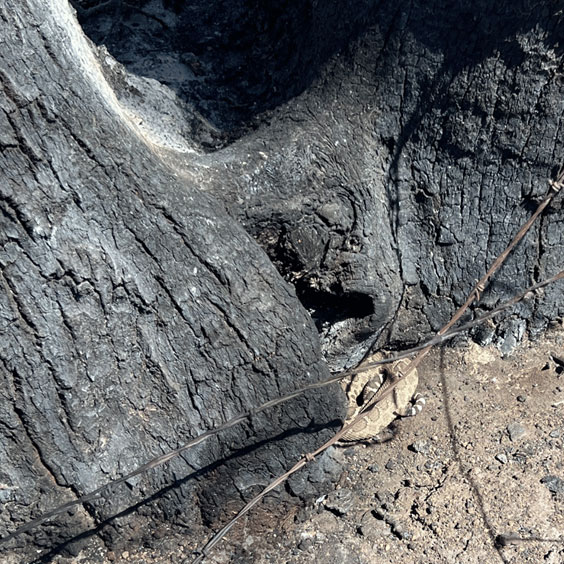
On a more technical note, oaks are adapted to fire, but their thick bark and insulated buds can certainly be overcome by high intensity wildfire. The following photos are of trees at the Horseshoe Bend site. Leaf tissue is relatively expendable and easily replaced, but an oak’s cambium (a layer of tissue just underneath the bark that produces the xylem and phloem cells responsible for transporting water and nutrients up and down the stem) is more vital. According to experts at UC Davis, an oak can survive with as little as 10% of its remaining cambium intact (as measured around the circumference of the tree).
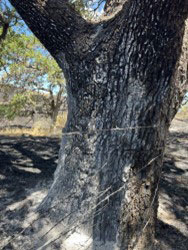

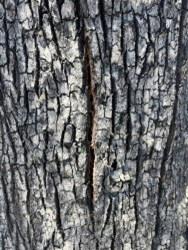
In this example (first image), half the tree is severely burned, and half is not – this tree will more than likely survive. According to experts at UC Davis, there’s a greater chance of lethal cambium damage if the bark is severely blackened and charring has reduced the bark thickness (second image). If the bark has been cracked or separated from the stem (third image), the cambium is almost certainly dead. Cambium in healthy oak is usually a white or reddish pink color. Dead cambium is dark or yellowish.
To learn more, search for University of California’s publication 8445, “Burned Oaks: Which Ones Will Survive,” or click here to revisit the presentation Dr. David Peter gave on Oregon white oak biology and fire ecology.
In the years ahead, we look forward to hearing from this ECOP member and others about how these oaks and the recovering understory evolve and change in the aftermath of the fire.