



Triggers for restoration action
If you need help identifying the native and nonnative species present on your site, see collated guides and lists in our Resource Library.
How do I know if seeding is necessary?
-
Disturbance:
Disturbance can occur either mechanically or by natural forces like fire. Many invasive annual grasses and weedy forbs thrive in disturbed sites. One way to help prevent or control weedy plants is to seed native species into disturbed sites before weeds have a chance to establish and outcompete native plants.



-
Presence and proliferation of weedy plant species:
The presence of weedy plants has potentially undesirable consequences such as:
- Outcompeting native plants
- Altering fire behavior by increasing fuel loads with their dense thatch
- Reduced habitat quality for native wildlife and pollinators
If your site is populated with weedy plant species, you may want to conduct management actions to reduce weeds before you seed or plant your desired species.


What are your goals?
The goals you have identified for your site will influence how and what you decide to seed. Spend some time refining your goals before taking action. Some common goals for land managers working in East Cascades oak habitats include:
What should I plant?
Deciding what species to plant is a crucial step in your restoration project and it is not always as easy as it sounds! Check out our Native Plant Species for East Cascades Oak Habitat Restoration page for more guidance and our Ecologically Appropriate Plant Materials page to learn more about seed selection.
Whatever you decide to plant, planting more than one species is often a good strategy for restoring your site. A mix of different species provides different strengths and may be more resilient to disturbances like grazing, fire, insects, drought, extreme cold, etc. than a single species. Diverse species can help generate a more resilient oak ecosystem.


Preparing your site
Seedbed preparation aids germination and emergence by improving seed to soil contact, ensuring proper seeding depth, controlling competing vegetation, and maintaining ample soil moisture. Depending on the current state of your site, you may need to prepare your site for planting and seeding.
Tips for preparing your site:
It is easiest to manage weeds before trying to seed your desired species. It’s also important to consider the implications of your treatment on your future restoration actions (e.g., residual impacts of certain herbicides negatively affecting future seeding) and the current use of the space. Do people frequently pass through the site, especially with kids and pets? Are people harvesting food or medicine from the site? Depending on the herbicide you use, consider the impacts it may have on nearby trees.
For more information on managing weedy species and seedbed preparation, see:
Columbia Gorge Cooperative Weed Management Area Weed List
Lists weeds of Washington and Oregon with links to more information for each species.
NRCS Technical Note: Seedbed Preparation and Seed to Soil Contact
This WA tech note covers seed to soil contact, seedbed preparation for most grass and…
The Pacific Northwest Native Plant Primer
Packed with proven advice that every home gardener can follow, this incomparable sourcebook profiles 225…

When to seed
Timing will ultimately depend on what and why you are seeding. Set your seeds up for success by planting them when the time is right.
Typically, in the East Cascades, it is a good idea to seed in the late fall. Planting in the fall, also known as fall dormancy planting, allows seeds to benefit from fall and winter moisture which gives them a head start germinating in spring before the soil dries out. You can even broadcast seed on top of snow. Later, the snow melt will help incorporate the seed into the soil. Spring seeding is not recommended because the soil dries out too quickly and emerging seedlings won’t be strong enough to survive the summer drought.
Remember to check the weather! It is a good idea to seed right before precipitation, but not before a strong precipitation event that could trigger flooding or erosion.
More information on when to seed:
ODOT Native Grass Seed Mix for East Slope Cascades
This is a seed mix suggested by Oregon Department of Transportation (ODOT) for maintenance use….
USDA Corvallis PMC Native Seed Production Manual
The purpose of this manual is to summarize the seed production methods used by the…
Seeding after herbicide application
If you used herbicide to treat the area before seeding, review the herbicide label to determine which plants the herbicide affects and the length of time the herbicide will remain active in soil (residual time). This will determine when you can seed and what kind of seed you can put down.

Seeding after wildfire
After a high intensity fire, reseeding with native forbs and grasses can help prevent weedy species from establishing, especially if there were already invasive annual grasses nearby. Disturbance from heavy machinery or digging fire line can also trigger a need to seed. Check out Washington State University Extension’s “Seeding After Fire” guide designed for East Cascade habitats.

Seeding after mechanical disturbance
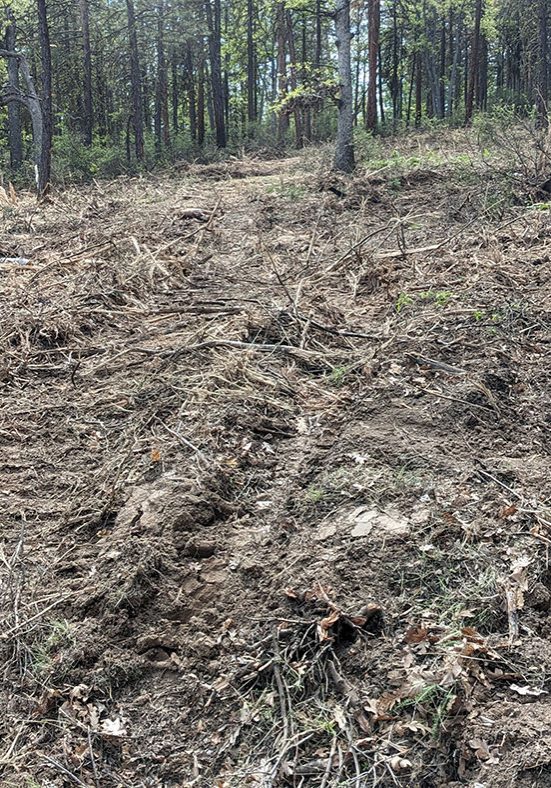
Generally, it’s a good idea to put seed down soon after disturbance to prevent weedy plants from establishing there first. Tracks from machinery are notorious for aiding invasive annual grass establishment.

Pro Tip
Consider a seed mix including annuals and/or fast establishing species to prevent weedy plants from establishing first, especially if invasive annual grasses are already present at your site.
Seeding Methods
Seeding from locally collected sources
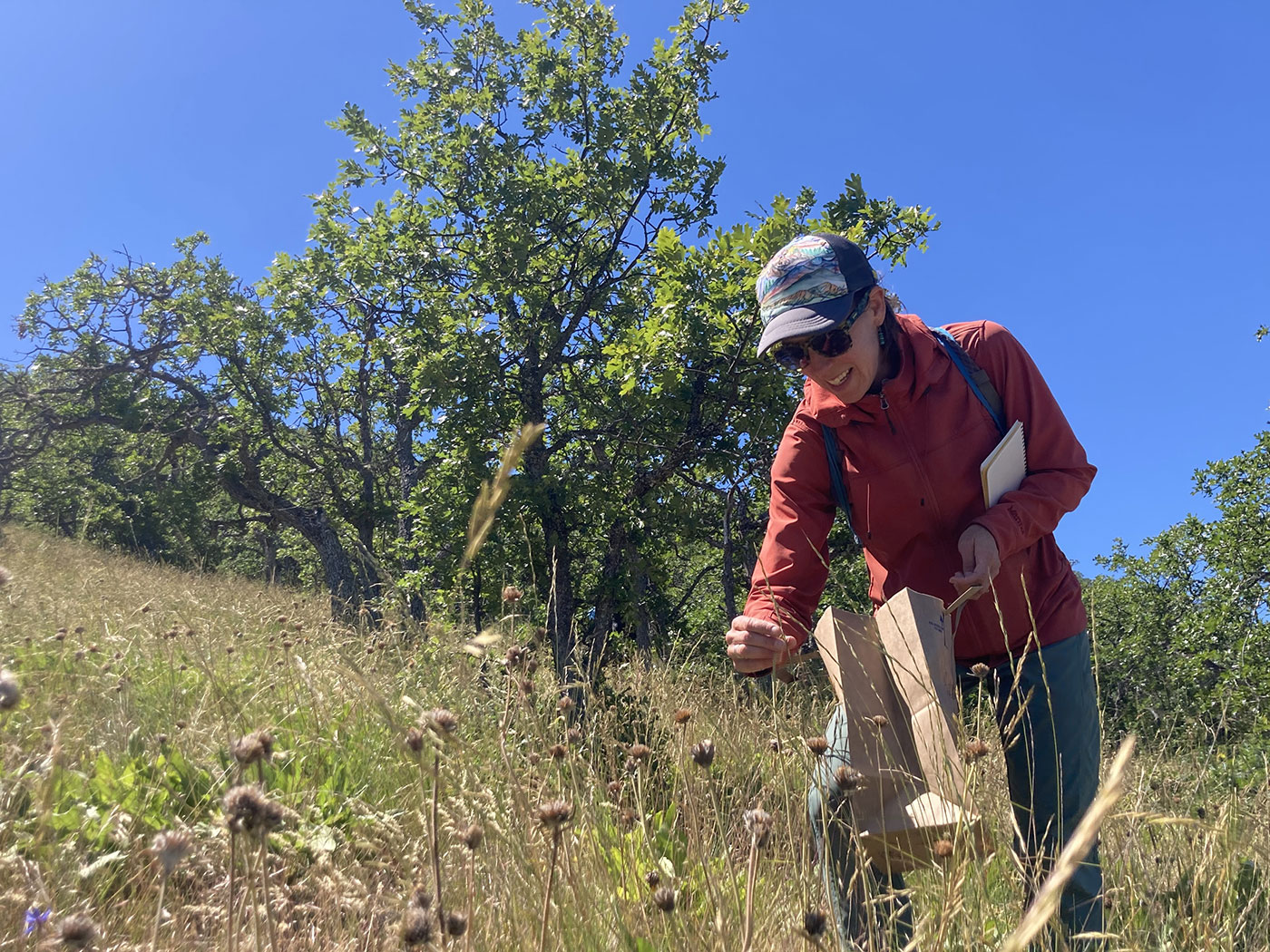
When collecting from your own site, you can store seed for later or choose to distribute the seed at the same time you collect it to mimic the plant’s natural seeding behavior. Be sure not to over-collect (especially annual species) or you could impact the existing population. An ethical standard is to collect less than 5% of the viable population. Consider the overall plant community when collecting seed. You don’t want to collect seed in an area infested with weeds because then it is likely your seed will be contaminated. Also avoid collecting near the edge of the range of the species, or in a relatively small population of the species. Consult a local expert or seed collection guide for further best practices.
Plugs and broadcast vs. drill seeding
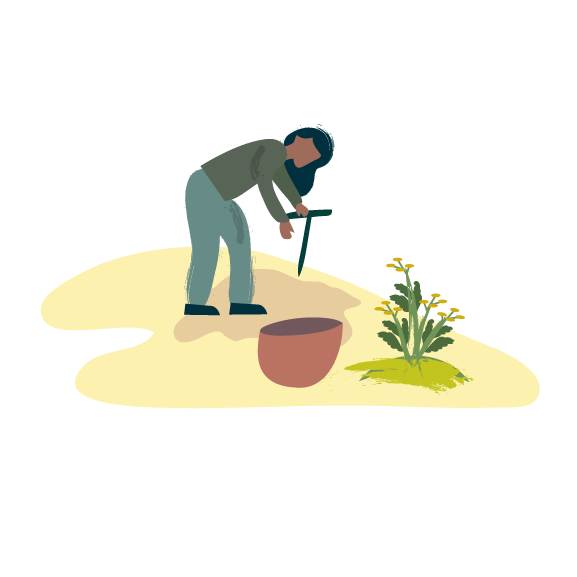
Depending on the size or accessibility of your site and what you are planting, you may opt to plant seedlings or container grown plugs. Plugs are more expensive than seed, but more reliable in terms of establishment for certain species.
Broadcast seeding is a planting technique where seeds are scattered across an area— it can be done on a small scale by hand or on a large scale across many acres using machinery such as ATVs. To improve germination and success rates, make sure you properly prepared the site (see guidance above). Following a broadcast seeding, some type of light raking should be used to help incorporate the seed and improve seed to soil contact. In dryland conditions, successive seedings in multiple years may be needed to achieve desired cover levels.

Pro Tip
Most seeding recommendations are the drilled rate. Broadcast rates are double the drilled rate.
The other technique is drill seeding— using a seed drill can be beneficial for a few reasons. It helps ensure better seed-soil contact, seed is buried at the proper depth (which protects your seed from bird or insect predators), and seed drills apply seeds more uniformly to prevent overcrowding. If a seed drill is readily available and your site conditions are appropriate, it may be the preferred method. However, they can be expensive to rent or purchase and require some skilled knowledge to operate properly. Some Soil and Water Conservation Districts have seed drills available for rent.
Pro Tip
If your seed mix contains seeds of different sizes, textures, or stages of cleaning, request they be separated if you plan to use a drill seeder. When planting light, fluffy seeds or extremely small seeds, a carrier (such as pelletized lime, rice hulls, fertilizer, cracked corn, cottonseed, hulls, or damp sand) adds weight and helps distribute the seed evenly.
For more on seeding methods, check out NRCS’s Technical Note, “Considerations for Establishing Native Grasses from Seed for Restoration, Revegetation, and Erosion Control in Western Washington and Western Oregon”
How much seed to apply?
Overseeding can cause overcrowding and subsequent failure. However, underseeding may leave room for weedy plants to establish, so it is important to carefully consider how much seed you need to apply. Seeding rates are often recommended for each seed variety or seed mix you purchase commercially.
When specific recommendations aren’t available, the NRCS recommended seeding rate is 20 pounds pure live seed (PLS)/acre. If you are measuring by PLS per square foot, at least 20 – 30 is recommended.

Pro Tip
Why is it described as “PLS/acre?” This is because in seed mixes for restoration there may be other material present in the mix. This could be seed coatings to help improve germination or even natural materials not removed in the cleaning process. That means the general weight of the seed mix may not equate to the weight of actual live seed.
Stewardship after planting
We often think of seeding as the act of putting seed into soil and nothing more. But the steps you take to continue stewarding your planting can greatly increase your long-term success!
A few steps you can take include:
-
Protect seeded areas from domestic grazing, wildlife browsing, and vehicle damage until plants are well established. This may include caging saplings, fencing off newly seeded areas from grazing, and avoiding heavy machinery and trampling at your site until plants are established.
-
Monitor the health of your planting— inspect all seeded areas for successful germination and failures so you can reseed within the planting season if needed.
-
Remove emerging weedy species as needed to prevent them from outcompeting your seedlings. Remember, using herbicide after your restoration planting could harm your seedlings so hand pulling can be a great option for small scale restoration plantings.
While it is tempting to try to aid your planting, it may be best to avoid fertilizer or excessive watering since this can help weedy species proliferate. Native plants are adapted to the conditions and soils of their native range and thus should not generally need this kind of intervention. For oaks planted in backyard settings, it may be best to avoid fertilizer or excessive watering since this can potentially increase populations of sucking insects.
Share your restoration project successes (and failures) with us at oaks@columbialandtrust.org!
Thank you
Thank you to our gracious ECOP members who reviewed this management guidance document and provided important feedback.
Last updated: April 2025