
Stressors in Oak Systems


OAK MANAGEMENT PATHWAY
This page is a tool that supports Step 2: Make a Plan within the Oak Management Pathway.

Oaks and Stressors
Assessing the health of your oaks and other trees in your forest is an important step in developing your management plan— you can use our Condition Assessment Tool to help diagnose stress. This page will explore common oak tree stressors with photo examples.
Let's dive in!

Assessing the health of your trees
-
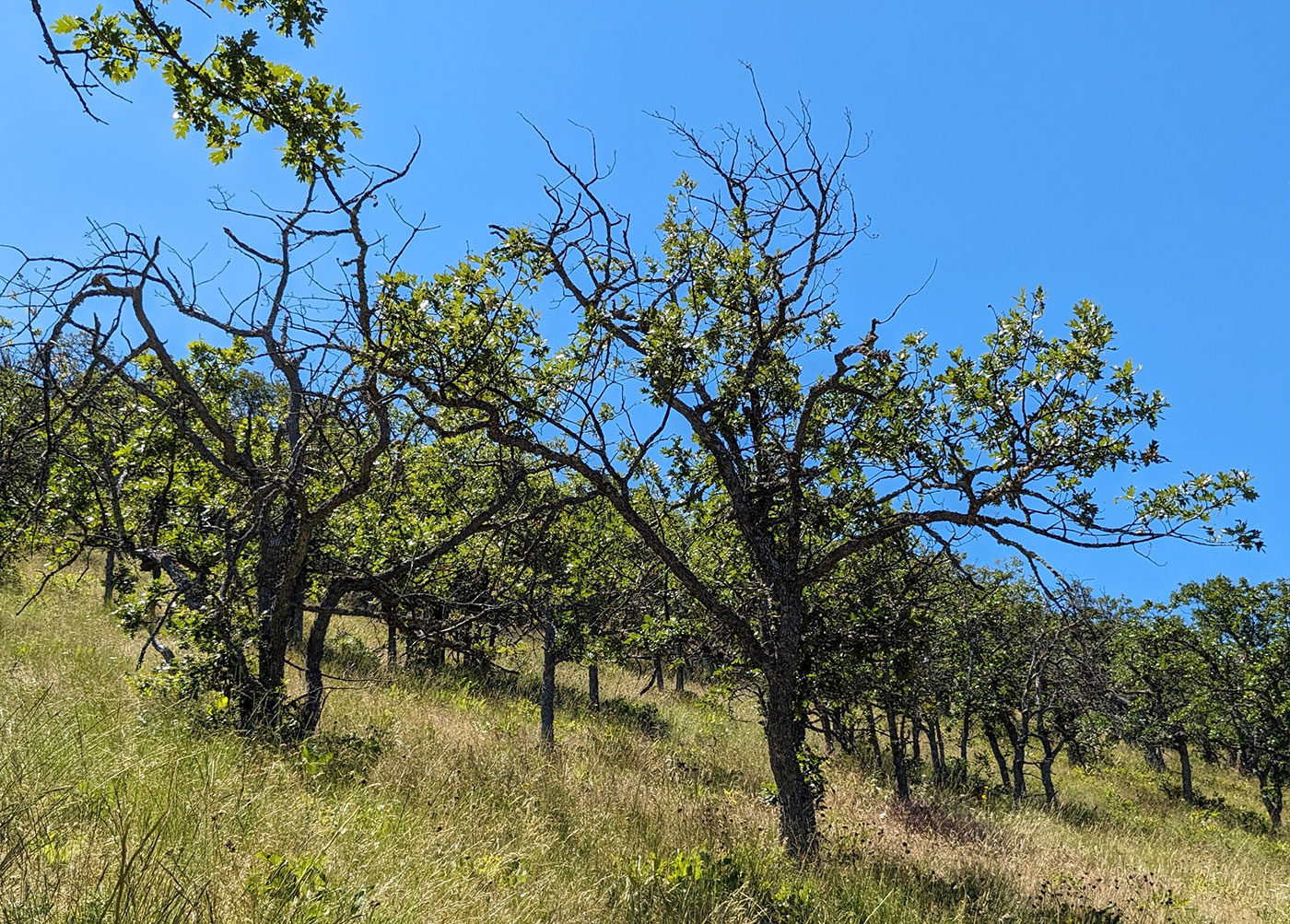
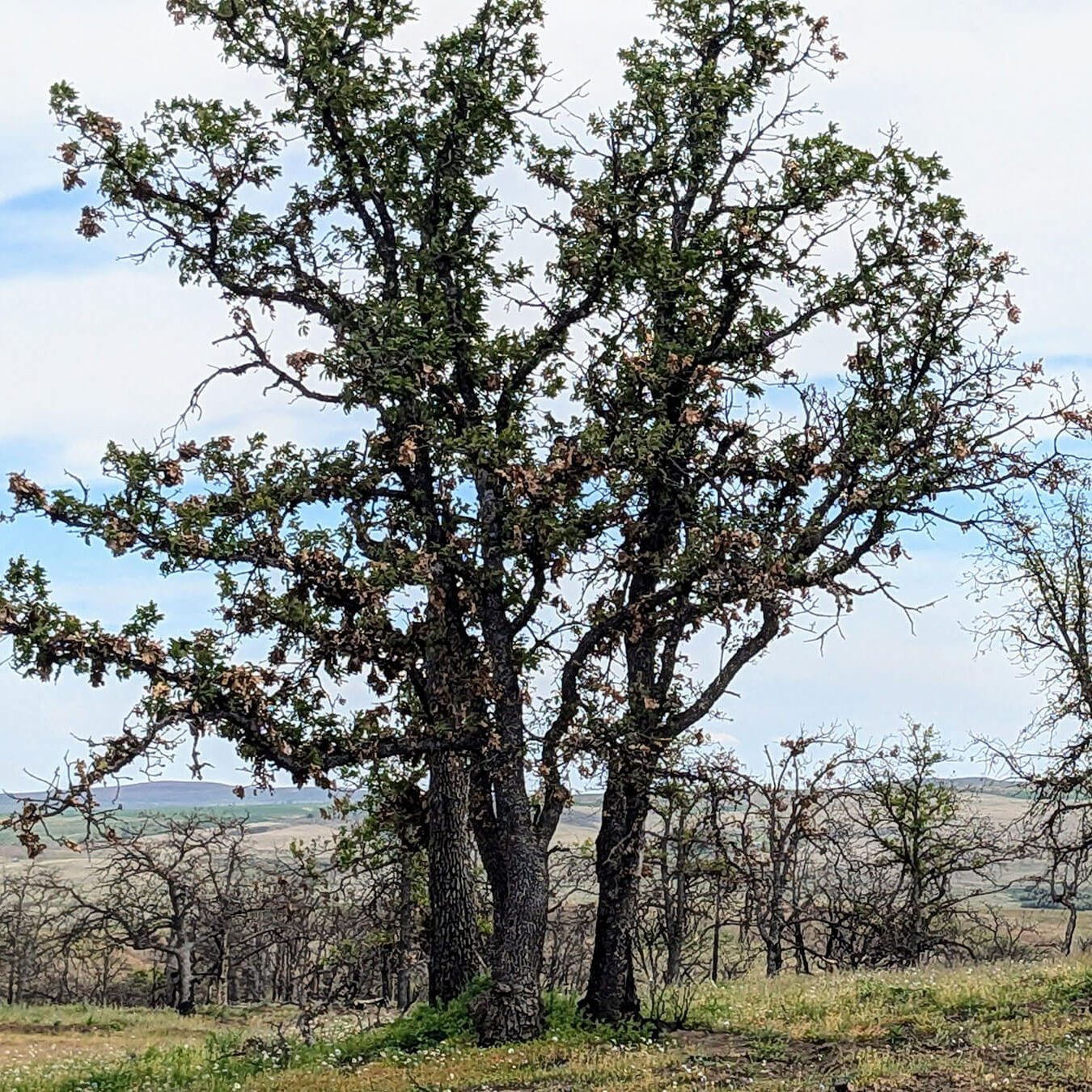
Drought stress:
Symptoms of mild drought stress in an Oregon white oak include prematurely dried leaves and leaf wilting. More severe drought stress results in the tree pruning back the size of its crown, as indicated by bare branches at the top or perimeter of the crown. Long vertical cracks may also develop in the bole, or trunk of the tree.

-
Epicormic branching:
Epicormic branches are leafy shoots arising from dormant buds on the trunk, stem, or branch of a woody plant. Epicormic branches look like new growth and can grow in dense clusters (reminiscent of mistletoe), or along the trunk or branches of a tree. Epicormic branches are formed in response to sudden availability of light (as when an overtopping conifer is removed), or injury.

-
Cankers or rot:
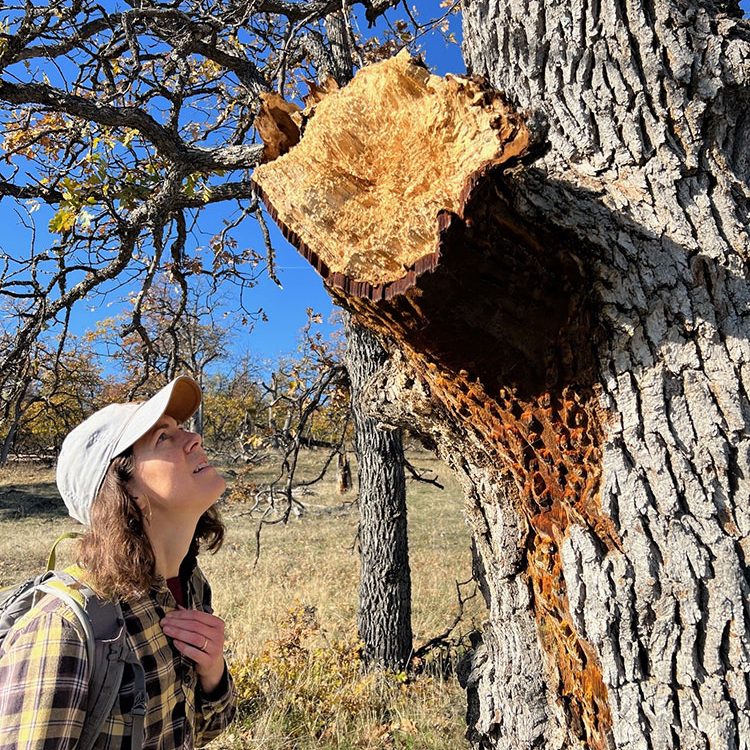
Oaks are host to a diversity of fungi, most of them native, many of them harmless, and some responsible for facilitating the creation of habitat features important in oak forests (though occasionally hard on oaks!). Some appear yellow, orange, or reddish like powder or rust on limbs self-pruned, or fallen to the ground. The wound left behind can have discoloration or a crumbly, foam-like texture. Mildews leave a powdery white substance on leaves or twigs. Root and butt rots tend to be evidenced by hard, shelf-like growths near the base of the tree, or by a tree that has broken off near the base and fallen over. Identifying the type of canker, rot, or other fungal growth and the prognosis for the host tree is something you may need expert help with. Consult the USDA Field Guide to Insects and Diseases of California Oaks or contact an ISA certified arborist, Oregon Department of Forestry or Washington Department of Natural Resources.

When to seek support
In a healthy ecosystem, minor levels of these kinds of stressors are typical. If you are noticing a proliferation of stressors, it may be time to call a specialist or seek technical support.
Pests in oak systems
-
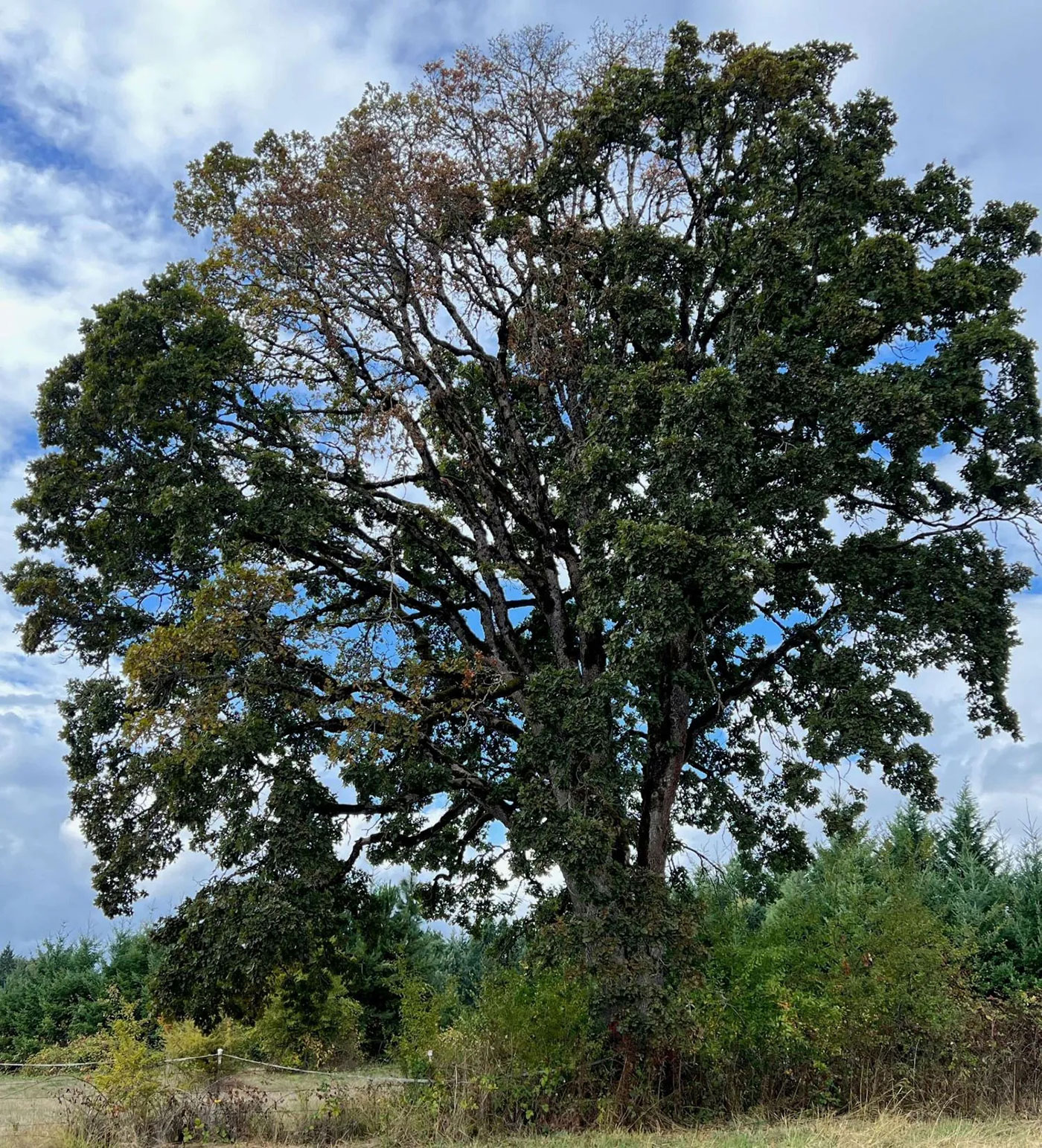
Mediterranean oak borer (MOB, Xyleborus monographus) is a non-native, tiny brown ambrosia beetle that tunnels into oaks and inoculates them with fungi to feed their young. The fungus clogs the tree’s tissues, causing harm. MOB has been found in Oregon in the Willamette Valley and outside of Troutdale, OR. Warning signs include light brown frass (tiny wood shavings) at the base of the tree, small entry holes from which sap may or may not ooze, and browning leaves from the top down. A native bark beetle, the Western oak bark beetle, produces reddish colored frass and is rarely harmful for healthy, non-stressed trees.
For more information about MOB:
ODF Fact Sheet- Mediterranean Oak Borer
Mediterranean oak borer (MOB) is a tiny brown woodboring insect called an “ambrosia” beetle. Female…
Best Management Practices: Mediterranean Oak Borer
MOB is a recently detected exotic invasive insect first found in Oregon in 2018. MOB…
Mediterranean Oak Borer in Oregon
View this YouTube video of Wyatt Williams from Oregon Department of Forestry presenting about MOB…
-
Sudden oak death is caused by the pathogen Phytophthora ramorum and has resulted in significant oak mortality in California. Luckily, Oregon white oak has not been particularly susceptible to this pathogen to date.
-
Oak mistletoe (Phoradendron villosum) is a native pest preferring oak as a host but is also found on some other hardwoods. It forms spherical to ellipsoidal clumps of green leafy shoots emerging from oak branches. Although unsightly, leafy mistletoe usually has little impact on healthy oaks. Heavy mistletoe infestations can lead to early defoliation in oaks and potentially decline in some unhealthy trees. Learn more from the Pacific Northwest Pest Management Handbook.
-
Galls are formed when a gall wasp secretes a chemical into a twig or leaf of the tree causing woody material to grow around it, a bit like a tumor. Galls do not pose a risk to the tree unless they are numerous and the tree is weakened by something else. There are more than 70 different kinds of gall wasps associated with Oregon white oak, and you can ID them by entering “Quercus garryana” in the host name on the gallformers website. They are beautiful and fascinating, and you can even make dye or ink out of them, as was used to write the Declaration of Independence!
Ecosystem stressors: Follow local guidelines about treating fresh slash (green, cut branches) to protect your site from pests. This is especially important if you are cutting ponderosa pine because the California fivespined Ips beetle prefers to attack slash and then move to nearby standing green trees. Monitor the surrounding area for current infestations by looking for pine with red needles on the top. Avoid cutting pine in the summer if infestations are nearby. Generally, October through March are safer times to cut pine since the beetles are not moving during colder months.

Thank you
Thank you to our gracious ECOP members who reviewed this management guidance document and provided important feedback.
Last updated: April 2025