
Oak Observations September 2025
Oaks on the Trailing Edge - Post treatment data collection
In the East Cascades, our ecotonal landscape experiences dryer conditions than the Willamette Valley where more Oregon white oak research has taken place. Land managers need deeper insight into how oaks respond to management activities to ensure we are effectively stewarding oak habitats. That’s why the East Cascades Oak Partnership has invested deeply in monitoring, from standardizing monitoring protocols to launching innovative monitoring projects with academic, tribal, state, and federal partners. What we learn together will help partners understand the effectiveness of management decisions and characterize conditions and trends of oak systems across the region.
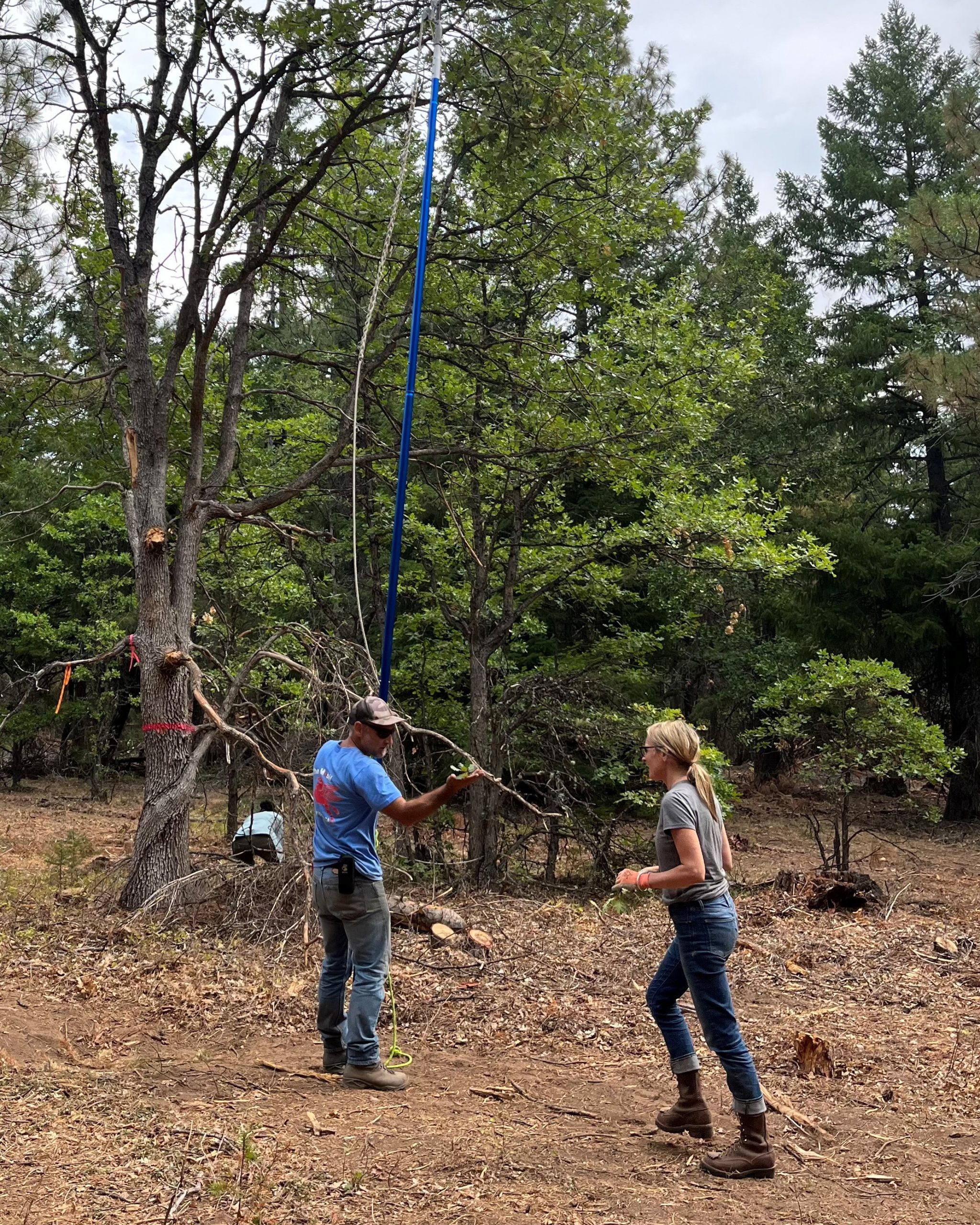
Because it may take years or even decades for an oak tree to show significant signs of growth or decline, it can be challenging to monitor their responses to treatment. That’s why ECOP and partners have invested in the “Oaks on the Trailing Edge Monitoring Project” which is designed to give us more immediate insight into how over 200 oak trees are responding to thinning treatments. ECOP collaborator, Dr. Lucy Kerhoulas, from Cal Poly-Humboldt came out to our three project sites (USFS’ Gate Project, The Conservation Fund’s Compadre Project, and Confederated Tribes of Warm Springs’ Log Springs Project) with her team last year to collect pre-treatment data. Since then, partners conducted thinning treatments on the three sites. This summer, Lucy’s team returned and measured water status and stomatal conductance in dozens over 200 oak trees. They also measured soil moisture, leaf area index, and tree density around each sample oak tree.
Oregon white oaks are adapted to a wide range of growing conditions, including the variable and dry conditions we experience in the East Cascades. They have specific adaptations to survive drought and fire. One adaptation is how they regulate their stomata – the pores on the leaf surface where gas exchange occurs. In hot, dry summer months oaks can either keep stomata open to continue photosynthesizing or close the stomata to limit water loss. Soil moisture and relative humidity influence this behavior, both of which can be influenced by management actions like thinning.
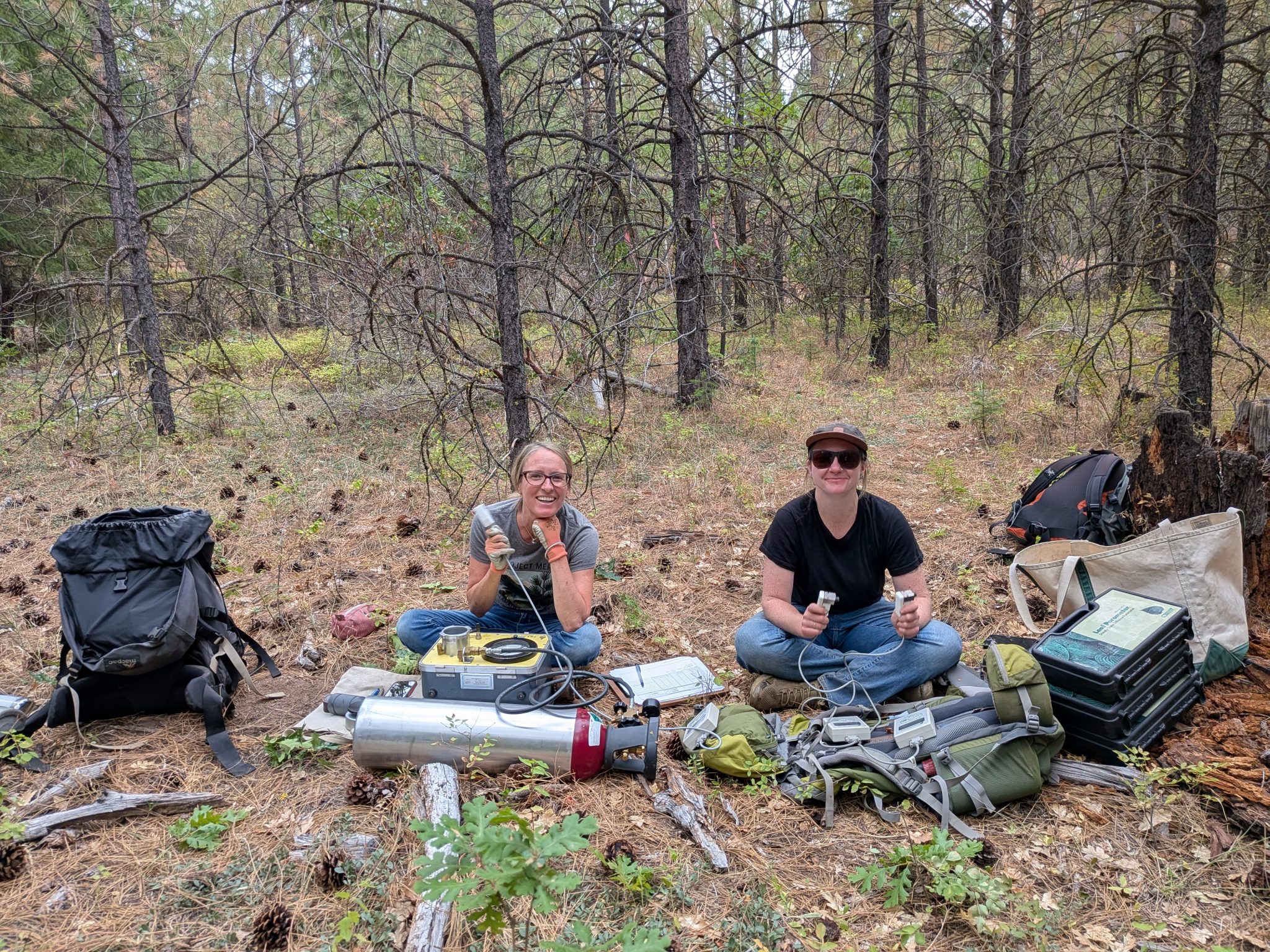
To understand gas exchange and water status in oaks, Dr. Kerhoulas and her team placed clippings of oak branches into a pressurized chamber to measure leaf water stress at different times of day and night and used a leaf porometer to measure stomatal conductance, a proxy for leaf productivity.

Initial findings from the Conservation Fund’s Compadre restoration site (where 150 acres of thinning in mixed oak and pine woodlands took place) show some interesting results! At this site, oaks in the treated stands showed lower water stress and greater gas exchange (which implies higher productivity) compared to oaks in the control plots where thinning did not take place. At the plots in the Mt. Hood National Forest, treatment took place later in the year and there were no measurable differences apparent yet. At the Warm Springs site, water stress and gas exchange varied between treatment and control plots but trended toward greater water stress in treated plots–the opposite of what was observed at Compadre. Post-treatment year 2 of data collection will occur next August and will help us determine if these effects measured in post-treatment year 1 persist.

This project will provide insight into the effects thinning treatments have on oaks across multiple sites to inform adaptive management of oak habitats in the East Cascades. It furthers ECOP's goal to address management uncertainties and create a shared base of understanding around our region's unique Oregon white oak systems. Monitoring the results of restoration projects strengthens our management approaches. To learn more about ECOP’s monitoring strategies, protocols, and ways you can monitor your oaks, visit the monitoring pages of ECOP's website.