
Oak Observations August 2025
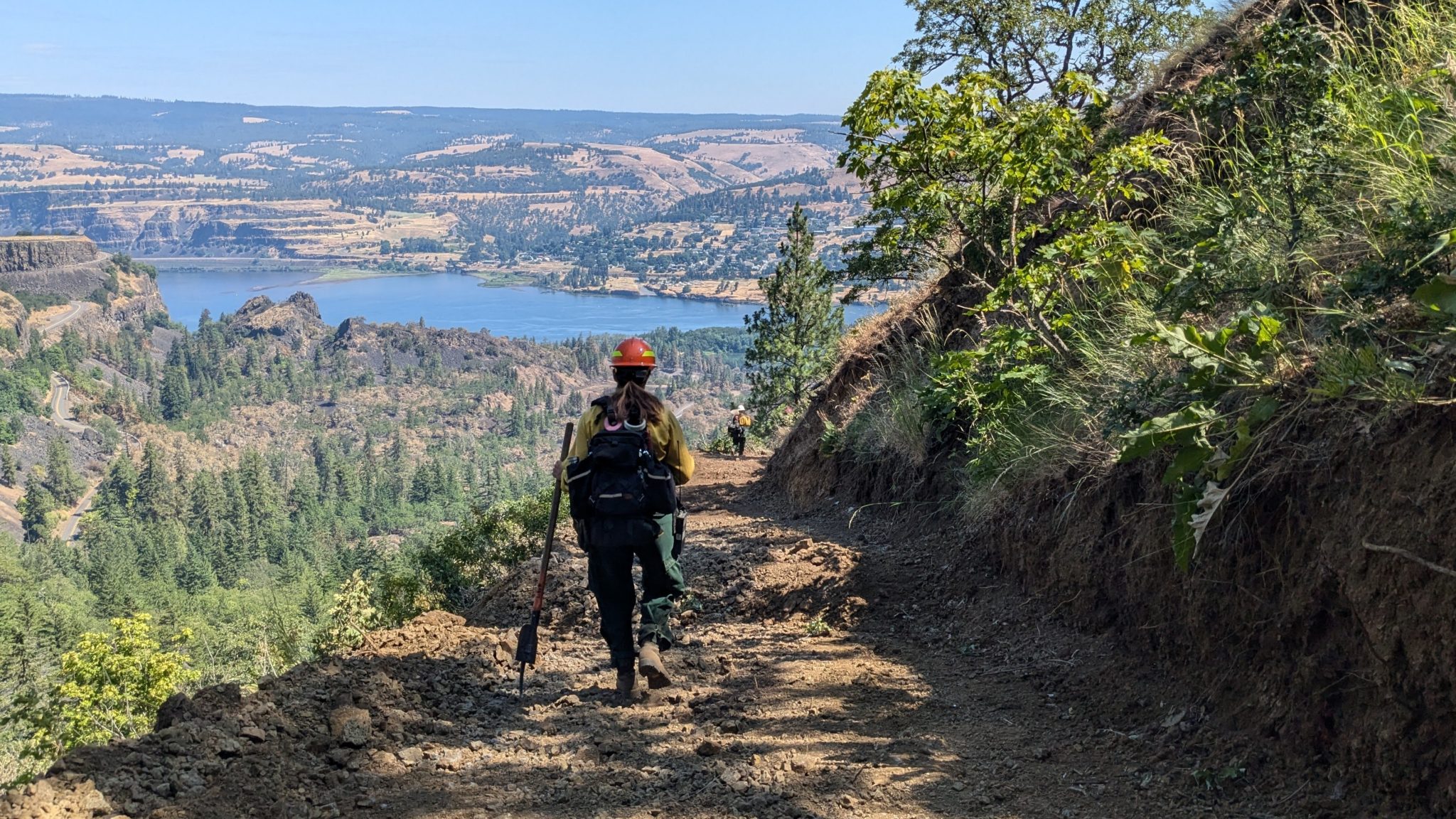
USFS CRGNSA tours the Rowena Fire Footprint
ECOP is committed to learning more about the effects of wildfire and navigating ways to help our communities become more fire ready and resilient. We are curious about the recent fire impacts in the Rowena and Burdoin fire footprints. Unfortunately, the Rowena and Burdoin fires tragically resulted in the loss of dozens of homes. A fund has been established to help community members navigate the Rowena fire losses—United Way of the Columbia Gorge has launched the Rowena Fire Relief Recovery Fund to provide long-term support for those affected by the fire. This fund is intended to help meet ongoing needs such as housing, food security and other critical resources throughout the recovery process. Underwood Conservation District has put together a survey for those affected by the Burdoin fire to support recovery efforts.
To learn more about the Rowena fire’s effects on oak woodlands and understory plants, ECOP partners with the USFS Columbia River Gorge National Scenic Area toured the Rowena fire perimeter. They toured the area in July, one month after the fire started, to learn more about the fire effects and burn intensity. Their team shared the following:
In addition to wind and weather effects, fire behaves differently at different times of year due to moisture levels in plants and humidity in the air. Plant responses to fire are also different in early season fire events compared to fires that happen late in the summer when things are already dry and going into their dormant season.
The Rowena fire happened early enough in the growing season that some plants had enough energy to want to keep growing! During the tour, partners saw that tall wooly buckwheat (Eriogonum elatum) was resprouting fresh leaves, along with oceanspray (Holdiscus discolor, pictured below on the right) and many other shrubs. At the Discovery center (which is scheduled to reopen this fall once fire cleanup is completed) they found Balsamroots in flower!

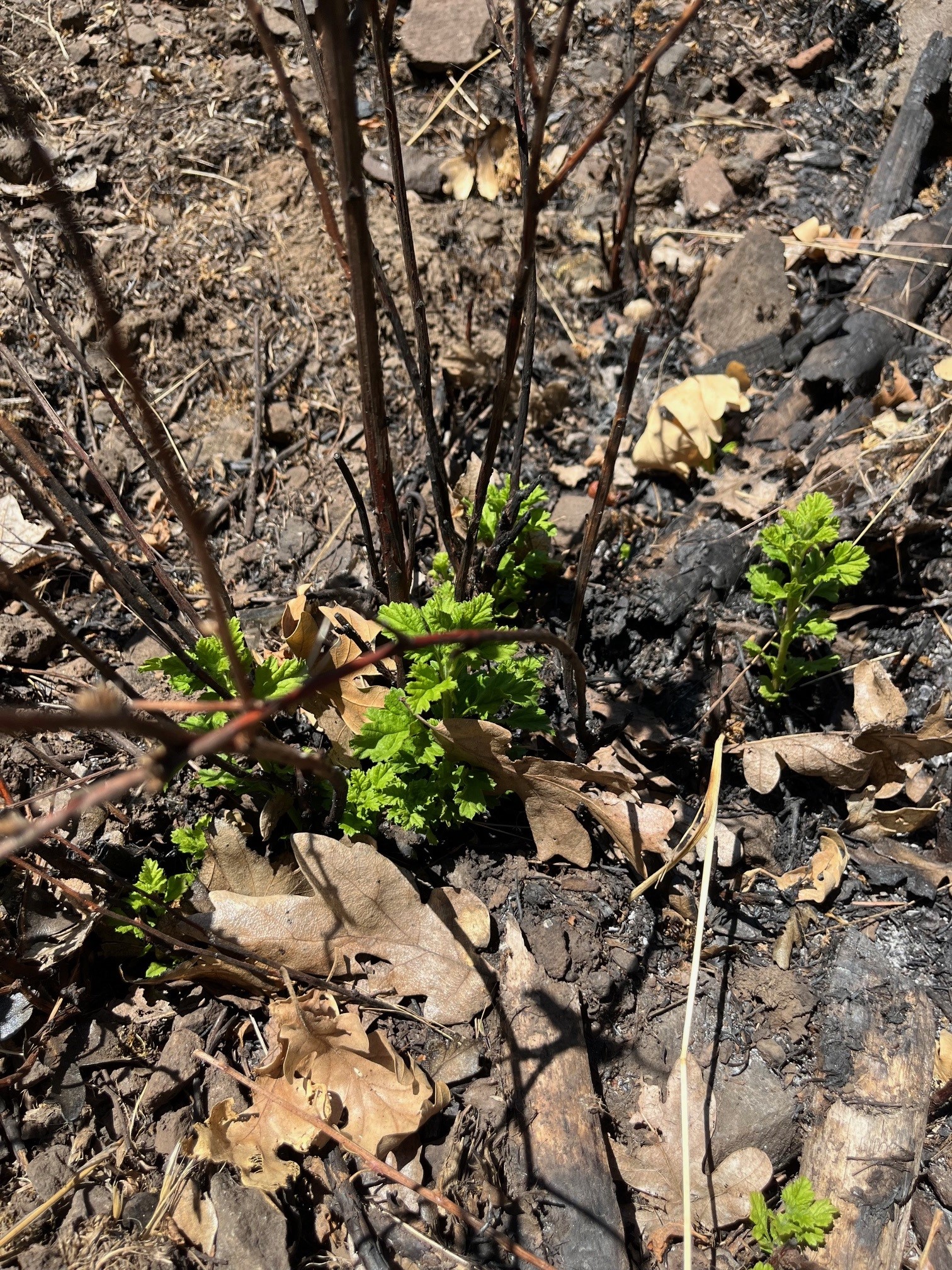
One of the characteristics that makes Oregon white oak so fire resilient is its ability to resprout following disturbance. In Rowena, the oaks were already leafing out from the scorched branch tips just weeks after the fire and some burnt oaks that lost their crowns were resprouting (image on the left).
In general, on National Forest Service managed lands where the majority of fire activity was low severity, the fire moved through so quickly that many plants were merely scorched. In places, the amount of fuel on the ground was minimal due to the previous fire that burned in almost the same footprint in 2014. The US Forest Service conducted fuels treatments in the Rowena basin in 2006 that extended to Sevenmile Hill with completion in 2020, which helped keep the burn severity low (similar to how prescribed burns can remove fuels to help keep future fire intensity lower). Those fuels treatments included thinning, oak release from Douglas fir, and pile burning the material.
However, when splitting trees into medium (5-24” DBH) and large (>24” DBH) trees, there was a statistically significant difference in medium sized tree density from 2022 to 2024. Medium trees averaged 11 trees per plot before treatment and 7 after treatment. There was no difference in large tree density. Primarily Douglas-fir trees decreased in density. Medium DBH Douglas-fir trees averaged 137 trees per acre in 2022 and was 91 in 2024.
Tree species composition primarily shifted for medium DBH trees (5-24” DBH). After treatment, there were more Oregon white oak trees than Douglas-fir (Figure 2)

ECOP continues to seek out learning opportunities to explore our landscape’s relationship with fire and understand how we can move forward in a safer and more resilient way. We facilitate funding toward restoration projects like prescribed burning that improve forest health and fire resilience. Our monitoring efforts are helping partners learn about efficacy of thinning and fuels treatments and ways we can help the oak landscape, and the communities who inhabit it, become more fire resilient. We will share out opportunities to engage with these topics as they emerge.
To learn more about Oregon white oaks’ relationship with fire, visit ECOP’s Fire Guidance page.