Oak Observations June 2025
Pollinator Week
 It’s Pollinator Week! This special week was dedicated to celebrate the innumerable ways that pollinators uplift ecosystems and economies. It is a time to celebrate and share opportunities for people to take action for pollinators.
We’d like to share a few oak understory plant species that can help you support pollinators in the East Cascades. These are plants you can incorporate into your lawn, garden, or restoration project to protect biodiversity and help pollinators who give us so much in return.
Five East Cascades oak understory plants that are great for pollinators include:
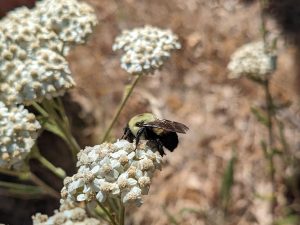
- Yarrow, Achillea millefolium (pictured above) is a common and hardy flowering plant species that hosts specialist bees, serves as a nesting site and provides food for pollinator larvae. It is attractive to bumble bees (pictured on the right), and is resistant to browsing from deer! This is an easy species to incorporate into your planting and does well in droughty and sun exposed sites.
- Rabbitbrush, Ericameria nauseosa offers beautiful golden blooms in late summer into fall, providing interest in your garden and resources for pollinators at a time when many other plants have already finished flowering. Rabbitbrush hosts specialist bees and bumble bees, provides food for pollinators in their larval stage, and is deer resistant.
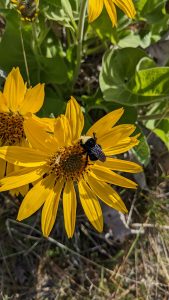
- Arrowleaf balsamroot, Balsamorhiza sagittata (also B. careyana or deltoidea) pictured above on the left. There are multiple types of this charismatic yellow flower that are native to our region. All of them offer resources to local bee species and other pollinators. They may take awhile to establish, but once they bloom, they offer you and the pollinators so much!
-
Blanketflower, Gaillardia aristata have particularly showy flowers that bloom late in the season. They provide food for pollinator larvae and host many species of bees.
-
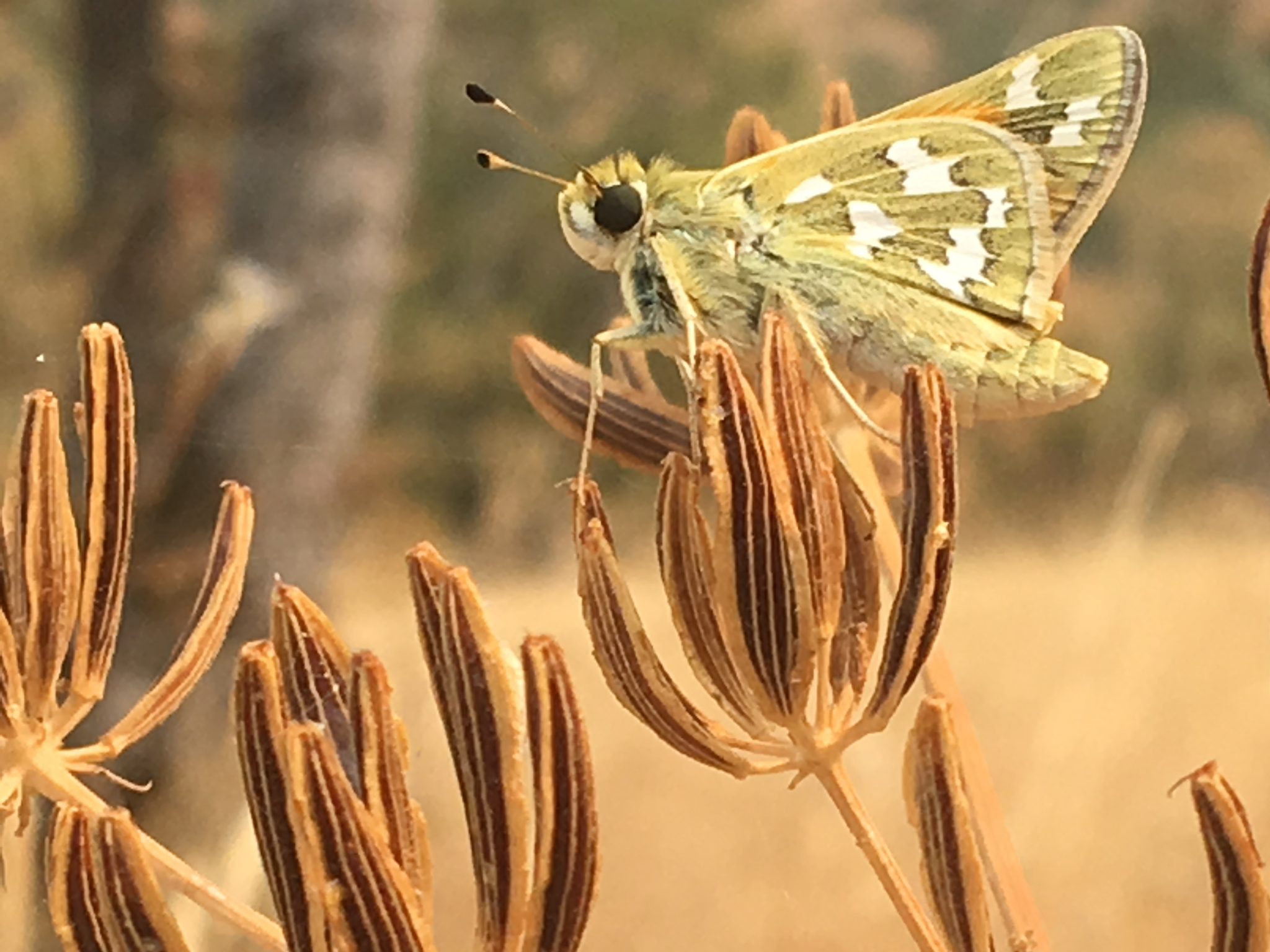
Goldenrod, Solidago missouriensis (pictured on the right) forms plumes of small golden flowers that are attractive to bees and butterflies alike. It forms great nesting sites in the stems. Goldenrod tends to spread so choose its location wisely.