
Oak Observations June 2026
Oak Galls and Gall Wasps
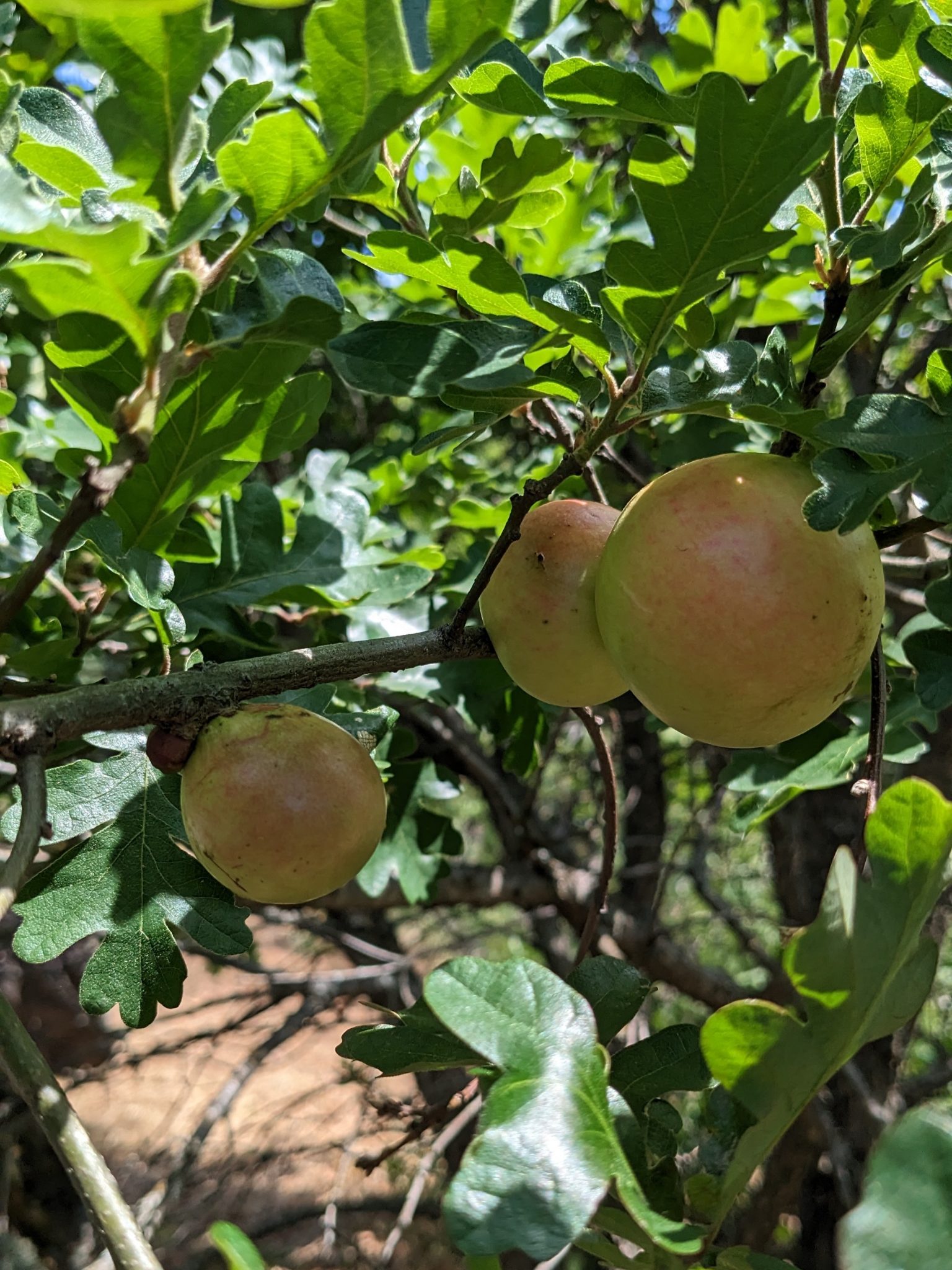
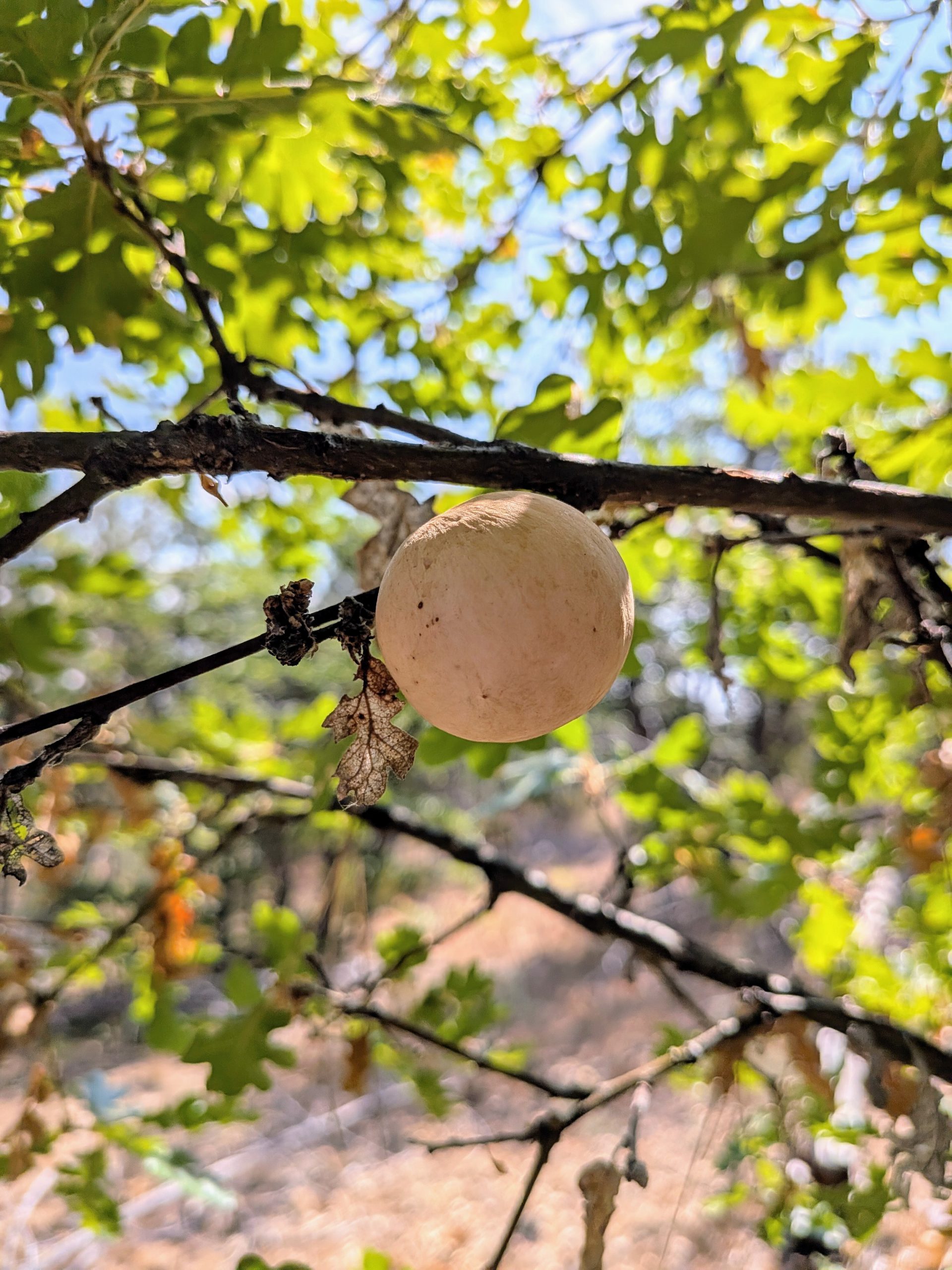
Have you ever wondered why Oregon white oaks sometimes look like they are growing apples? These common “oak apples” are actually galls, formed from the activity of California gall wasps (Andricus quercuscalifornicus). This particular wasp is tiny (<4 mm long) and lays eggs on oak stems in the fall. The larvae develops in the spring, begins to feed, and the gall forms, which is a growth of plant tissue. These galls are fairly large (can be 1-4”), are green at first, then turn brown by fall.
In the fall, the developed wasp emerges from the a tiny exit hole on the outside of the gall. This is considered a parasitic relationship, but the majority of galls use the trees without harming them, except for some cosmetic damage. A fun fact about these specific galls—you can make dye or ink out of them, as was used to write the Declaration of Independence!
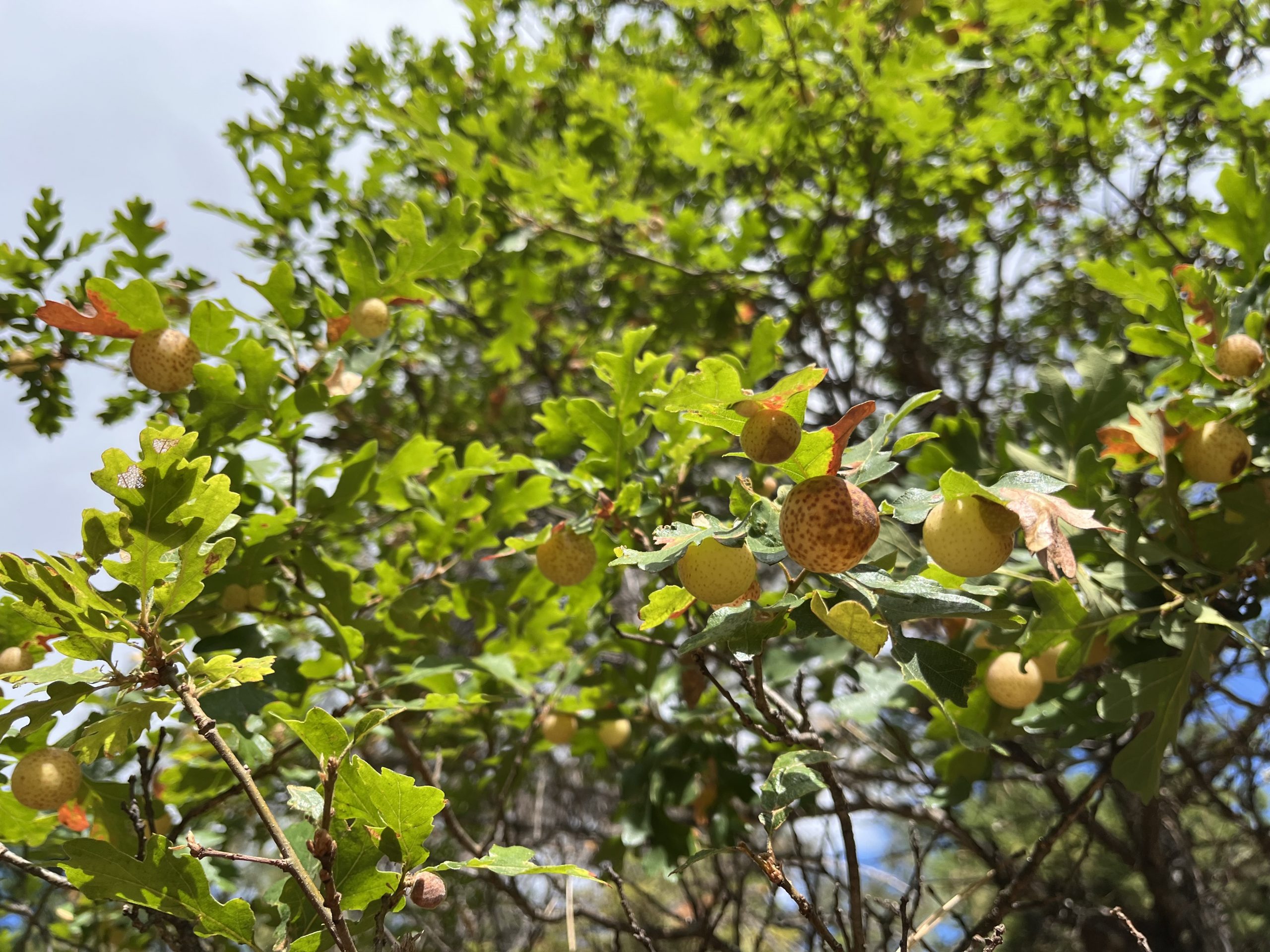
The Califonia gall wasp is not the only one though! There are several hundred different oak gall wasp species in North America. Some other common gall wasps seen associated with Oregon white oak are speckled gall wasp (Cynips mirabilis), jumping gall wasp (Neuroterus saltatorius), and oak twig gall wasp (Bassettia ligni). The jumping gall wasp is particularly fascinating—small mustard seed-like galls form on oak leaf undersides and when they fall off the leaves in the fall, they “jump” around on the ground due to the larvae activity inside! If you want to deep dive into oak galls even more, check out the gallformers website to view over 70 different galls associated with Oregon white oak.
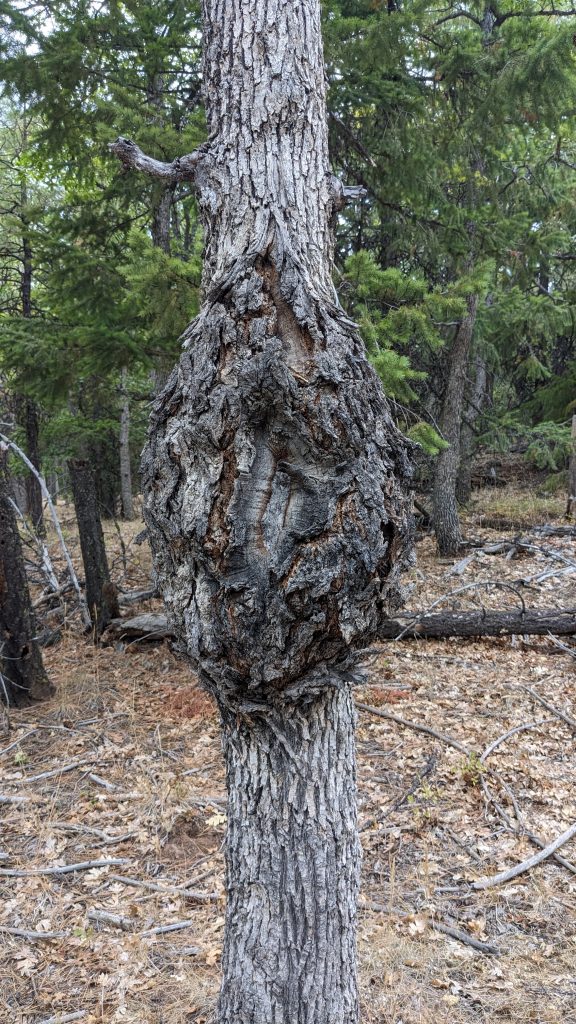
Another interesting growth we see on oaks are cankers. Cankers often originate at a wound on a tree and are commonly associated with canker rot fungi (Inonotus species). Trees can sometimes have a very intense callusing response to this fungus or the fungus can affect the tree for years, provoking repeated rounds of callus growth. When the latter occurs, you can see a large canker on a tree with some concentric bands (referred to as a target canker). Best management practices include avoiding wounding or damaging oak trees when conducting mechanical restoration treatments in oak systems.
Check out ECOP’s website to view resources and learn more about common stressors in oak systems, including drought stress, cankers, and Mediterranean oak borer. And if you ever have questions about what you are seeing in your oak trees, send us an email!