
Oak Observations March 2026
Wildlife Spotlight: Lewis's woodpecker
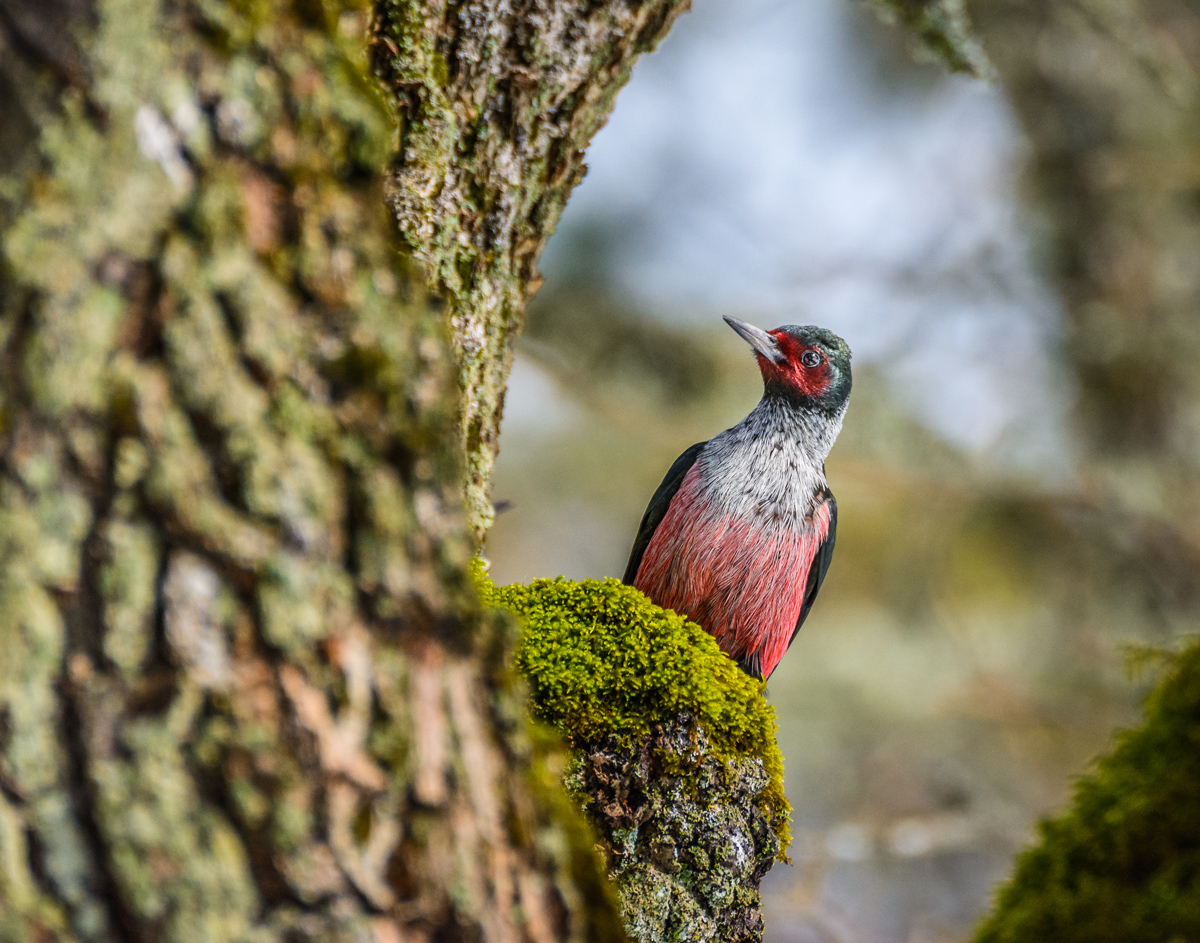
Have you ever seen a plucky green woodpecker taking an acrobatic dive through the oak canopy? It may have been a Lewis’s woodpecker. This unique bird is ECOP’s mascot, featured in our logo. While the diverse oak habitats of the East Cascades support hundreds of species of wildlife, this charismatic avian is a perfect representative because they depend on the unique habitat features only oaks can provide.
Lewis’s woodpeckers prefer to capture prey on the wing, so they thrive in more open canopy structures of oak savannah and mixed oak woodlands. They are often seen in woodlands after wildfire or prescribed burn events, as fire can help create an even more open canopy structure for them to fly through and easily spot their prey.
In addition to insects that they catch in flight (instead of by boring into bark) they also eat acorns. Lewis's woodpeckers nest mainly in holes and crevices created by other birds or that occur in dead trees (snags). Oregon white oaks are renown for their cavities, which offer shelter to birds and mammals alike.

Lewis’s woodpeckers sport a unique coloration, with one researcher referring to them as a “watermelon woodpecker” because of their deep green back with rosy red face and belly. Learn more about local efforts to understand these incredible birds with Kaly Adkins talk on ECOP’s YouTube channel: “Lewis's Woodpecker Habitat Associations and Migration”
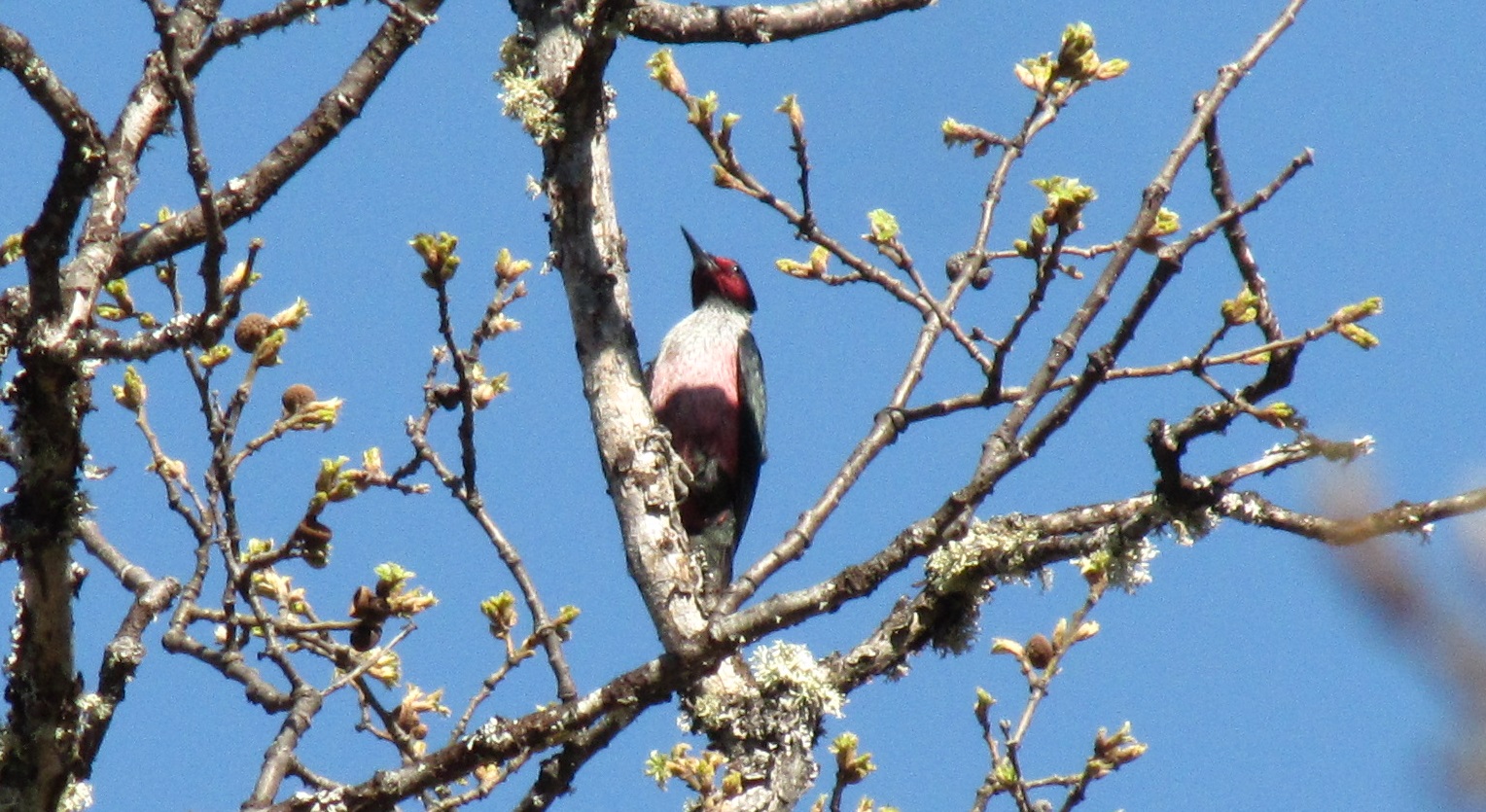
Because East Cascades oak habitats offer valuable habitat to so many species of birds, especially as climate changes, Pacific Birds Habitat Joint Venture is one of the founding sponsors of our partnership. We are grateful for their continued support toward restoring and protecting oak habitats. According to the Cornell Lab, "The resilience of the oak forests in this area is imperative for already threatened bird species in the region, such as Lewis’s Woodpecker, whose range of habitat will be constrained by the impacts of climate change… There is a mutualistic relationship between many birds and oak woodlands. Just as intact oak landscapes provide habitat for birds, the presence of birds is also critical for oak landscapes. The Oregon White Oak, for instance, relies on birds for the distribution of its acorns, a reciprocal relationship that is crucial for the survival of this tree species.” You can read the full article here to learn more about what makes oaks in the East Cascades such an important resource for birds like these special woodpeckers.
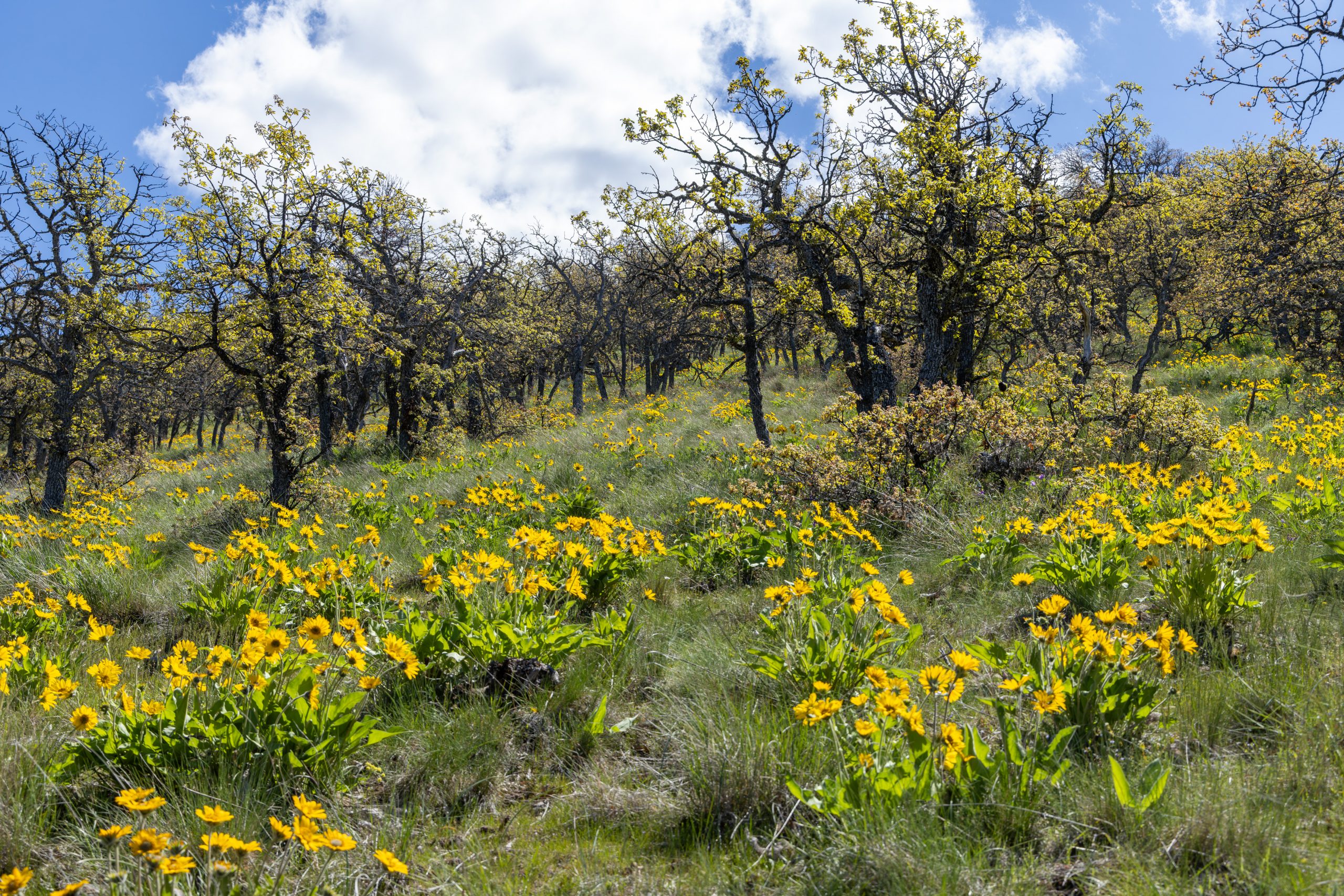
The White River Wildlife Area hosts a uniquely year-round population of Lewis’s woodpecker. Across most of Oregon, Lewis’s woodpecker is migratory. The wildlife area, managed by the Oregon Department of Fish and Wildlife, was the recipient of one of ECOP’s very first Focused Investment Partnership Technical Assistance grants through the Oregon Watershed Enhancement Board. This project deployed cultural resources surveys across 5,050 acres. Treatment areas were prioritized in part by using ECOP’s Condition Assessment Tool. Now, the partnership is implementing targeted forest treatments across 500 acres to reduce wildfire risk, restore oak woodland structure, and improve ecological resilience under changing climate conditions—protecting this incredible oak system for the people, wildlife, and woodpeckers who depend on it.
To learn more about the partnership’s work in the White River Wildlife Area and throughout our priority geography, check out the "What We do Together" page and ECOP storymap.