
Oak Observations May 2024
Mediterranean Oak Borer
Following a workshop on Mediterranean Oak Borer, an invasive ambrosia beetle recently detected in Oregon, we wanted to share some updates about oak pests.
The Oregon Department of Agriculture has tracked 871 Mediterranean Oak Borer (MOB) surveys. As we learned at the ECOP meeting last September, the infested tree in the Sandy River delta was removed by USFS. Additional infested trees were located in Troutdale and were destroyed. Currently, infestations have also been found in Wilsonville and Salem and are also being treated.
Following field observations, a trapping study, and hand examination of infested trees, Cal Fire reports that MOB can continue to reproduce in an infested tree for more than 5 years. They also observed a peak spring dispersal period from January to May, but there may be some dispersal possible every month.
MOB attacks live trees rather than dead wood. Interestingly, MOB does not eat oak wood, they carry a pathogenic fungi that causes a type of oak wilt and can eventually kill the tree. The beetles occupy the sapwood of the tree and cultivate the fungus which is their food source.
Signifiers of MOB
Dieback of a section of the crown, sometimes a whole branch
Usually the decline is from the top down and on one side
Stunted leaves in atypical clumps
Pale boring dust (frass)
Tiny round exit holes
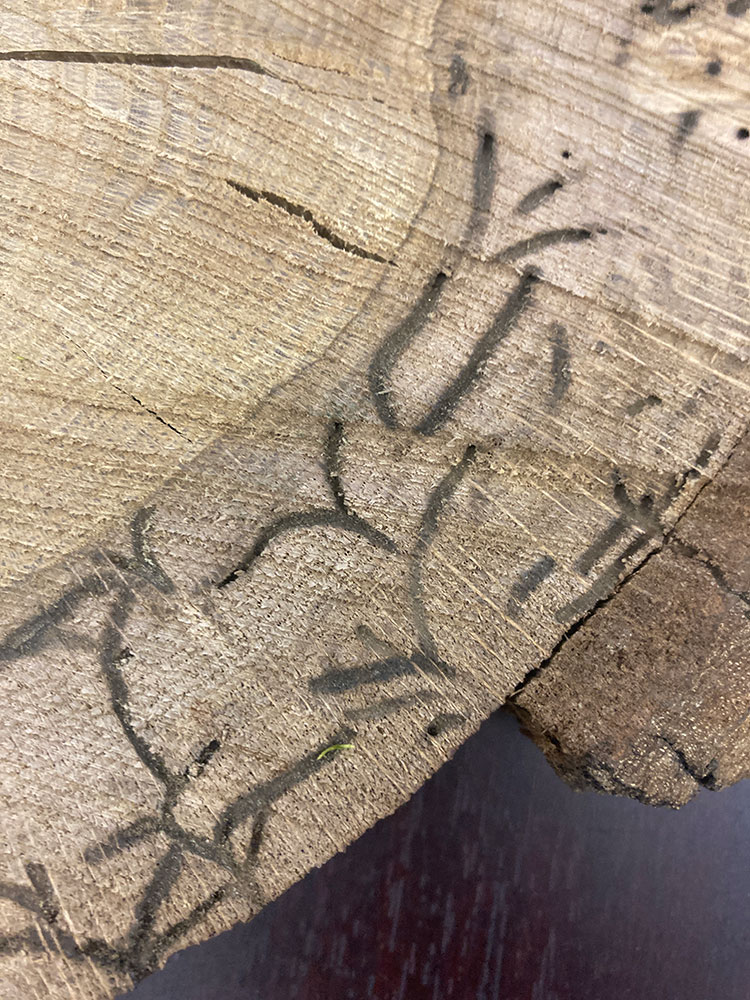
Black stained branching galleries crossing the sapwood
So, what can you do?
Solarization and chemical options have not been effective
Don’t move firewood!
Remove infested trees and chip infested wood less than 3 inches
Burn and bury infested wood
If you see signs of MOB, report it to the Oregon Invasive Species Hotline!
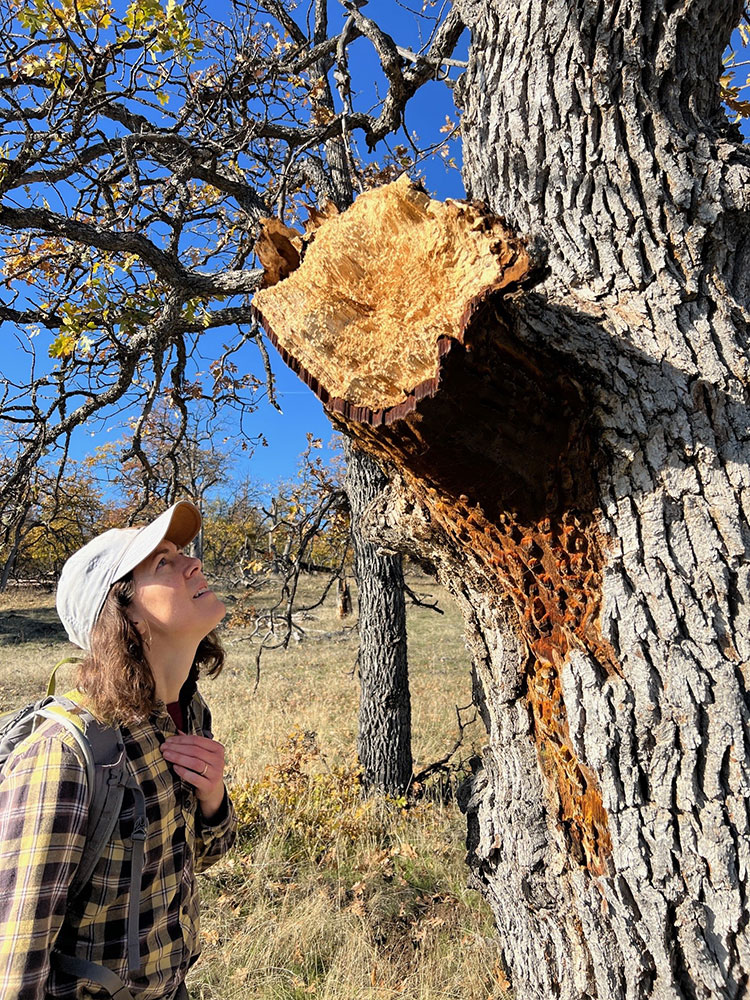
On a lighter note, not all pests or afflictions to oak are as serious as MOB. The mysterious oak fungus we found last fall was identified by a clever reader as a canker rot called Inonotus andersonii. Luckily, I. andersonii is not a serious threat to the stand, although it has caused limb failure in this individual. It is a basidiomycete fungus (in the Polyporales) that can infect a tree through injuries and broken limbs. Unless people are looking closely, it's often overlooked, especially when the fruiting bodies turn blackish. The fresh fruiting body is sheet like, with tightly packed, rust-colored tubes that point downward. Spores are a striking bright yellow when fresh. Decayed wood can become soft enough to crumble with your hand (as was the case with this oak).
Thanks for your help identifying and reporting oak pests and for your continued interest in the incredible oak habitats that make the East Cascades so special.