Oak Observations September 2024
Oaks on the Trailing Edge
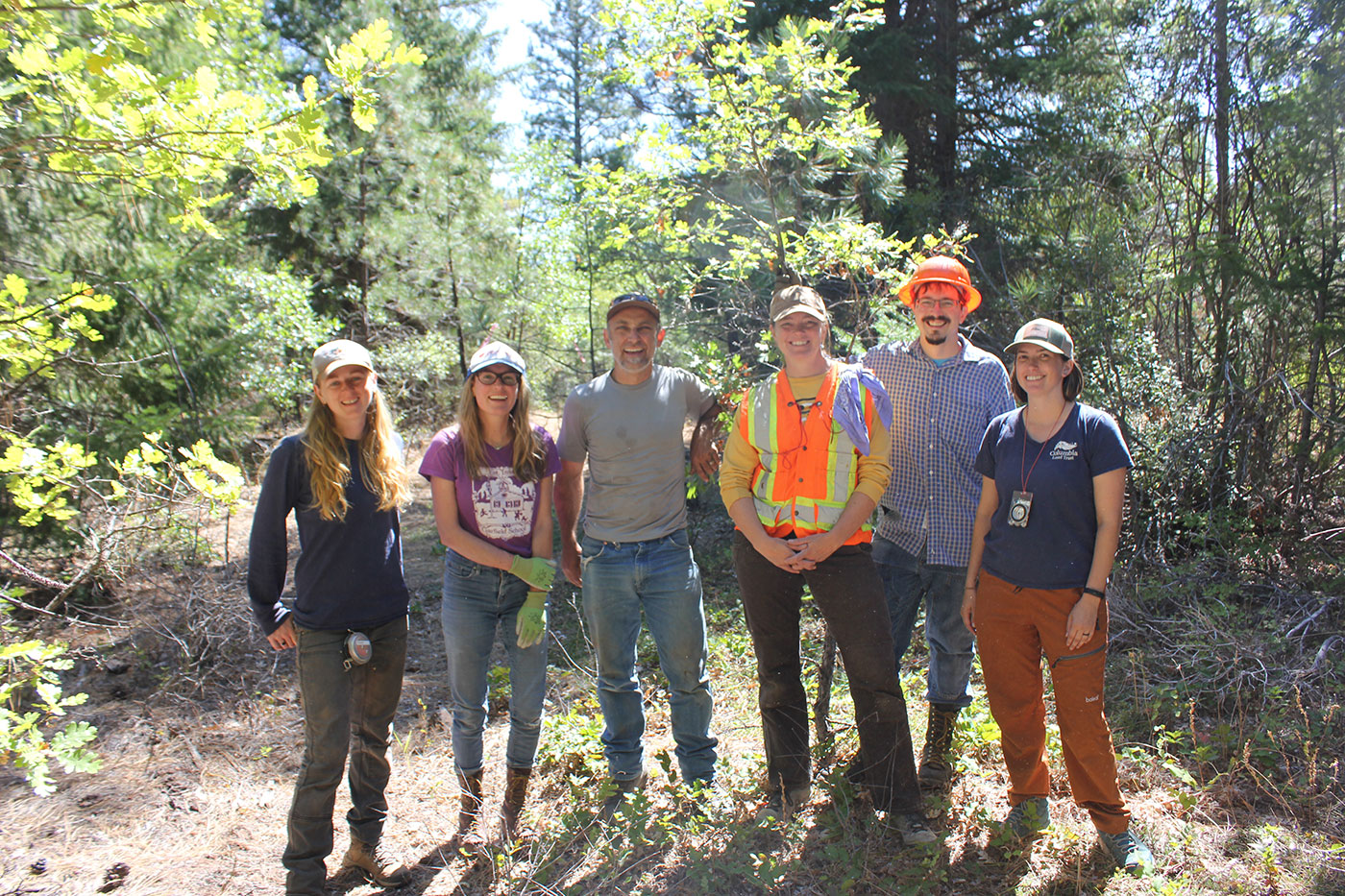
In the East Cascades, conservation practitioners need deeper insight into how oaks are responding to management to ensure we are taking the most effective steps to protect these crucial habitats. This is why we’ve invested as a partnership in monitoring. This summer we deepened that investment by launching a three year monitoring project at three different project sites to gain insight into how oaks are responding to thinning treatments in droughty environments.
Fire exclusion in the East Cascades has resulted in forests with more trees. The resulting competition for soil water and sunlight can weaken tree resistance to insects and disease, leading to increased stress and mortality. In combination with a general increase in fuels and invasive grasses, the resulting conditions can fuel higher intensity fires. A typical management response in this scenario is to thin trees and remove fuels.
White oaks are adapted to a wide range of growing conditions, and they have some important adaptations to survive drought and fire. One adaptation is how they regulate their stomata –the pores on the leaf surface where gas exchange occurs. In hot, dry summer months oaks have a choice: keep stomata open to continue photosynthesizing or close the stomata to limit water loss. Making the wrong choice can result in stress, or even death. Several factors influence the “decision” including soil moisture and relative humidity, both of which can be influenced by management choices like thinning.
Since it can take decades for an oak to show signs of stress or die, we engaged Dr. Lucy Kerhoulas from Cal Poly-Humboldt to measure water status and soil moisture in dozens of trees at three restoration sites before and after treatment. This “Oaks on the Trailing Edge Monitoring Project” is designed to give us insights into how oaks are responding immediately to thinning treatments and reveal ways we can help steward these habitats through a changing climate.
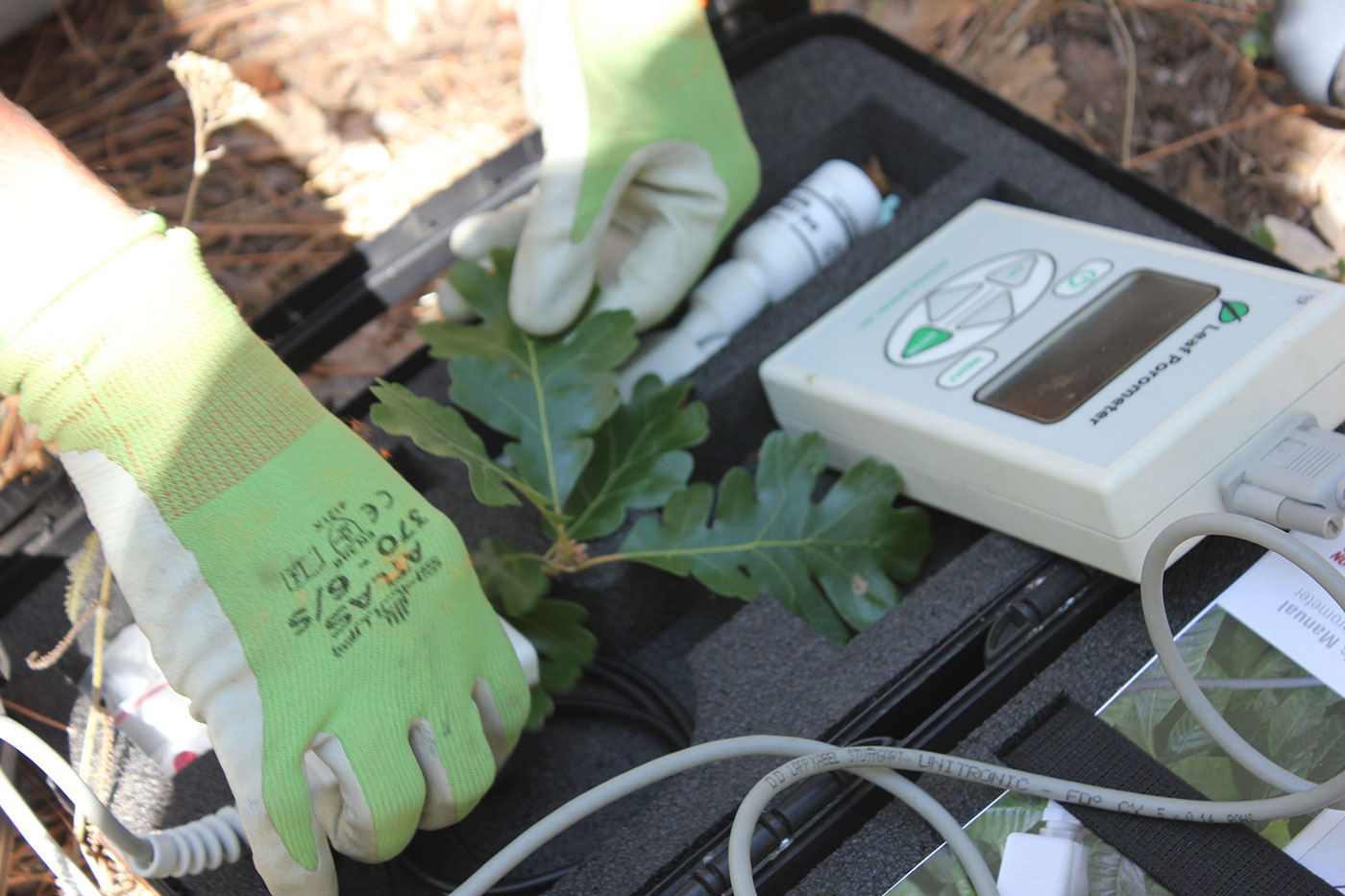
To understand gas exchange and water status in the oaks, university staff placed clippings of oak leaves into a pressurized chamber to reveal the moisture content at different times of day and night, and used a porometer to measure conductance.
They began their field days with pre-dawn measurements at 1 AM. Shout out to those who have lost sleep for science!
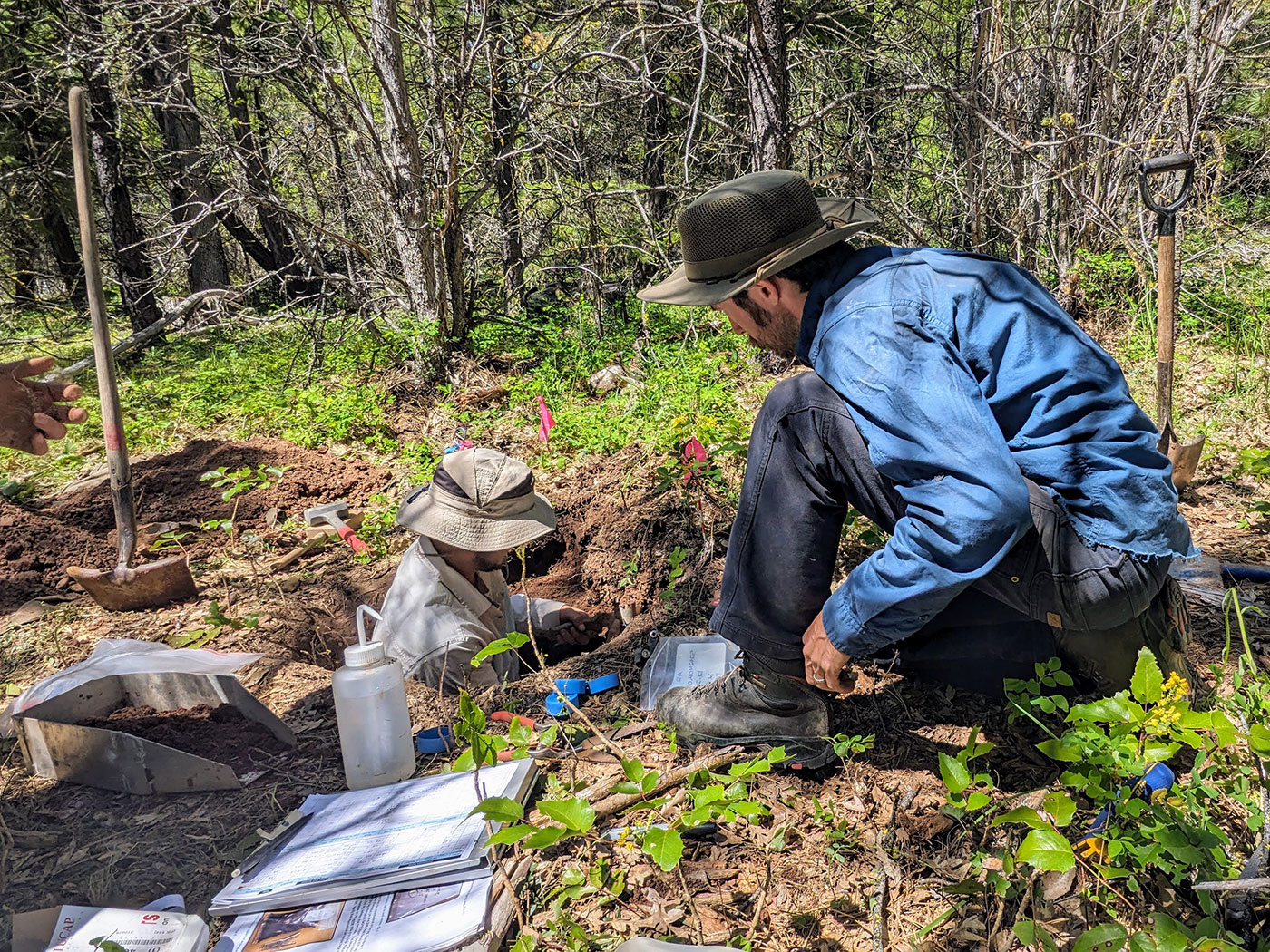
Andy Neary and staff from NRCS (pictured above) are among the cadre of partners who are collaborating to strengthen our understanding of these resilient ecosystems. They installed soil monitoring sensors to measure changes in soil moisture and temperature before and after thinning treatments. Above ground temperature and relative humidity are simultaneously measured with weather stations from collaborator Dr. Larry O’Neill, at Oregon State University.
Working together with diverse communities across our ecotonal landscape, we collaborate toward conservation solutions that are informed by sound science, partner observations, and are adaptive to changing conditions. Stay tuned for learnings gleaned from this incredible effort. The results will inform management guidance and recommendations specially tailored for our beloved East Cascades oak habitats.
Thank you Oregon Watershed Enhancement Board and Oregon Department of Forestry for supporting this important work.