Oak Observations December 2024

What a year it has been for oak conservation and our growing partnership! ECOP has made some incredible strides all while oak conservation groups throughout the west coast are coming together to launch a collaborative website and kickoff the Year of the Oak campaign! Stay tuned in 2025 for events and communications sharing the values of oaks and celebrating with events across the region.
We closed out the year strong with a cooperative volunteer event in the Mt. Hood National Forest. A big thank you to the intrepid volunteers who came out to seed a restoration site this December! It was the perfect event to closeout the year of more than a dozen learning tours, events, and meetings. Remember, you can re-visit the presentations shared during this year’s meetings and events on our ECOP YouTube channel.
USFS Mt. Hood National Forest secured one of the very first grants through the FIP back in 2023 for restoration of oak habitats on the eastern edge of Mt. Hood National Forest. This mixed oak-pine woodland had been invaded in places by non-native annual grasses and suffered from ponderosa pine die off due to drought and insects. Over the last two years, USFS worked to control the invasive grasses and thinned pine to improve habitat for oaks while reducing the risk of catastrophic wildfire.
This December, volunteers, USFS and Columbia Land Trust staff braved below freezing temperatures to make sure this area is seeded for success! With hot chocolate in hand, we worked together to give native plants the best shot at establishing before annual grasses can proliferate in disturbed soils.
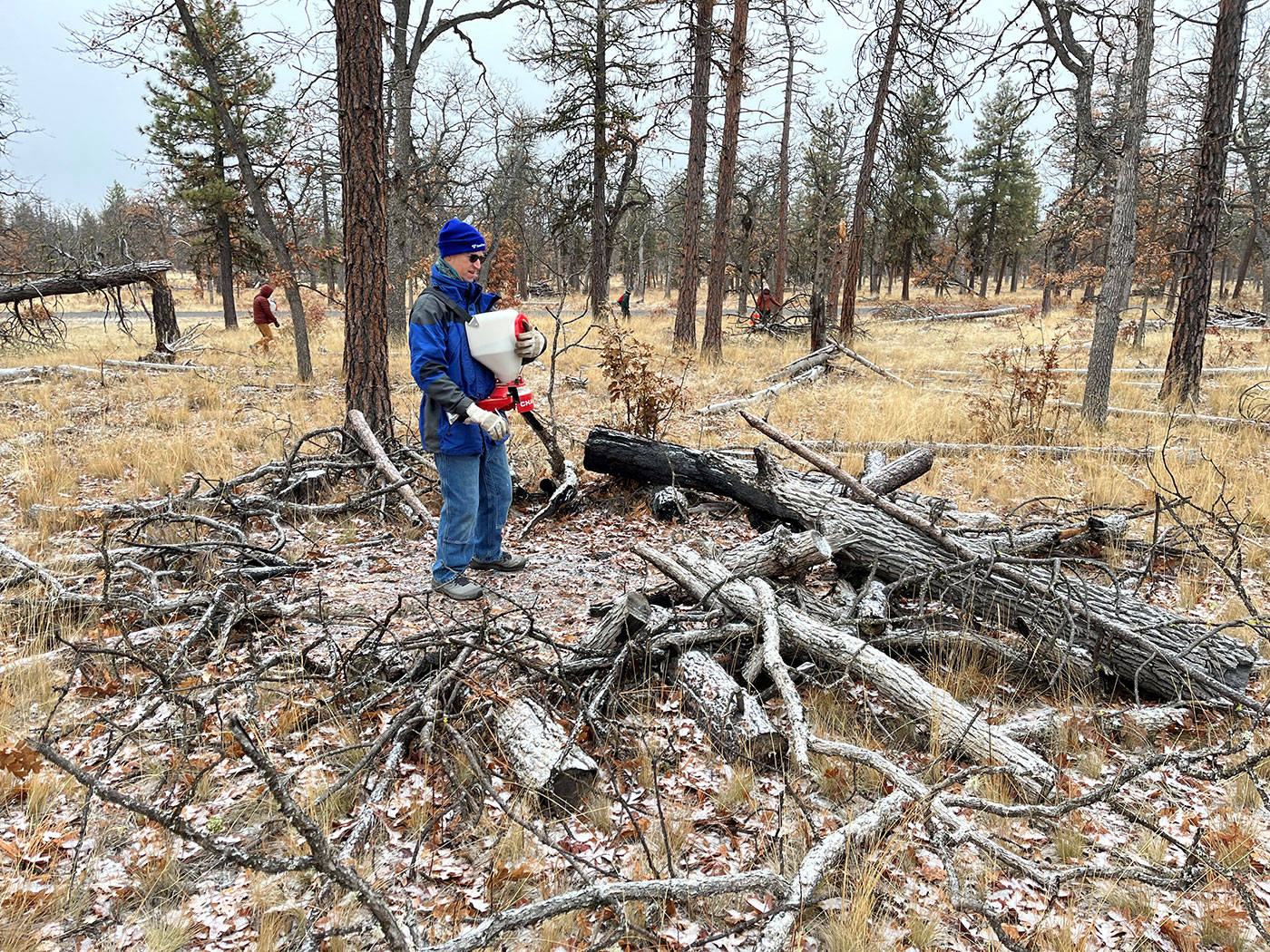
Seeding burned piles and disturbed areas including tracks from heavy machinery can give native plants a chance to compete before invasive annual grasses can establish. Doing this work in winter might seem counterintuitive but sowing seeds onto snow allows them to take advantage of seasonal moisture. Snow may also offer a protective layer against seed predators, like birds. Species in our seed mix included: blue wildrye, Idaho fescue, slender hairgrass, California brome, yarrow and broadleaf lupine.